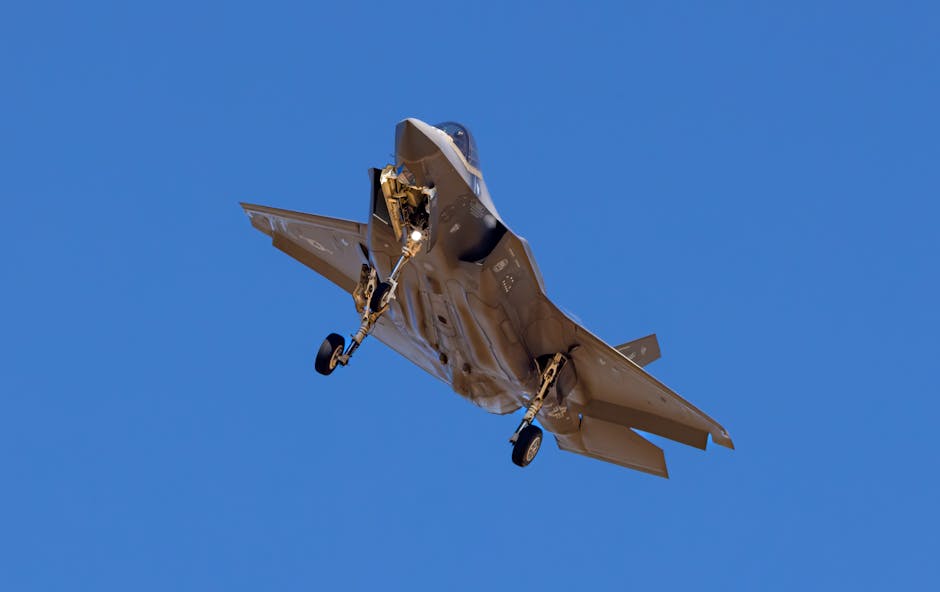
- US President Donald Trump revealed a major strike on Iran was delayed just 10 minutes before launch.
- The strike was intended as retaliation for Iran’s downing of a $130 million US surveillance drone over the Strait of Hormuz.
- Iran claimed the drone had violated its sovereign territory, while the US insisted it was flying in international airspace.
- The planned strike targeted radar installations, air defense systems, and command centers across southern Iran.
- The decision to delay the strike has left diplomats scrambling to interpret the US signal, with concerns of a future devastating conflict.
Smoke still curled from the ruins of an Iranian surveillance outpost in Hormuzgan Province when the first official U.S. statement emerged—not of war, but of restraint. In a late-night tweet from the Oval Office, President Donald Trump declared he had called off a “very major attack” just ten minutes before it would have launched. The decision followed Iran’s downing of a U.S. Global Hawk drone over the Strait of Hormuz, an act Washington claimed was an unprovoked act of aggression in international airspace. Yet, instead of the thunder of cruise missiles, the region was met with the uneasy silence of suspended violence. Diplomats in Riyadh, Tehran, and Islamabad scrambled to interpret the signal: Was this a reprieve, or merely the calm before a more devastating storm?
U.S. Pulls Back from Brink of War

The White House confirmed that military operations—reportedly targeting radar installations, air defense systems, and command centers across southern Iran—were aborted on direct orders from the president. Senior defense officials revealed that dozens of Tomahawk missiles had been primed aboard Navy destroyers in the Persian Gulf, with fighter jets on high alert at Al Udeid Air Base in Qatar. The planned strike was intended as retaliation for Iran’s shooting down of the $130 million surveillance drone, which the Pentagon insisted was flying in international airspace. Iran, however, maintained the drone had violated its sovereign territory near the port city of Jask. Despite mounting pressure from hawkish advisors, including National Security Advisor John Bolton, Trump cited the potential for disproportionate Iranian casualties—estimated at 150 lives—as the reason for halting the operation. “I asked, how many will die?,” Trump later told reporters. “Fifteen hundred people. And I said, no, this is not the right response.”
According to Reuters, the reversal stunned military leaders and allies alike.
The Path to the Brink

Tensions had been escalating for weeks before the drone incident. In May 2019, the Trump administration intensified its “maximum pressure” campaign against Iran, imposing crippling sanctions on its oil exports and designating the Islamic Revolutionary Guard Corps (IRGC) a foreign terrorist organization—the first time the U.S. had labeled another nation’s military as such. Iran responded by exceeding limits on uranium enrichment set by the 2015 nuclear deal, which the U.S. had unilaterally abandoned the prior year. Attacks on oil tankers in the Gulf of Oman, sabotage of Saudi pipelines, and a surge in proxy activity across Iraq and Yemen heightened fears of direct conflict. The downing of the Global Hawk on June 20 was the flashpoint. While some analysts questioned whether the drone’s flight path breached Iranian airspace, satellite data and radar logs presented by the U.S. suggested otherwise. Still, the near-miss strike underscored how rapidly a single incident could spiral into full-scale war in one of the world’s most volatile regions.
Diplomats, Hawks, and the Voice of Restraint

Within the Trump administration, a quiet struggle played out between hardliners and moderates. John Bolton and Secretary of State Mike Pompeo advocated for a forceful response, warning that inaction would embolden Tehran. In contrast, Defense Secretary James Mattis—before his resignation months earlier—had consistently cautioned against military adventurism in the region. Chairman of the Joint Chiefs Gen. Joseph Dunford reportedly supported a measured approach, emphasizing diplomatic channels. Meanwhile, Pakistan emerged as an unexpected mediator. Prime Minister Imran Khan, leveraging longstanding but complex ties with both Tehran and Washington, initiated backchannel talks aimed at de-escalation. The BBC reported that Pakistani intelligence officials shuttled messages between the two capitals, urging restraint. Khan publicly warned that a war between the U.S. and Iran would be catastrophic for regional stability and global energy markets.
Consequences of a Strike That Wasn’t

Though the immediate threat of war receded, the implications of the aborted strike were profound. Allies in the Gulf, particularly Saudi Arabia and the United Arab Emirates, expressed concern over U.S. unpredictability, while Iran interpreted the reversal as a sign of American weakness. Tehran doubled down on its nuclear activities, accelerating centrifuge development and enriching uranium to higher levels. Militant groups aligned with Iran, such as Hezbollah and certain Shia militias in Iraq, signaled readiness for asymmetric retaliation. In Washington, critics questioned the coherence of U.S. strategy—was restraint a sign of prudence or inconsistency? The episode also highlighted the outsized influence of individual leaders in high-stakes geopolitics, where a single decision could avert or ignite war.
The Bigger Picture
This near-war moment reflects a broader shift in global conflict dynamics, where cyber operations, drone warfare, and rapid escalation dominate over traditional battlefields. The U.S.-Iran standoff exemplifies how modern brinkmanship unfolds not through declarations, but through tweets, intelligence leaks, and last-minute reversals. It also underscores the growing role of non-traditional mediators like Pakistan in preventing conflagration. As great-power competition returns, the world watches closely: in an era of instant communication and volatile leadership, the margin for error has never been thinner.
What comes next remains uncertain. Diplomatic efforts continue, but trust between Washington and Tehran lies in ruins. The nuclear deal hangs by a thread, and regional proxies remain on high alert. While the bombs did not fall that night, the underlying tensions have neither been resolved nor forgotten. The Middle East remains a tinderbox—one spark away from a war no one may be able to control.
Source: The New York Times