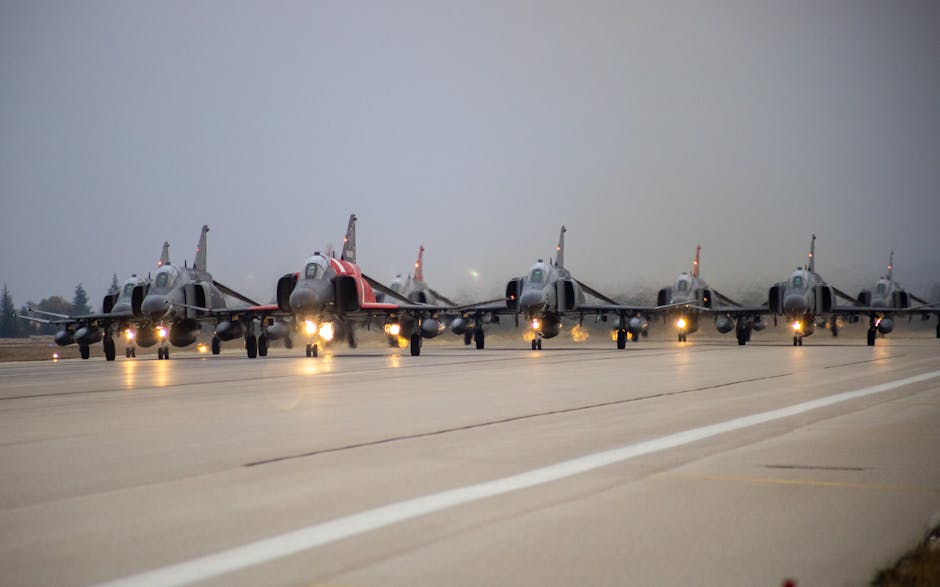
- President Trump paused a military strike on Iran after discovering ‘serious negotiations’ aimed at de-escalating tensions.
- Intensive backchannel diplomacy led by Saudi Arabia and the UAE opened a fragile window for dialogue and potentially averted a broader war.
- U.S. Central Command had placed multiple assets on high alert in preparation for the anticipated strike.
- Satellite imagery revealed B-52 bombers redeployed to Al Udeid Air Base and the USS Abraham Lincoln repositioned within striking distance of Iran.
- Iranian-backed militia attacks surged across the Persian Gulf, with 14 recorded in Iraq and Syria, targeting U.S. personnel.
President Donald Trump has delayed a previously scheduled military strike on Iranian targets, citing the emergence of what he described as “serious negotiations” aimed at de-escalating mounting hostilities between the United States, Israel, and Iran. The decision, confirmed by senior defense officials on background, marks a critical pivot from the brink of direct conflict, following weeks of escalating rhetoric and retaliatory attacks across the Middle East. While details remain classified, U.S. intelligence suggests that intensive backchannel diplomacy—led by Saudi Arabia and the United Arab Emirates—has opened a fragile window for dialogue, potentially averting a broader regional war.
Escalation Metrics and Military Readiness

U.S. Central Command (CENTCOM) had placed multiple assets on high alert in the days leading up to the anticipated strike. Satellite imagery analyzed by Reuters showed B-52 bombers redeployed to Al Udeid Air Base in Qatar and the USS Abraham Lincoln carrier strike group repositioned within striking distance of Iran’s southern coast. Open-source intelligence from Conflict Monitor indicates a 300% surge in drone activity across the Persian Gulf in the past two weeks, with at least 14 Iranian-backed militia attacks recorded in Iraq and Syria—many targeting U.S. personnel. Despite these provocations, Pentagon officials note that Iran has not directly engaged U.S. forces, suggesting a calculated restraint that may have contributed to the pause in military action.
Key Regional and International Actors

The diplomatic intervention came primarily from Gulf Cooperation Council (GCC) states, particularly Saudi Crown Prince Mohammed bin Salman and Emirati President Sheikh Mohamed bin Zayed, who have grown increasingly alarmed by the prospect of a U.S.-Iran war destabilizing energy markets and inviting wider regional chaos. Both leaders conducted urgent phone calls with Trump and Israeli Prime Minister Benjamin Netanyahu in the 72 hours preceding the strike delay. Meanwhile, Oman—long a mediator in U.S.-Iran relations—facilitated a secret channel through its ambassador in Muscat, according to a senior Gulf diplomat speaking to BBC News. On the Iranian side, Foreign Minister Hossein Amir-Abdollahian signaled openness to negotiations, warning that further military action would “trigger irreversible consequences,” while maintaining that Iran’s nuclear program remains non-negotiable.
Strategic Trade-offs in Delaying Military Action

The decision to delay the strike presents both risks and opportunities. On one hand, avoiding immediate military confrontation reduces the likelihood of Iranian retaliation against U.S. bases, commercial shipping in the Strait of Hormuz, or Israeli population centers—each of which could escalate into full-scale war. It also preserves diplomatic space for potential progress on limiting Iran’s uranium enrichment, currently at 60%, just short of weapons-grade. On the other hand, critics argue that repeatedly calling off strikes may embolden Iran’s regional proxies and undermine U.S. deterrence credibility. Former CENTCOM commander Gen. Frank McKenzie warned in a recent Brookings Institution report that “strategic ambiguity, when overused, becomes strategic indecision,” potentially encouraging further asymmetric attacks by Iranian-backed groups.
Why the Timing Shifted Now

The shift in timing reflects converging pressures: a spike in oil prices—Brent crude rose above $95 per barrel—and growing bipartisan concern in Congress over unauthorized military action. The attack was reportedly set for April 12 but was suspended after intelligence assessments indicated that Iran had not authorized the recent militia strikes, suggesting a possible split between hardline elements and the diplomatic corps in Tehran. Simultaneously, Israeli officials expressed reservations about opening a second front while still engaged in Gaza, according to a New York Times report. These factors, combined with Gulf-led diplomatic momentum, created a narrow opening that the administration chose to exploit.
Where We Go From Here
Over the next six to twelve months, three plausible scenarios could unfold. First, a breakthrough in indirect talks could lead to a U.S.-Iran understanding limiting enrichment in exchange for eased sanctions—a variant of the 2015 JCPOA framework. Second, stalled diplomacy could result in a limited Iranian attack on U.S. interests, triggering a proportional but targeted American response, keeping the conflict contained. Third, a miscalculation—such as an Israeli strike on Iranian nuclear facilities—could spark full-scale conflict, drawing in Hezbollah, Houthi forces, and potentially U.S. ground troops. Each path hinges on the durability of current communication channels and the willingness of both Washington and Tehran to accept incremental de-escalation over maximalist demands.
Bottom line — While the postponement of military action offers a temporary reprieve, the absence of a formal ceasefire or verified diplomatic framework means the region remains poised on the edge of a much larger conflict, with long-term stability dependent on sustained, high-level engagement rather than tactical pauses.
Source: Al Jazeera