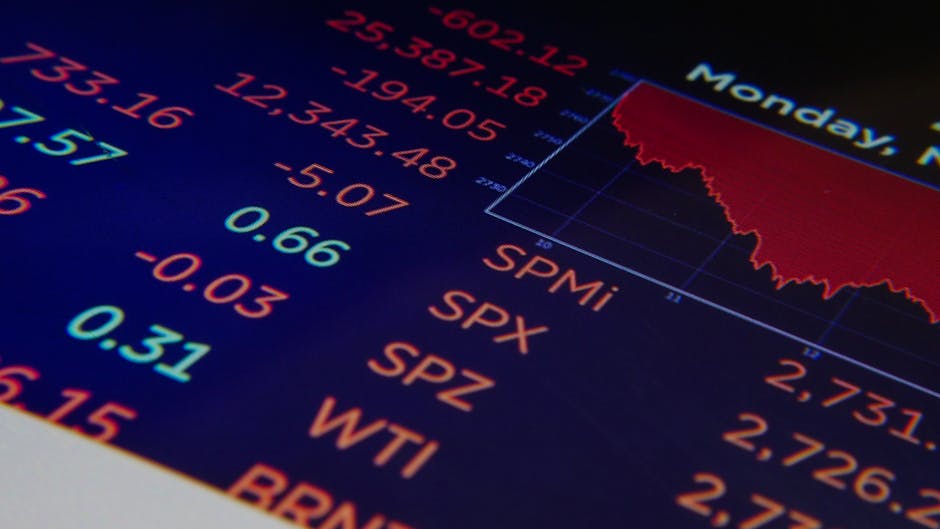
- US stock indices, led by tech giants, have climbed to record highs despite warnings from the bond market and rising geopolitical tensions.
- The S&P 500 recently surpassed 5,100, driven by strong earnings and renewed investor appetite for high-multiple growth stocks.
- The bond market is signaling inflation concerns and expectations of prolonged high interest rates, with the 10-year Treasury yield surging past 4.7%.
- Corporate bond spreads have widened, and junk bond issuance has slowed, indicating credit market stress.
- Markets are ignoring escalating tensions between the United States and Iran, driven by strong earnings and investor sentiment.
In the hushed, glass-walled trading rooms of Lower Manhattan, the glow of Bloomberg terminals casts a cool blue light across anxious faces. Outside, New York pulses with a frenetic energy, but inside, the silence is punctuated only by the occasional murmur of risk managers recalculating exposure. For weeks, Wall Street has danced on the edge of a paradox: stock indices, led by tech giants and speculative growth plays, have climbed to record highs, brushing off warnings from the bond market, inflation data, and the shadow of conflict in the Persian Gulf. Traders sip cold coffee as S&P 500 futures tick upward, yet beneath the surface, a quiet unease festers—what happens when the music stops and the bill for complacency comes due?
Markets Rally Amid Geopolitical and Economic Storms

Despite escalating tensions between the United States and Iran following drone strikes in the Strait of Hormuz, U.S. equity markets have posted a string of record closes. The S&P 500 recently surpassed 5,100, while the Nasdaq Composite climbed above 16,000, driven by strong earnings from AI-related tech firms and renewed investor appetite for high-multiple growth stocks. Yet, these gains stand in stark contrast to signals from the bond market, where the yield on the 10-year Treasury has surged past 4.7%, reflecting inflation concerns and expectations of prolonged high interest rates. Corporate bond spreads have widened, and junk bond issuance has slowed, suggesting credit markets are far less optimistic than their equity counterparts. According to data from Reuters, this divergence—where stocks rise as bonds fall—is one of the most pronounced since the dot-com bubble.
How We Got Here: The Disconnect Between Markets

This rift between equities and fixed income has deep roots in the post-pandemic recovery. When the Federal Reserve slashed rates to near zero in 2020 and unleashed trillions in quantitative easing, risk assets surged, lifting everything from tech stocks to cryptocurrencies. Even as inflation roared back in 2022, the market assumed the Fed would engineer a ‘soft landing.’ By 2023, despite 11 rate hikes, equities rebounded, fueled by artificial intelligence hype and massive buybacks. Meanwhile, long-term bond yields began climbing as investors priced in persistent inflation and growing U.S. fiscal deficits. Today, with the national debt exceeding $34 trillion and defense spending rising due to Middle East instability, bond traders are demanding higher compensation for risk—yet stock investors continue to bet on earnings resilience and future rate cuts. Historically, such divergences often precede market corrections, as seen in 1987 and 2000.
The People Betting on Calm—and Chaos

On one side are institutional investors like BlackRock and Vanguard, which continue to overweight U.S. equities based on long-term growth narratives, particularly in AI and clean energy. Their strategists argue that corporate balance sheets remain strong and that earnings forecasts for 2024 are achievable. On the other side, hedge funds and macro traders, including those at Bridgewater Associates and Paul Tudor Jones’ Tudor Investment Corp, are positioning for a reckoning. Jones recently warned of a potential 20% pullback, citing overvaluation and fragile sentiment. Retail investors, emboldened by platforms like Robinhood and a surge in meme stock activity, are caught in between—buying dips with one hand while nervously watching news of Iran’s uranium enrichment levels with the other. The psychology is split: faith in innovation versus fear of macro collapse.
Consequences of the Market Mismatch

If the bond market is right and equities are overvalued, a correction could ripple across the economy. Over 60% of American households own stocks, either directly or through retirement accounts, meaning a sharp drop could dent consumer confidence and spending. Pension funds, already grappling with long-term liabilities, could face shortfalls. A sell-off could also force the Federal Reserve into a difficult corner: cut rates to stabilize markets and risk reigniting inflation, or hold firm and risk deepening a downturn. Meanwhile, global markets are watching closely. A U.S. equity crash could trigger capital flight from emerging markets and destabilize currencies already strained by high dollar funding costs.
The Bigger Picture
This divergence isn’t just a Wall Street curiosity—it reflects a deeper fracture in how risk is priced in the modern economy. With central banks having spent over a decade suppressing volatility, markets may have grown too accustomed to bailouts and liquidity. The current rally suggests investors believe the Fed will always step in, a moral hazard that could undermine financial discipline. Moreover, the growing influence of passive investing and algorithmic trading may be amplifying momentum, decoupling prices from fundamentals. When assets stop being valued on earnings, cash flow, or risk, but instead on narrative and momentum, the foundation becomes fragile.
What comes next may hinge on a few critical data points: the next CPI report, Fed commentary, and any escalation in the Middle East. If inflation cools and the Fed signals rate cuts, the rally could persist. But if oil spikes above $100 a barrel due to supply disruptions, or if earnings falter in the coming quarters, the disconnect may snap violently. For now, the market marches upward—but with bond yields screaming caution and war drums echoing in the background, even the most bullish investors are glancing over their shoulders.
Source: Financial Times