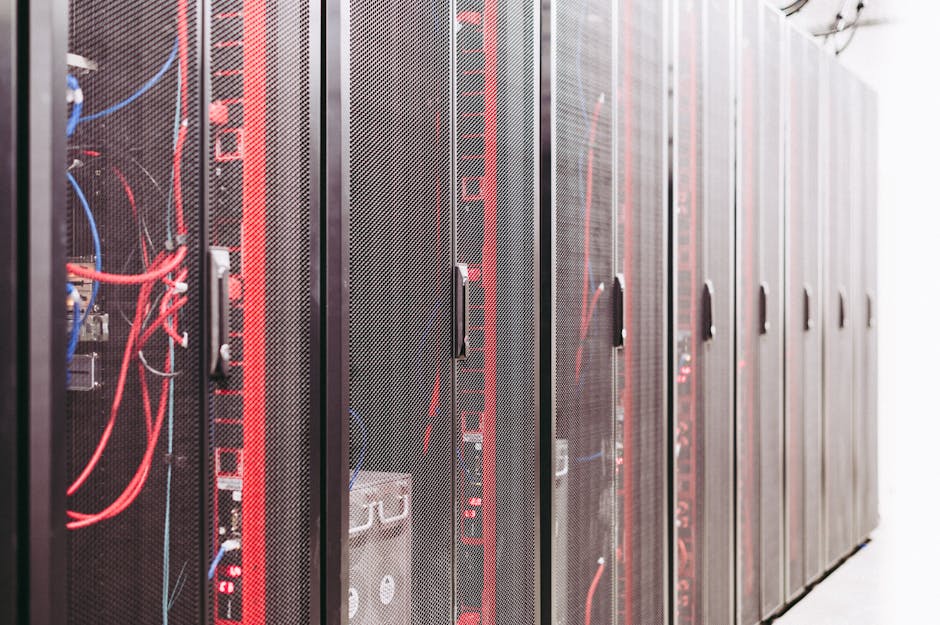
- Google is investing $5 billion to deploy 500MW of data center capacity by 2025, accelerating its AI infrastructure ambitions.
- The expansion positions Google Cloud to better compete with Amazon Web Services and Microsoft Azure in the growing AI cloud market.
- Hyperscalers are partnering with private equity and infrastructure funds to meet surging demand for AI training and inference workloads.
- AI workloads account for nearly 30% of new hyperscale data center deployments, driving demand for specialized infrastructure.
- Google’s 500MW expansion can support approximately 500,000 AI-optimized servers, each consuming 1 kilowatt on average.
Google is accelerating its artificial intelligence infrastructure ambitions through a $5 billion private capital investment backed by Blackstone, aimed at deploying 500 megawatts of new data center capacity by 2025. This strategic expansion positions Google Cloud to better compete with Amazon Web Services and Microsoft Azure in the rapidly growing AI cloud market. The investment reflects broader industry trends where hyperscalers are forging partnerships with private equity and infrastructure funds to meet surging demand for AI training and inference workloads, which require exponentially more computing power and energy than traditional cloud services.
AI Infrastructure Demand Hits New Highs

Data from Synergy Research Group indicates that global hyperscale data center capacity grew by 18% in 2023, with AI workloads accounting for nearly 30% of new deployments. Google’s planned 500MW expansion represents enough power to support approximately 500,000 AI-optimized servers, each consuming 1 kilowatt on average. For context, a single large language model training run can consume over 1,000 megawatt-hours, equivalent to the annual electricity use of 100 homes. According to McKinsey & Company, AI-related cloud spending is projected to reach $190 billion by 2025, up from $60 billion in 2023. The $5 billion committed to Google’s cloud infrastructure, facilitated through Blackstone’s infrastructure arm, will fund land acquisition, power contracts, cooling systems, and next-generation TPUs—Google’s custom AI chips—to meet this demand. This level of investment underscores the capital intensity of modern AI deployment, where infrastructure costs now rival software development in strategic importance.
Key Players Driving the AI Cloud Race

Google, Blackstone, and NVIDIA are emerging as central actors in this new phase of cloud infrastructure development. Google Cloud, under CEO Thomas Kurian, has prioritized AI integration across its enterprise offerings, including Vertex AI and Workspace enhancements. Blackstone, the world’s largest alternative asset manager with over $1 trillion in assets, brings not only capital but expertise in large-scale infrastructure logistics through its Blackstone Infrastructure Partners division. The firm previously invested in data center REITs like QTS Realty Trust, giving it operational insight. Meanwhile, NVIDIA’s H100 and upcoming Blackwell GPUs remain the gold standard for AI training, and Google has increasingly adopted them alongside its own Tensor Processing Units. According to a report by Reuters, the new capacity will be distributed across eight U.S. sites, including existing campuses in Iowa, Nevada, and South Carolina, leveraging Google’s pre-negotiated power agreements and fiber networks.
Trade-Offs in Speed, Cost, and Sustainability

While the $5 billion investment accelerates deployment, it introduces significant trade-offs around energy consumption, environmental impact, and financial risk. Data centers already account for 1-2% of global electricity use, and AI workloads can increase that footprint tenfold per server. Google has committed to running on 24/7 carbon-free energy by 2030, but achieving this with 500MW of additional load will require direct power purchase agreements with renewable providers and advanced grid-matching software. There is also risk in overbuilding: if AI adoption slows or regulatory scrutiny intensifies, idle capacity could erode returns. On the upside, owning infrastructure rather than leasing reduces long-term costs by up to 40%, according to Goldman Sachs research. Moreover, vertical integration of chips, cooling, and power gives Google tighter control over performance and latency, crucial for enterprise AI contracts where uptime and speed are contractual obligations.
Why the Timing Is Critical

The move comes at a pivotal moment when AI adoption is transitioning from experimentation to operational deployment across finance, healthcare, and government. Enterprises are demanding dedicated, secure, and high-performance environments, pushing cloud providers to guarantee capacity and compliance. Regulatory shifts, including the EU’s AI Act and U.S. executive orders on AI safety, are also driving onshore infrastructure investments to meet data sovereignty requirements. Google’s partnership with Blackstone allows it to scale rapidly without diluting its balance sheet, leveraging private capital’s appetite for stable, long-term infrastructure yields. This model mirrors Amazon’s recent joint ventures with Brookfield and Microsoft’s equity raises for AI infrastructure, signaling a structural shift in how tech giants fund growth.
Where We Go From Here
In the next 12 months, three scenarios could unfold. First, a competitive escalation: AWS and Azure may announce similar private capital partnerships, triggering a new phase of infrastructure arms racing. Second, regulatory pushback could emerge as local governments scrutinize data center water use, power demands, and tax incentives. Third, consolidation may occur, with smaller cloud providers unable to match the capital outlays being forced into niche roles or acquisition. Google’s ability to integrate its TPU v5 chips into this new capacity will be a key differentiator. The company must also demonstrate progress on carbon-free matching to maintain its ESG credibility. How these factors align will determine whether this expansion becomes a strategic moat or a capital trap.
Bottom line — Google’s $5 billion AI infrastructure play with Blackstone is a high-stakes bet on long-term cloud dominance, blending technological ambition with financial engineering in an era where data centers are the new factories of artificial intelligence.
Source: Financial Times