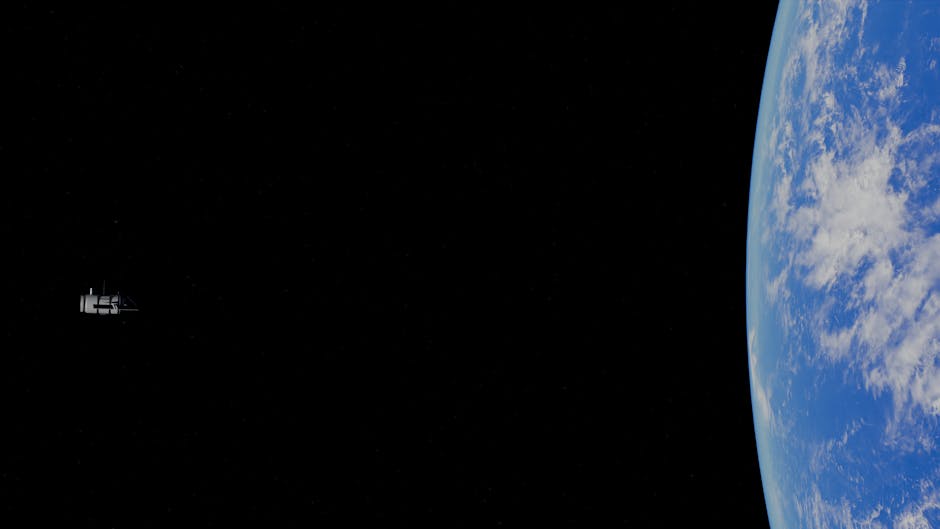
- Asteroid 2024 JW1 passed within 18,000 miles of Earth, underscoring the planet’s vulnerability to cosmic threats.
- The asteroid was detected just five days before its close approach, raising concerns about the limitations of near-Earth object monitoring.
- 2024 JW1 was traveling at approximately 47,000 miles per hour, making it a potentially devastating impactor.
- The asteroid’s late discovery highlights the blind spots in Earth’s planetary defense network, particularly for small but dangerous asteroids.
- NASA tracks over 35,000 near-Earth objects, but many smaller asteroids like 2024 JW1 remain undetected until they are close.
In a startling reminder of Earth’s cosmic vulnerability, asteroid 2024 JW1 passed within 18,000 miles (29,000 kilometers) of our planet on May 6, 2024—less than one-tenth the average distance to the Moon—just five days after its initial detection. Traveling at approximately 47,000 miles per hour, the 30-foot-wide object went unnoticed until May 1, when the NASA-funded ATLAS (Asteroid Terrestrial-impact Last Alert System) telescope in Hawaii first captured its trajectory. Had it entered the atmosphere, 2024 JW1 would likely have exploded with the force of 150 kilotons of TNT—more than ten times the energy of the Hiroshima bomb—potentially causing regional devastation if it detonated over a populated area. Its late discovery reignites concerns among planetary scientists about the limitations of current near-Earth object (NEO) monitoring infrastructure, particularly for small but dangerous asteroids.
Why This Flyby Raises Alarm

While asteroid impacts are rare, the proximity and delayed detection of 2024 JW1 crystallize long-standing concerns about blind spots in Earth’s planetary defense network. NASA’s Planetary Defense Coordination Office tracks over 35,000 near-Earth objects, yet the majority of smaller asteroids like 2024 JW1 remain undetected until they are dangerously close. These objects are often too dim to be seen until they reflect enough sunlight, typically when already approaching from the sunward side—making them invisible to ground-based telescopes. The fact that an object capable of unleashing multi-kiloton energy went undetected until days before flyby demonstrates that current early-warning systems are still reactive rather than predictive. Experts warn that while larger, civilization-threatening asteroids (over one kilometer) are now 95% cataloged, the vast population of sub-100-meter objects remains largely uncharted, posing a persistent and underestimated risk.
Tracking the Path of 2024 JW1

Asteroid 2024 JW1 was first observed by the ATLAS telescope system, operated by the University of Hawaii and funded by NASA’s Near-Earth Object Observations Program. Initial calculations from the Minor Planet Center confirmed its trajectory would bring it within 0.00012 astronomical units of Earth—closer than many geostationary satellites. The object, classified as an Apollo-type asteroid (a group that crosses Earth’s orbit), originated from the inner asteroid belt and exhibited a highly elliptical path around the Sun. Despite its size, 2024 JW1 posed no impact threat this time; its closest approach occurred over the Indian Ocean, posing no danger to satellites or ground infrastructure. Still, its velocity and trajectory exemplify the kind of short-notice flyby that could challenge emergency response systems if a similar object were on a collision course.
Systemic Gaps in Asteroid Detection

The delayed detection of 2024 JW1 underscores systemic limitations in global NEO surveillance. Ground-based optical telescopes like ATLAS and Pan-STARRS are effective but constrained by weather, daylight, and observational blind spots near the Sun. According to a 2023 report by the National Academies of Sciences, Engineering, and Medicine, up to 60% of potentially hazardous asteroids under 140 meters in diameter remain undetected. Space-based infrared observatories, such as the upcoming NEO Surveyor mission, are expected to mitigate this by detecting asteroids based on heat signatures rather than reflected light, enabling earlier identification—even when objects approach from the sunward direction. However, NEO Surveyor, originally slated for 2025, now faces delays due to budget constraints and technical challenges, leaving a critical gap in coverage.
Global Implications of Late Detection

A late-detection scenario involving a larger asteroid could leave governments with insufficient time to respond—whether through evacuation, infrastructure protection, or deflection missions. While international protocols exist under the United Nations’ Space Mission Planning Advisory Group (SMPAG), coordination remains theoretical without real-time data sharing and pre-authorized response frameworks. Moreover, public communication would be a major challenge: a sudden asteroid warning could trigger panic if not managed transparently. The 2013 Chelyabinsk meteor, which exploded over Russia with 440 kilotons of energy and injured over 1,500 people, was also undetected until entry—demonstrating the real-world consequences of surveillance gaps. 2024 JW1, though non-threatening, serves as a timely stress test for planetary defense readiness.
Expert Perspectives
“We’re improving, but we’re still flying blind to a significant fraction of the near-Earth population,” says Dr. Amy Mainzer, principal investigator for the NEO Surveyor mission. She emphasizes that infrared space telescopes are essential for detecting dark, fast-moving asteroids that evade optical systems. In contrast, some astronomers caution against overreaction, noting that impacts from objects like 2024 JW1 occur roughly every few decades and are typically confined to remote areas. Still, the consensus is clear: early detection is the only reliable mitigation strategy. As Dr. Scott Manley, a computational astronomer, notes, “It’s not a matter of if, but when, we’ll need to act on short notice. Our best defense is seeing them coming.”
Looking ahead, the success of missions like NASA’s DART mission, which demonstrated asteroid deflection in 2022, offers hope for future intervention. However, deflection requires years of lead time. The key challenge now is ensuring that detection systems keep pace with orbital threats. With NEO Surveyor expected no earlier than 2027, and increasing satellite congestion in low Earth orbit, the window for improving global preparedness is narrowing. The flyby of 2024 JW1 may not have made global headlines, but for planetary defense experts, it was a silent wake-up call.
Source: Cnn