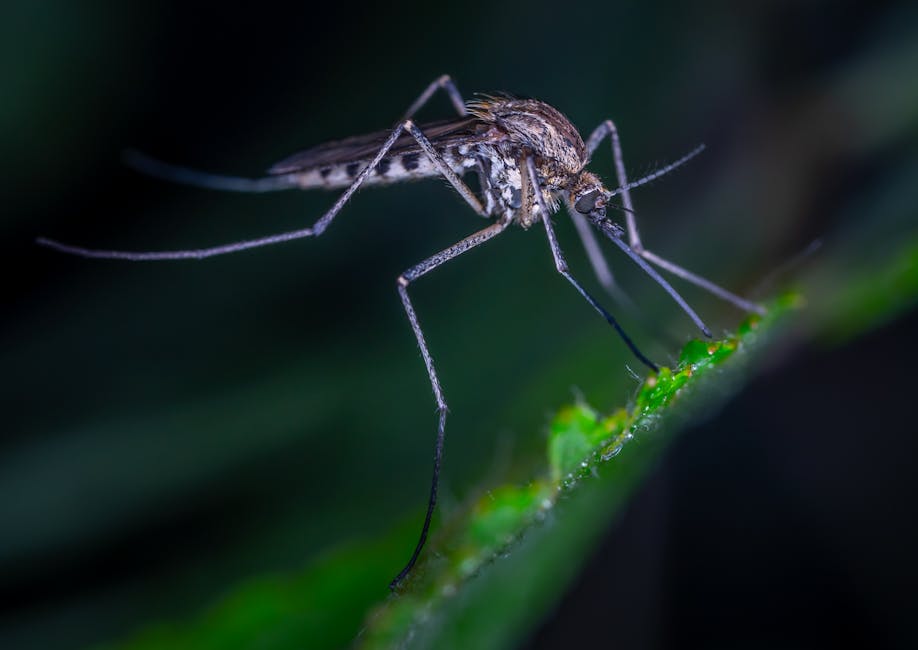
- Rising temperatures in Canada are reshaping ecosystems, allowing disease-carrying vectors to thrive in previously inhospitable areas.
- Black-legged ticks and Aedes mosquitoes are expanding their populations hundreds of kilometers northward, bringing Lyme disease and West Nile virus with them.
- Climate change is driving an increase in vector-borne diseases in Canada, with warmer winters and longer summers extending the active season for ticks and mosquitoes.
- Ticks and mosquitoes are reproducing more frequently, leading to a higher incidence of diseases such as Lyme disease and West Nile virus.
- This public health crisis is unfolding in real time, with new cases of Lyme disease being reported in areas previously thought to be too cold for the ticks.
On a quiet trail just north of Ottawa, a hiker brushes through tall grass, unaware of the tiny threat clinging to her sock. Weeks later, she develops a fever, joint pain, and a bullseye-shaped rash—a telltale sign of Lyme disease. Just a decade ago, such cases were rare in this region. Now, they are becoming alarmingly common. Across Canada, rising temperatures are reshaping ecosystems in subtle but profound ways, quietly enabling disease-carrying vectors like black-legged ticks and Aedes mosquitoes to thrive in areas once too cold for their survival. Once confined to southern border zones, these arthropods are now establishing populations hundreds of kilometers northward, bringing with them pathogens such as Borrelia burgdorferi and West Nile virus. This slow-moving public health crisis, driven by climate change, is no longer a distant possibility—it is unfolding in real time, one tick bite at a time.
Expanding Range of Disease-Carrying Vectors

According to a recent commentary published in the Canadian Medical Association Journal (CMAJ), climate change is a key driver behind the increasing incidence of vector-borne diseases in Canada. Warmer winters, earlier springs, and longer summers are extending the active season for ticks and mosquitoes, allowing them to reproduce more frequently and survive in regions previously inhospitable to them. Black-legged ticks, the primary vector for Lyme disease, have been detected in new areas across Ontario, Quebec, Manitoba, and British Columbia. Public health data shows a staggering increase in reported Lyme disease cases—from fewer than 150 in 2009 to over 3,000 in 2022. Similarly, West Nile virus, transmitted by Culex mosquitoes, has seen re-emergence in regions like Saskatchewan and Alberta, where sustained warming has created favorable breeding conditions. These shifts are not isolated incidents but part of a broader ecological transformation with significant implications for human health.
How Climate Change Reshaped Canada’s Disease Landscape

The roots of this emerging crisis lie in decades of gradual warming. Since 1948, Canada has warmed at nearly twice the global average rate, with some northern regions experiencing increases of over 2.3°C. This warming has disrupted seasonal patterns critical to vector life cycles. Ticks, which rely on consistent temperatures above freezing to quest for hosts, now survive winters that once killed them off. Mosquitoes, whose larval development accelerates in warmer water, are completing more generations per season. A 2021 study by Nature Climate Change projected that by 2050, over 70% of Canada’s population could live in areas suitable for Lyme disease transmission. These changes mirror global trends; the World Health Organization (WHO) has identified climate change as one of the greatest threats to global health in the 21st century, with vector-borne diseases at the forefront.
The Scientists and Health Officials Sounding the Alarm

The CMAJ commentary was co-authored by a team of epidemiologists and climate health experts from the Public Health Agency of Canada and several academic institutions, including the University of Alberta and McGill University. Their motivation stems from growing evidence that public health infrastructure is underprepared for the scale of change. Dr. Janie Rosolen, a lead author, emphasized that while surveillance systems have improved, they remain fragmented across provinces, limiting national coordination. Meanwhile, frontline clinicians in rural and northern communities often lack training to recognize early symptoms of emerging diseases. The authors argue for a unified national strategy that integrates climate modeling with disease forecasting, drawing inspiration from systems used in Europe and the United States. Their goal is not just to track disease but to anticipate and mitigate outbreaks before they occur.
Impacts on Communities and Healthcare Systems

The expansion of vector-borne diseases poses disproportionate risks to rural, Indigenous, and northern communities, where access to healthcare is already limited. In some First Nations communities in Manitoba and Ontario, residents report finding ticks on pets and livestock for the first time. These populations often rely on outdoor activities for subsistence and cultural practices, increasing exposure risk. Healthcare providers face challenges in diagnosis, as symptoms of Lyme disease can mimic other conditions like chronic fatigue or fibromyalgia. Misdiagnosis delays treatment and can lead to long-term complications. Moreover, the financial burden on the healthcare system is expected to grow, with increased demand for testing, specialist referrals, and long-term care for patients with persistent symptoms. Without proactive measures, the cost—both human and economic—could escalate rapidly.
The Bigger Picture
This shift in disease dynamics is not merely a Canadian issue—it reflects a global pattern of climate-driven health threats. From dengue fever spreading into southern Europe to malaria reappearing in highland regions of Africa, warming temperatures are redrawing the map of infectious disease. In Canada, the implications extend beyond public health to policy, urban planning, and intergovernmental cooperation. Addressing this challenge requires more than medical intervention; it demands a rethinking of how climate resilience is integrated into health systems. The CMAJ commentary serves as a wake-up call: climate change is not a distant environmental concern but a present and growing threat to human health.
What comes next will depend on how swiftly Canada adapts. Enhanced surveillance, public education campaigns, and climate-informed health planning are essential. Research into tick and mosquito control, including biocontrol methods and predictive modeling, must be prioritized. As temperatures continue to rise, the window for proactive action narrows. The story of a single tick on a hiker’s sock is no longer just an anecdote—it is a symbol of a changing nation, where the frontlines of public health are shifting with the seasons.
Source: MedicalXpress