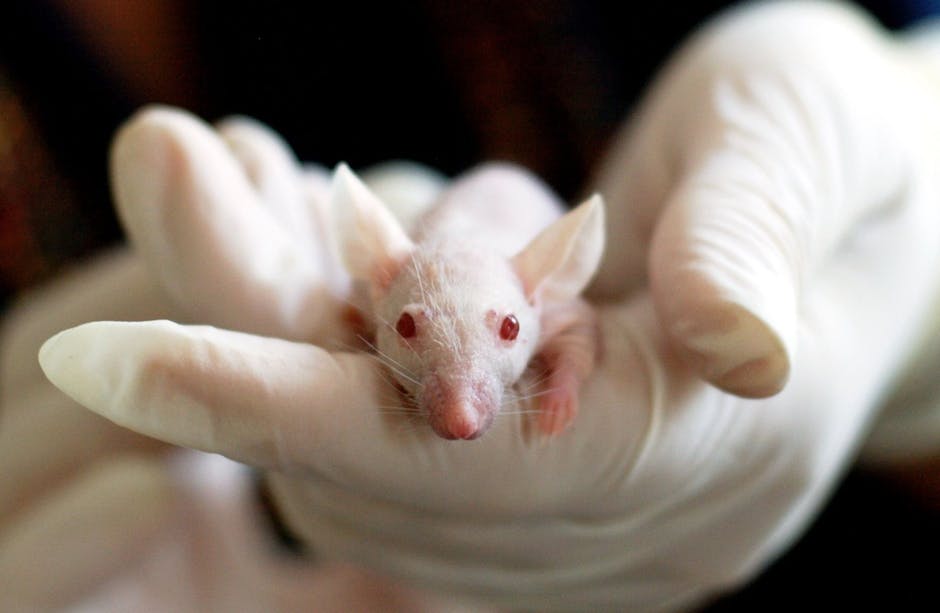
- Researchers have created a mouse model that accurately reproduces a rare genetic disorder called geleophysic dysplasia.
- The mouse model exhibits the core clinical features of the disease, including stunted growth, heart valve disease, and premature death.
- The new model offers an unprecedented opportunity to understand the underlying biology of geleophysic dysplasia and test potential therapies.
- Geleophysic dysplasia is a devastating condition affecting only a handful of people worldwide due to its rarity and complexity.
- The mouse model was engineered by introducing a specific mutation in the ADAMTSL2 gene known to cause the disease in humans.
What if a tiny mouse could hold the key to understanding a rare, fatal genetic disorder in humans? That’s the question driving new research into geleophysic dysplasia, a devastating condition marked by stunted growth, progressive heart valve disease, and early mortality. Affecting only a handful of people worldwide, the disease has remained poorly understood due to its rarity and complexity. But now, researchers have engineered a mouse model that faithfully reproduces the most severe aspects of the disease — including early lethality and cardiac abnormalities — offering an unprecedented opportunity to probe its underlying biology and test potential therapies.
Can Animal Models Accurately Reflect Rare Human Genetic Diseases?

Yes, and this new mouse model of severe geleophysic dysplasia demonstrates precisely that. By introducing a specific mutation in the ADAMTSL2 gene — known to cause the disease in humans — scientists have created mice that exhibit the core clinical features: profound short stature, thickened heart valves, skeletal abnormalities, and premature death. Geleophysic dysplasia is part of a broader group of disorders called acromelic dysplasias, all linked to disruptions in the extracellular matrix, particularly involving proteins that regulate transforming growth factor-beta (TGF-β) signaling. The mouse model, described in The American Journal of Pathology, not only mirrors the human phenotype but also confirms that dysregulated TGF-β activity is central to disease progression, making it a credible platform for future intervention studies.
What Evidence Supports the Model’s Accuracy and Utility?

Multiple lines of evidence confirm the model’s fidelity to human disease. Histological analysis revealed progressive thickening of the atrioventricular valves — a hallmark of geleophysic dysplasia — due to excessive deposition of glycosaminoglycans and collagen, mirroring findings in patient autopsies. The mice also showed reduced long bone growth, craniofacial abnormalities, and shortened lifespan, typically dying within three to four weeks. Molecular profiling detected elevated TGF-β signaling in cardiac and connective tissues, consistent with prior studies linking ADAMTSL2 mutations to unchecked pathway activation. According to the study authors, “The pathological and molecular features observed in these mice closely recapitulate the human condition,” providing a robust system for testing anti-fibrotic or TGF-β-inhibiting drugs. This level of phenotypic and mechanistic alignment is rare in models of ultra-rare diseases, making it a significant advancement in the field.
Are There Limitations or Skeptical Views on the Model’s Applicability?

While promising, some researchers urge caution in extrapolating findings directly to humans. Geleophysic dysplasia patients often exhibit additional symptoms not fully captured in the mouse model, such as respiratory complications and skin thickening, suggesting species-specific differences in disease expression. Moreover, the mouse lifespan is compressed, potentially accelerating pathology in ways that don’t reflect the slower progression seen in children. There is also debate over whether targeting TGF-β alone will be sufficient, given the complex interplay of extracellular matrix proteins like fibrillin-1 and latent TGF-β binding proteins. Some experts argue that while the model is invaluable for proof-of-concept studies, therapies developed in mice may need significant adaptation before human trials. As one geneticist noted, “Rare disease models are essential, but they are tools — not perfect replicas.”
What Real-World Impact Could This Model Have on Patients?

For families affected by geleophysic dysplasia, this model offers tangible hope. Currently, treatment is purely supportive — managing heart failure, performing valve surgeries, and addressing respiratory issues — with no disease-modifying therapies available. The mouse model enables preclinical testing of drugs that could slow or halt disease progression. For example, existing TGF-β inhibitors used in other fibrotic conditions could be repurposed and evaluated in this system. Additionally, the model may help identify early biomarkers of disease, allowing for earlier diagnosis and intervention. Beyond geleophysic dysplasia, insights gained could apply to related disorders like Weill-Marchesani syndrome or acromicric dysplasia, which share overlapping genetic pathways. This ripple effect underscores the broader value of rare disease research in advancing precision medicine.
What This Means For You
Even if you’ve never heard of geleophysic dysplasia, this research exemplifies how studying rare diseases can yield insights with wide-reaching implications. The development of accurate animal models accelerates the path from genetic discovery to potential treatment, not just for one condition but for entire families of related disorders. For patients and families living with ultra-rare diagnoses, such models represent more than scientific curiosity — they are beacons of progress in a landscape often defined by uncertainty and limited options.
Now that scientists have a working model of severe geleophysic dysplasia, the critical next question becomes: which therapeutic strategies will most effectively modulate TGF-β signaling without disrupting its essential physiological roles? Answering this could determine whether treatment moves from symptom management to true disease modification.
Source: MedicalXpress