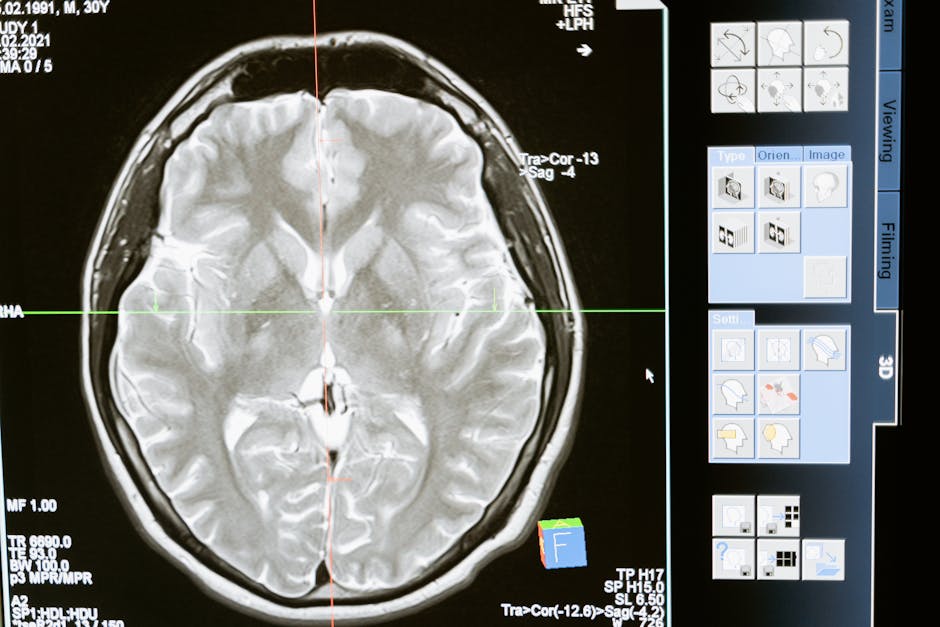
- AI model predicts Alzheimer’s 6 years in advance using a single MRI scan, without relying on neuropsychological testing.
- The AI model identifies pre-symptomatic patterns in brain structure that correlate with future disease progression.
- This approach eliminates the need for repeated cognitive evaluations, enabling faster and more scalable early diagnosis.
- The AI model achieved 84% accuracy in predicting cognitive decline over a 6-year follow-up period in a study published in Nature Medicine.
- This AI model is a significant step towards enabling timely therapeutic interventions when they are most effective.
Artificial intelligence is revolutionizing the early prediction of Alzheimer’s disease by analyzing a single baseline MRI scan to forecast cognitive decline years in advance—without relying on neuropsychological testing. Developed by researchers at UC San Francisco and MIT, the AI model identifies subtle, pre-symptomatic patterns in brain structure that correlate with future disease progression. By eliminating the need for repeated cognitive evaluations, this approach offers a faster, scalable path to early diagnosis, potentially enabling timely therapeutic interventions when they are most effective.
AI Trained on Structural MRI Detects Early Neurodegeneration

A 2023 study published in Nature Medicine demonstrated that a deep learning algorithm, trained on over 1,500 baseline structural MRI scans from the Alzheimer’s Disease Neuroimaging Initiative (ADNI) dataset, could predict the rate of cognitive decline with 84% accuracy over a six-year follow-up period. The model focused on gray matter density, hippocampal atrophy, and cortical thinning—biomarkers long associated with Alzheimer’s pathology. Notably, it achieved this without incorporating amyloid-beta or tau biomarkers, which are typically detected via PET scans or cerebrospinal fluid analysis. When tested on an independent cohort from the Framingham Heart Study, the AI maintained a 79% predictive accuracy, underscoring its generalizability across diverse populations. These results suggest that structural MRI alone, when interpreted through AI, contains sufficient information to model disease trajectory long before clinical symptoms dominate.
Key Players Advancing AI-Driven Neurodegeneration Forecasting

The breakthrough emerged from a collaboration between neurologists at UC San Francisco and machine learning experts at MIT’s Computer Science and Artificial Intelligence Laboratory (CSAIL). Dr. Michael Yassa, a cognitive neuroscientist and senior author of the study, emphasized that traditional diagnostic workflows require months of cognitive testing and costly imaging follow-ups, creating bottlenecks in early detection. The AI, named “AlzNet,” was designed to extract maximal prognostic value from a single scan, reducing both time and resource burden. Meanwhile, companies like Biogen and Roche are monitoring such developments closely, as accurate early prediction could enhance patient selection for clinical trials of disease-modifying therapies like lecanemab. Regulatory bodies, including the FDA, have expressed interest in AI tools that improve diagnostic precision, particularly as new treatments become available.
Trade-offs: Accuracy, Accessibility, and Ethical Implications

While the AI model offers transformative potential, it presents significant trade-offs. On the benefit side, eliminating repeated cognitive testing reduces costs and increases accessibility, particularly in low-resource settings where neuropsychologists are scarce. MRI machines, though not universally available, are more widespread than PET scanners or lumbar puncture facilities. However, concerns remain about overdiagnosis and psychological harm from predicting a disease with no definitive cure. False positives could lead to unnecessary anxiety, insurance discrimination, or premature life changes. Additionally, the model was primarily trained on data from white, educated participants in North America, raising concerns about bias in global populations. Ensuring equitable performance across racial, socioeconomic, and geographic groups will be critical before clinical deployment.
Why Now: Convergence of Data, Algorithms, and Clinical Need

This advance arrives at a pivotal moment when three factors converge: the availability of large, longitudinal neuroimaging datasets like ADNI, improvements in deep learning architectures capable of detecting subtle spatial patterns, and the recent FDA approval of anti-amyloid therapies that work best in early disease stages. For decades, Alzheimer’s prediction relied on composite clinical assessments that were slow and subjective. The rise of explainable AI—models that highlight which brain regions drive predictions—has increased clinician trust. Moreover, public health urgency is growing: the World Health Organization estimates that over 55 million people live with dementia globally, a number expected to double every 20 years. With healthcare systems straining under dementia’s burden, tools that enable earlier, more efficient diagnosis are no longer optional but essential.
Where We Go From Here
In the next 6 to 12 months, three scenarios could unfold. First, the AI model may be integrated into multicenter clinical trials to stratify patients by predicted decline rate, improving trial efficiency. Second, regulatory agencies could begin reviewing such tools under the SaMD (Software as a Medical Device) framework, paving the way for limited clinical use. Third, if validated in more diverse populations, the technology might be piloted in memory clinics to triage high-risk patients for further testing. Each path depends on rigorous external validation and ethical oversight. Commercialization efforts are likely to accelerate, but equitable access must be prioritized to avoid deepening global disparities in dementia care.
Bottom line — an AI system that predicts Alzheimer’s progression from a single MRI scan marks a paradigm shift in neurodegenerative disease forecasting, offering unprecedented opportunities for early intervention while demanding careful ethical and clinical stewardship.
Source: MedicalXpress