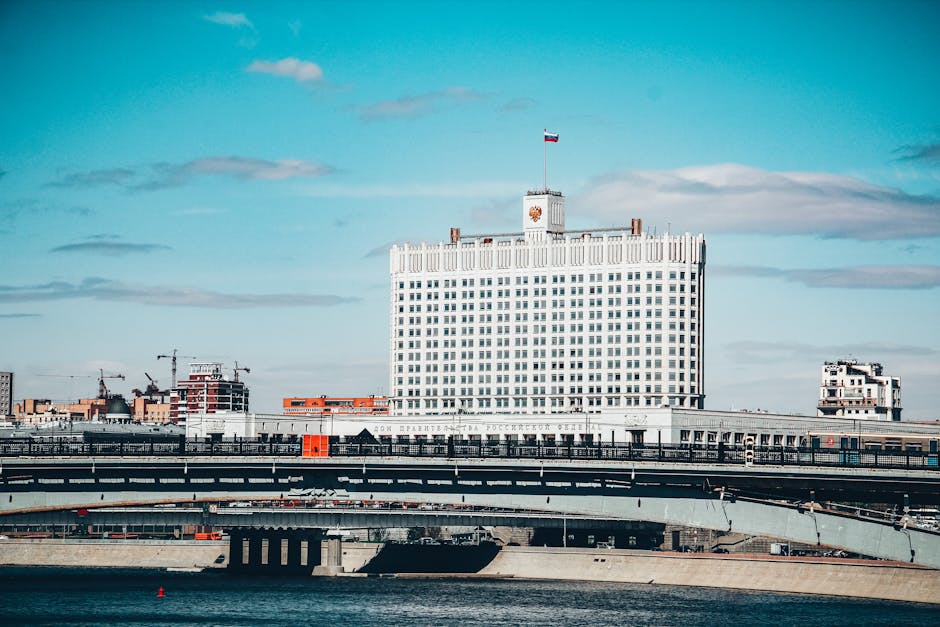
- Russia’s elite are increasingly discussing a post-Putin future due to eroding confidence in his rule.
- A quiet exodus of influential figures from Russia has been reported, fleeing asset seizures and political purges.
- Economic sanctions and military losses are straining the Russian system, leading to doubts among loyalists.
- Russia’s talent pool is shrinking due to emigration, exacerbating the country’s problems.
- A future without Putin is no longer unthinkable, with some even imagining a scenario where he’s no longer in power.
Can Russia survive without Vladimir Putin at the helm? Once unthinkable, this question is now being openly discussed among former officials and members of the country’s elite. A recent admission by a high-ranking ex-official—that the Russian establishment can now “imagine a future without him”—has sent shockwaves through geopolitical circles. As the war in Ukraine drags into its third year, reports indicate a quiet but significant exodus of influential figures from Russia, many fleeing sudden asset seizures and political purges. This internal unraveling suggests that even within the tightly controlled corridors of power, confidence in Putin’s enduring rule is eroding.
A Post-Putin Russia: Is the Idea Gaining Ground?

The notion that Russia could function without Vladimir Putin was long dismissed as fantasy, especially after two decades of centralized authority and state propaganda. But in a striking interview with BBC News, a former senior Russian official—speaking anonymously for safety—revealed that private conversations among former elites increasingly focus on life after Putin. The source stated that while public loyalty remains enforced, behind closed doors, many now believe the system is overstretched and unsustainable. With economic sanctions biting, military losses mounting, and a shrinking talent pool due to emigration, even loyalists are questioning the longevity of Putin’s rule. The admission underscores a quiet ideological shift: the cult of personality may still dominate state media, but pragmatic calculations are replacing blind allegiance among the elite.
Elite Exodus and Asset Seizures: Evidence of Internal Fractures

Recent data from the Center for Eastern Studies in Warsaw estimates that over 20% of Russia’s pre-2022 business and political elite have left the country since the invasion of Ukraine. Many cite fear of sudden prosecution, conscription of family members, or arbitrary asset seizures as primary motivators. In 2023 alone, the Russian government reportedly seized more than 800 private properties and corporate holdings under vaguely defined “national security” laws. One high-profile case involved Sergei Kulikov, a former deputy minister, whose Moscow estate and offshore accounts were frozen after he criticized mobilization policies in a private Telegram group. Such actions, analysts say, are less about rooting out dissent and more about consolidating control under a shrinking inner circle. As Reuters reported, these purges are creating a climate of fear that’s accelerating the brain drain, weakening long-term governance.
Skepticism Remains: Is the Resistance Overstated?

Despite these signs, some experts caution against reading too much into elite discontent. Russia has a long history of internal power struggles that rarely translate into systemic change. Dr. Elena Rostova, a political scientist at the European University at St. Petersburg (now based in Berlin), argues that most departing elites are not ideologically opposed to Putin but are instead risk-averse pragmatists seeking personal safety. “Their departure doesn’t mean they want regime change—they just don’t want to be collateral damage,” she said in a recent panel. Moreover, the state’s grip on media, security forces, and the judiciary remains firm. Even if private conversations have shifted, public opposition remains dangerous and marginal. The absence of organized political alternatives also limits any real threat to Putin’s hold on power, suggesting that what looks like dissent may simply be survival instinct.
Real-World Impact: How Elite Flight Weakens Russia’s Future

The departure of skilled administrators, economists, and technocrats is already having tangible effects. Regions once managed by experienced officials are now overseen by political appointees with limited expertise, leading to inefficiencies in infrastructure, healthcare, and education. The tech sector, once buoyed by private investment and global connections, has shrunk by nearly 40% since 2022, according to Rosstat data. Startups have fled to Armenia, Georgia, and Turkey, taking capital and innovation with them. Meanwhile, the seizure of private assets has chilled domestic investment, as even loyal businessmen hesitate to expand. This erosion of institutional memory and economic vitality could haunt Russia for decades, regardless of who eventually leads the country. A hollowed-out state, reliant on coercion rather than competence, may struggle to adapt in a post-war or post-Putin landscape.
What This Means For You
For global observers, the quiet unraveling of Russia’s elite signals that authoritarian systems, no matter how tightly controlled, are vulnerable to internal decay. While Putin remains in power, the foundations of his regime are showing stress. This matters beyond Russia’s borders: a destabilized leadership could lead to more unpredictable foreign policy, including escalations in Ukraine or elsewhere. For citizens in democratic nations, it’s a reminder that political resilience depends not just on opposition, but on the integrity of institutions and the freedom of elites to dissent without fear. The fraying of loyalty at the top may not bring immediate change, but it lays the groundwork for future shifts.
Yet one question remains unanswered: if and when Putin does leave power, who—or what—will rise in his place? With no clear successor and a suppressed civil society, the path forward is uncertain. Could reform emerge from within the security apparatus? Or will the vacuum invite further authoritarianism? The silence from within Russia’s inner circle on these questions may be the most telling sign of all.
Source: Fortune