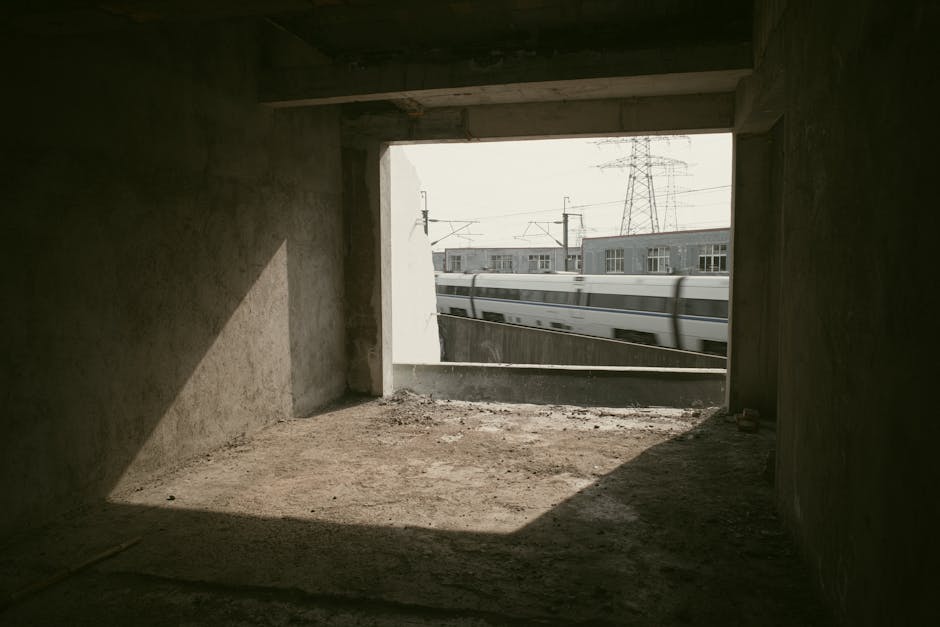
- The HS2 rail project’s design flaws and cost escalation have led to systemic mismanagement.
- Prioritizing high-speed performance over practical integration has undermined HS2’s credibility and delivery.
- HS2’s unit costs are triple the European average for high-speed rail, driven by extensive tunneling and land acquisition.
- Total projected expenditures for HS2 have ballooned to £107 billion, up from £32.7 billion in 2010.
- Full service on the 140-mile Phase One is now delayed until at least 2033 due to ongoing technical issues.
Executive summary — the High Speed 2 (HS2) rail project’s persistent failures stem from foundational design flaws, political reversals, and unchecked cost escalation. Originally envisioned as a transformative infrastructure program to rebalance regional economic disparities, HS2 has instead become emblematic of systemic mismanagement in major public projects. A newly released independent review confirms that prioritizing high-speed performance over practical integration and adapting to political whims undermined both credibility and delivery.
Technical Design and Cost Escalation

The 2023 government-commissioned Oakervee Review, updated with fresh audit data from the National Audit Office, identifies HS2’s core technical specifications as a primary driver of cost inflation. Designing trains to operate at 225 mph (362 km/h) necessitated extensive tunneling, viaducts, and land acquisition, pushing unit costs to £230 million per kilometer—triple the European average for high-speed rail. By 2024, total projected expenditures had ballooned to £107 billion, up from an initial £32.7 billion in 2010. Route modifications, including the cancellation of the eastern leg to Leeds and truncation to Handsacre in Staffordshire, have further fragmented the network’s utility. According to the House of Commons Transport Committee, just 18 miles of the 140-mile Phase One are fully operational, with full service now delayed until at least 2033. These technical ambitions, while impressive on paper, failed to account for topographical constraints, urban integration challenges, and lifecycle maintenance burdens.
Key Political and Institutional Actors

HS2’s trajectory has been shaped by a revolving door of political leadership and institutional fragmentation. Successive governments—Conservative, coalition, and caretaker—altered the project’s scope to align with shifting fiscal and electoral priorities. In 2021, then-Prime Minister Boris Johnson paused construction north of Birmingham, citing value-for-money concerns, only to later reframe the project under the “Levelling Up” agenda. Transport for the North and Network Rail have struggled to coordinate with HS2 Ltd, the state-owned delivery body, resulting in duplicated planning and inconsistent stakeholder engagement. Meanwhile, local councils in the Midlands and North voiced frustration over broken promises of regeneration and connectivity. The Department for Transport, while retaining final authority, has been criticized for reactive rather than strategic oversight. This lack of sustained cross-party consensus has eroded investor confidence and complicated long-term financing through public-private partnerships.
Trade-Offs Between Speed, Cost, and Regional Equity

The pursuit of high-speed rail performance has come at the expense of broader transport integration and regional inclusivity. By focusing on a standalone high-speed line rather than upgrading existing corridors, HS2 has failed to deliver immediate benefits to underserved communities. The decision to bypass key cities like Sheffield and Nottingham in favor of direct London-Birmingham connectivity reinforces south-centric economic flows. Furthermore, environmental trade-offs are mounting: the project is expected to generate 5.8 million tonnes of CO₂ during construction, offsetting early carbon reduction claims. On the other hand, proponents argue that HS2 could still free up capacity on the West Coast Main Line, enabling more freight and regional services. The projected removal of up to 300,000 car journeys annually between London and the Midlands represents a modest sustainability upside. Yet these benefits remain theoretical without full network completion.
Why the Crisis Is Peaking Now

The current reckoning around HS2 reflects a convergence of fiscal tightening, public scrutiny, and shifting transport priorities. With UK national debt exceeding 100% of GDP in 2024, major infrastructure projects face unprecedented cost-benefit scrutiny. The 2023 cancellation of the HS2-Eastern Leg and the redirection of £36 billion to “alternative regional transport schemes” marked a strategic retreat from centralized rail investment. Simultaneously, advances in digital infrastructure and remote work have diminished the urgency of physical connectivity. Public opinion, once cautiously supportive, has turned skeptical: a 2024 BBC-commissioned poll found 54% of respondents believed HS2 was a waste of money. These factors have collectively forced a re-evaluation of whether high-speed rail remains a viable national priority.
Where We Go From Here
Three scenarios now dominate HS2’s future trajectory. First, a “minimal completion” path sees only Phase One to Birmingham advanced, with funds diverted to local transport upgrades—a politically expedient but infrastructure-fragmenting outcome. Second, a “revived integration” model proposes repurposing HS2 assets into a hybrid high-speed and regional network, potentially extending to Manchester and Leeds via upgraded conventional lines, as recommended by the National Audit Office. Third, a “full cancellation and repurposing” scenario, while legally and contractually complex, would terminate HS2 and reinvest savings into decarbonizing existing rail, urban transit, and active travel networks. Each path carries fiscal, political, and social consequences, with the chosen route likely to define UK transport policy for decades.
Bottom line — HS2’s collapse under the weight of its own ambitions and political interference serves as a cautionary tale for megaproject governance: technical excellence without institutional stability and public legitimacy is unsustainable.
Source: BBC