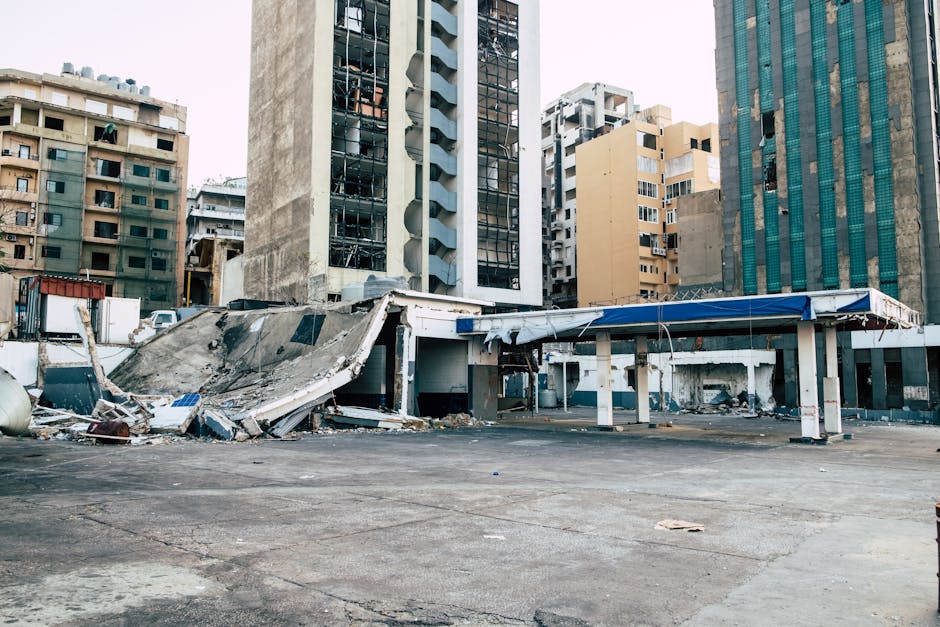
- A massive explosion rocked Jerusalem, visible across the West Bank and central Israel, sparking fears of a missile strike or terrorist attack.
- The blast occurred at Israel’s historic state-owned defense manufacturing complex, Ta’as, located near the capital.
- Emergency services were scrambled, with residents reporting tremors and a deafening boom, while officials initially feared an external attack.
- The incident triggered nationwide anxiety amid heightened tensions in the region, with the Israeli military activating air defenses.
- Officials eventually ruled out an external attack, suggesting an industrial accident at the classified site.
A blinding fireball erupted in the skies above Jerusalem late Tuesday evening, visible across the West Bank and central Israel, sending shockwaves through the region and prompting immediate fears of a missile strike or terrorist attack. Social media flooded with videos showing a towering orange plume ascending from the direction of the Ta’as — Israel’s historic state-owned defense manufacturing complex — located just west of the capital. Emergency services scrambled, and residents reported feeling tremors and hearing a deafening boom. The incident, occurring amid heightened tensions in the region, briefly triggered nationwide anxiety before officials ruled out an external attack, instead suggesting an industrial accident at the classified site.
\n
Why This Incident Raised Immediate Alarm

\n
The timing and location of the explosion could not have been more sensitive. Jerusalem sits at the geopolitical heart of one of the world’s most volatile regions, and any sign of detonation near its perimeter risks instant escalation. The city has long been a flashpoint in the Israeli-Palestinian conflict, and recent months have seen increased rocket fire from Gaza, cross-border skirmishes, and surging settler violence in the West Bank. With Iran-backed groups like Hezbollah and Hamas maintaining active threats against Israel, any unexplained blast near a defense installation immediately triggers worst-case scenario planning. The Israeli military quickly activated air defenses and scrambled fighter jets, while the Home Front Command issued advisories urging calm — a protocol typically reserved for incoming attacks. That such measures were deployed underscores how closely this event mirrored the early stages of an armed assault.
\n
What Happened at the Defense Facility

\n
Initial investigations point to an accidental detonation at a munitions storage or testing area within the Ta’as facility in Ramat Rachel, approximately six kilometers south of Jerusalem’s city center. The Israel Defense Forces (IDF) confirmed that no hostile activity was detected and that radar systems did not register any incoming projectiles. Instead, the explosion appears to have originated from within the compound, possibly during routine maintenance or storage operations involving volatile materials. Officials from Israel’s Ministry of Defense stated that the blast caused structural damage to parts of the site but no casualties were reported, attributing this to strict safety protocols and the facility’s remote layout. Emergency crews from the Israeli Fire and Rescue Services worked through the night to contain fires and secure hazardous debris, while airspace over Jerusalem was temporarily restricted to drones and civilian aircraft.
\n
Technical and Strategic Implications

\n
The Ta’as facility — short for “Tat-Asiron,” or State Ordnance Factory — has operated since Israel’s founding in 1948 and remains a cornerstone of the nation’s domestic arms production. It manufactures critical components for infantry weapons, armored vehicles, and explosive ordnance, reducing Israel’s reliance on foreign suppliers. Accidents at such sites are rare but not unprecedented; a similar explosion occurred in 2011 at the Dimona complex, killing two workers and raising concerns about aging infrastructure. Experts warn that as defense facilities age and production demands increase, the risk of industrial mishaps grows. Reuters reported that safety reviews have been called for across military industrial sites in recent years. The visibility of this blast — captured widely on consumer cameras — also highlights how modern warfare perception is shaped not just by events, but by their digital footprint, potentially exploited by adversaries for psychological impact.
\n
Who Is Affected and How

\n
While no injuries were reported, the psychological impact on Jerusalem residents was immediate and profound. Families evacuated homes, schools initiated lockdown procedures, and hospitals stood on alert. For a nation conditioned by decades of conflict to interpret loud explosions as acts of war, the distinction between accident and attack is not merely technical but emotional. Palestinian communities in East Jerusalem and the West Bank also reacted with alarm, many initially believing the blast was the start of renewed hostilities. Social media played a dual role — amplifying fear through viral footage while also enabling rapid official communication. The Israeli government moved quickly to release statements and brief journalists, recognizing that uncontrolled narratives in such moments can inflame regional tensions. Long-term, the incident may prompt a reevaluation of how defense facilities are sited near population centers and how risk is communicated to the public.
\n
Expert Perspectives
\n
Security analysts are divided on the broader implications. Dr. Eran Lerman, former deputy for foreign military affairs in the IDF, described the event as “a wake-up call on domestic vulnerability,” emphasizing that “even without an enemy, Israel’s strategic assets face serious internal risks.” In contrast, Dr. Alon Levkowitz of Tel Aviv University’s School of Security Studies argued that “the system worked”: early confusion was expected, but command protocols prevented overreaction. Meanwhile, international observers, including the BBC, noted that while the cause was likely mundane, the optics could benefit militant groups seeking to portray Israel as unstable. The consensus is that transparency — often limited around military sites — will be key to maintaining public trust.
\n
As the investigation continues, questions remain about the exact nature of the materials involved and whether regulatory oversights contributed to the blast. With Israel facing multifront threats, the integrity of its defense infrastructure is under unprecedented scrutiny. The world will be watching whether this incident leads to stronger safety mandates — or becomes a cautionary tale of near-disaster in the shadow of a holy city.
Source: News18