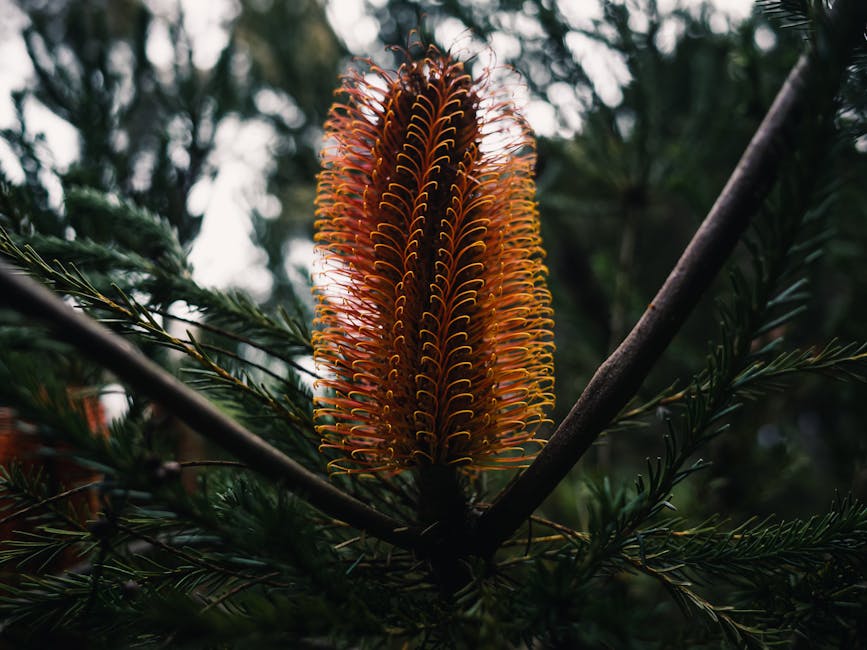
- A rare plant, Ptilotus senarius, was rediscovered in the Australian outback after being lost for 60 years.
- The plant was first documented in 1967 but had not been seen since, raising concerns about its extinction.
- The rediscovery was made possible by a bird bander’s smartphone photos uploaded to the iNaturalist platform.
- The plant’s unique features, including its velvety flower spikes and narrow, hairy leaves, were key to its identification.
- The rediscovery is a significant find for botanists and conservationists, offering new insights into the plant’s ecology and habitat.
Under a blistering sun in the remote sandstone gullies of central Queensland, where red dust swirls around twisted acacias and goannas dart between boulders, a quiet miracle unfolded — unnoticed at first. In October 2023, bird bander Aaron Bean paused during a routine survey near the Dugald River homestead, his boots caked in ochre soil. Something about a low, silvery shrub caught his eye: its velvety flower spikes shimmered like tinsel under the harsh light. He snapped a few photos with his smartphone, uploaded them to the biodiversity platform iNaturalist, and moved on. Neither he nor the digital community of naturalists could have known that this fleeting moment would rewrite a chapter of botanical history, pulling a species back from the edge of oblivion after six decades of silence.
The Rediscovery That Defied Odds

Within hours of the upload, botanist Dr. Anthony Bean, Queensland’s principal scientific officer for flora and a namesake of the uploader (no relation), flagged the image. Instantly, he recognized the distinctive inflorescence of Ptilotus senarius — a plant last documented in 1967 by botanist Stanley Thatcher Blake and not seen since. The specimen matched the sparse herbarium records: low-growing, with dense clusters of pinkish-silver flowers and narrow, hairy leaves adapted to arid conditions. Field verification followed swiftly. A joint expedition by the Queensland Department of Environment, Science and Innovation and the Australian Tropical Herbarium confirmed the plant’s presence at two nearby sites, both within a 10-kilometer radius. The species, once presumed extinct due to habitat degradation and prolonged drought, had survived in microrefugia — sheltered pockets where moisture and shade allowed it to persist undetected. Its reappearance marks one of Australia’s most dramatic botanical rediscoveries in decades.
How We Lost — and Found — a Species

Ptilotus senarius belongs to the Amaranthaceae family, a diverse group of flowering plants common in Australia’s arid zones. But unlike its hardy relatives, this species was always rare, known from just four historical collections, all made in the 1950s and 60s. As land use intensified — with cattle grazing, invasive grasses, and altered fire regimes — scientists assumed it had vanished. By the 2000s, it was classified as ‘presumed extinct’ on the Australian Government’s Species Profile and Threats Database. Yet the desert harbors secrets. Many arid-zone plants can lie dormant for years, emerging only after specific rainfall patterns. The recent La Niña weather cycle, which brought above-average rains to inland Queensland, may have triggered the plant’s bloom, making it visible for the first time in generations. This pattern echoes other rediscoveries, such as the night parrot in 2013, another ‘lost’ species revived by citizen-led observation.
The People Behind the Comeback

The rediscovery underscores a seismic shift in how science operates. Aaron Bean, though not a botanist, embodies the modern citizen scientist — equipped with a smartphone, curiosity, and access to global knowledge networks. His upload to iNaturalist, a platform co-founded by the California Academy of Sciences and the National Geographic Society, allowed experts worldwide to weigh in. Dr. Anthony Bean, who has described over 120 plant species, called the find “a shot of hope.” His decades of fieldwork and taxonomic expertise were essential in confirming the ID. But it was the synergy between amateur observation and professional validation that made the breakthrough possible. Conservationists now stress the importance of training and incentivizing public participation, particularly in remote regions where formal surveys are logistically daunting and underfunded.
What This Means for Conservation

The return of Ptilotus senarius is not just a feel-good story — it has tangible implications. First, it forces a reevaluation of extinction lists. If a plant can survive 60 years undetected, how many others are quietly hanging on? Second, it validates the use of digital platforms in biodiversity monitoring. iNaturalist now hosts over 80 million observations, many contributing to scientific publications and conservation planning. For Ptilotus senarius, immediate actions include habitat protection, seed banking, and ecological studies to determine its pollinators and germination requirements. Indigenous rangers from the local Iningai people are being consulted, as traditional knowledge may hold clues to the plant’s historical range and use. The discovery also reinforces the need to protect arid ecosystems, long overlooked in favor of rainforests and reefs.
The Bigger Picture
This event is a powerful reminder that extinction is not always final. In an age of climate crisis and mass biodiversity loss, such rediscoveries offer rare hope. They also challenge the notion that science is the sole domain of experts in labs. As technology democratizes data collection, the line between observer and scientist blurs. From backyard birdwatchers to hikers with cameras, ordinary people are becoming sentinels of planetary health. The story of Ptilotus senarius is not just about one plant — it’s about what happens when curiosity meets connectivity.
What comes next? Scientists plan to survey nearby watersheds for additional populations, while genetic analysis will determine how isolated these rediscovered plants are. Conservationists hope to designate the area a protected microsite. But perhaps the most enduring legacy will be cultural: a growing recognition that every photograph taken in the wild could hold the key to a species’ survival — or its final epitaph.
Source: ScienceDaily