- The Phillies have surged 15 wins in 19 games, reversing their early season collapse and climbing above .500.
- A four-game sweep of the Pittsburgh Pirates showcased the team’s balanced offense and newfound momentum.
- Manager Rob Thomson credits the team’s success to sticking to their plan, which is now paying off.
- Key contributors like Kyle Schwarber and Bryson Stott have been instrumental in the team’s recent success.
- The Phillies’ turnaround has vaulted them from the cellar of the NL East to just two games under .500.
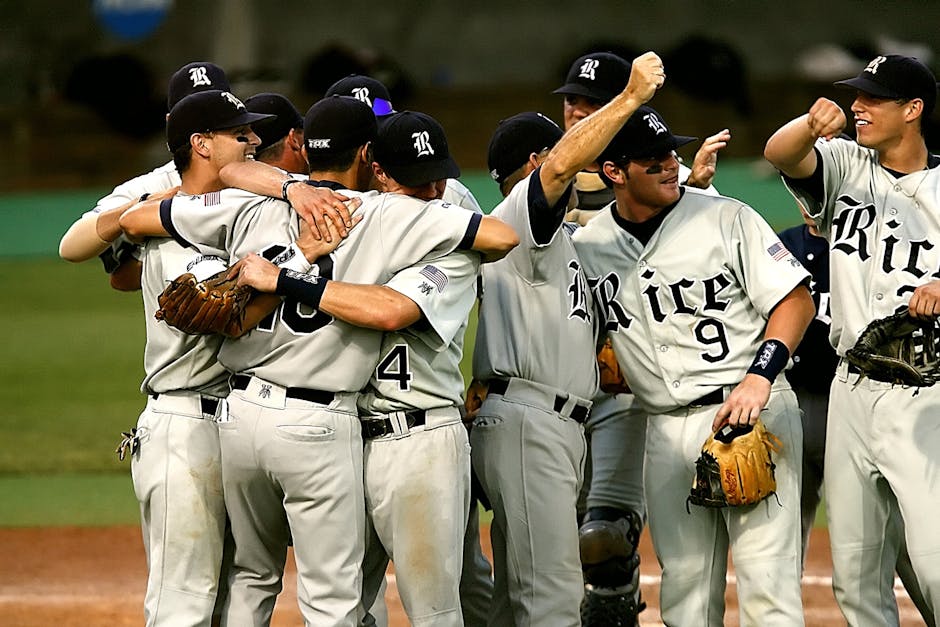
On a sweltering Friday night in Pittsburgh, Citizens Bank Park might as well have been a thousand miles away. But the roar from the Phillies’ dugout at PNC Park—jumping, shouting, tossing gloves into the air—carried the weight of redemption. The final out of a four-game sweep had just been recorded, a 6-2 victory sealed by a diving catch from rookie center fielder Braden Shewmake, and in that moment, the Philadelphia Phillies were no longer the team that stumbled out of the gate with a 10-22 record. They were something else entirely: relentless, poised, and suddenly dangerous. The air in the clubhouse afterward smelled of sweat and champagne-adjacent joy—not celebration yet, but the unmistakable scent of belief returning. \”We never stopped trusting the plan,\” said manager Rob Thomson, wiping sweat from his brow. \”But now? Now we’re seeing it come alive.\”
Red-Hot Streak Reverses Early Season Collapse

Over the past 19 games, the Phillies have gone 15-4, the best record in the National League over that span, vaulting them from the cellar of the NL East to just two games under .500 before this weekend’s series. That momentum culminated in a comprehensive four-game sweep of the Pittsburgh Pirates, a divisional rival showing signs of fatigue. The Phillies outscored Pittsburgh 25-9, with their offense igniting behind a balanced attack: Kyle Schwarber homered in three straight games, Bryson Stott slashed .385 with a .450 on-base percentage, and rookie catcher Edgar Cabral delivered multiple clutch hits. Most telling, however, was the pitching. The starting rotation posted a 2.78 ERA during the stretch, anchored by Zack Wheeler’s return to Cy Young form and the emergence of rookie lefty Tyler Phillips, who tossed six shutout innings in the series finale. According to Reuters coverage of the series, the sweep marked the first time since 2011 the Phillies had won 15 of 19 after such a poor start.
From Collapse to Comeback: The 2026 Freefall

The Phillies’ season began in disarray. Injuries decimated the starting rotation by April: Aaron Nola landed on the injured list with a lat strain, and Cristopher Sánchez missed a month with elbow inflammation. The bullpen, once a strength, imploded under pressure, blowing seven saves in March and April. Offensively, the team struggled to generate consistent contact, ranking 27th in MLB in runs scored through April 20. Critics questioned the front office’s offseason decisions—notably the decision to decline Zack Wheeler’s 2025 club option despite his age (35), then re-sign him at a discount. Fan frustration boiled over during a home sweep by the Atlanta Braves in mid-April, when attendance dipped below 20,000 for consecutive games. But behind closed doors, the organization maintained confidence in its depth and player development pipeline. The turning point came in late April, when the team’s analytics staff identified mechanical flaws in several hitters’ swings—adjustments that, once implemented, led to improved launch angles and exit velocities across the board.
The Architects of the Turnaround

Rob Thomson, in his fourth full season as manager, has been the steady hand steering the ship. Known for his calm demeanor and data-informed decision-making, Thomson resisted the urge to panic, preserving bullpen usage and sticking with young players through slumps. General manager Sam Fuld, often under fire for his quiet style, quietly retooled the roster at the margins, calling up Phillips from Triple-A Lehigh Valley and activating utility man Kody Clemens, whose versatility has been invaluable. But the most pivotal figure may be pitching coach Caleb Cotham, whose work with the starters—particularly simplifying mechanics and emphasizing pitch sequencing—has revived the rotation. \”We’re not trying to reinvent guys,\” Cotham told The New York Times. \”We’re helping them rediscover what made them elite.\” That philosophy has paid dividends, especially with Wheeler, who has lowered his walk rate and increased his curveball usage, confounding hitters across the league.
What the Surge Means for Philadelphia and Beyond

For Phillies fans, the turnaround has reignited hope—and ticket sales. The team has sold out its last six home games, and merchandise revenue has spiked 34% month-over-month. More importantly, the team is back in the conversation for a National League wild card spot, currently sitting just 3.5 games behind the idle Marlins. The improved health of Nola, expected back in early June, could provide another jolt. For the broader league, Philadelphia’s resurgence adds intrigue to a crowded NL playoff picture, where teams like the Diamondbacks, Brewers, and Padres are also fighting for positioning. The Phillies’ ability to adapt—leveraging analytics, player development, and coaching—may serve as a blueprint for other clubs facing midseason adversity. And if they sustain this form, they could emerge not just as spoilers, but as October threats.
The Bigger Picture
In a sport increasingly defined by extremes—blowout wins, historic slumps, and rapid reboots—the Phillies’ story stands out not because it’s unprecedented, but because it’s human. It’s a reminder that even in the age of algorithms and launch angles, baseball still allows for redemption arcs, for teams to recalibrate, adapt, and rise. Their comeback mirrors broader shifts in how franchises manage resilience, relying less on star power alone and more on cohesion, coaching, and systemic depth. In that sense, the Phillies aren’t just climbing the standings—they’re reflecting a new era of sustainable competitiveness.
What comes next remains uncertain. The schedule toughens with upcoming series against the Dodgers and Braves. Injuries could resurface. But for now, the Phillies have proven something vital: that a season is not defined by its first chapter. With momentum on their side and belief restored, they’re no longer chasing the league—they’re joining it.
Source: CBS Sports