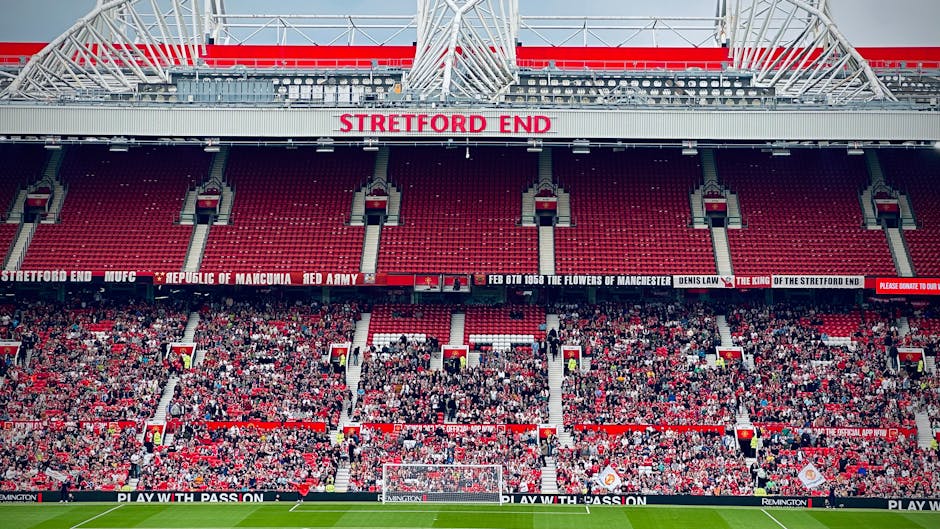
- The Premier League weekend showcased a mix of skill, strategy, and resilience from teams across the league.
- Key moments, including a 94th-minute bicycle kick and a goalkeeper’s red card, will be remembered for days.
- The Premier League is renowned for its unpredictability, and this weekend’s results were no exception.
- Tactical precision and defensive lapses played crucial roles in determining the outcomes of several matches.
- The razor-thin margins between victory and defeat were starkly evident throughout the weekend’s fixtures.
Under the glow of floodlights and beneath skies streaked with twilight, English football stadiums erupted in song and tension as another Premier League matchday unfolded. Packed terraces heaved with emotion—scarves aloft, faces painted, voices raw—witnessing moments that will be replayed for days: a 94th-minute bicycle kick in North London, a goalkeeper red-carded for handball outside the box, a teenage debutant calmly slotting home his first top-flight goal. From the tactical precision of Manchester to the scrappy resilience of the relegation battlers in the Midlands, this weekend was a microcosm of everything that makes the Premier League the most-watched football competition on Earth. It wasn’t just about points on the table; it was about pride, momentum, and the razor-thin margins that separate triumph from heartbreak.
Seven Matches, Countless Storylines

This past weekend’s slate of seven Premier League fixtures offered a masterclass in unpredictability. Arsenal edged Liverpool 2-1 at the Emirates in a match defined by set-piece mastery and defensive lapses, while Manchester City survived a scare against Brentford, coming from behind to win 3-2 thanks to a Phil Foden brace. In a surprise result, Nottingham Forest held Chelsea to a 1-1 draw, capitalizing on shaky backline coordination and a missed penalty by Cole Palmer. Tottenham roared to a 4-0 victory over Bournemouth, with Heung-Min Son scoring twice, while Fulham and West Ham played out a tense 1-1 draw in front of a raucous London crowd. Further north, Crystal Palace stunned Aston Villa 2-0 at Villa Park, interrupting Villa’s top-four aspirations. The day concluded with Everton and Wolves grinding out a 0-0 draw in a match low on chances but high on physicality. Full highlights, expert analysis, and post-match interviews were presented by veteran broadcaster Gabby Logan on BBC One’s Match of the Day, which continues to serve as the definitive weekly review of English football.
How the Fixtures Stack Up Historically

The Premier League’s current format, with staggered weekend fixtures culminating in a centralized highlight show, has roots stretching back to the early 1960s. Match of the Day, first aired in 1964, revolutionized how fans experienced football, bringing full-match highlights into living rooms across the UK at a time when live broadcasts were still restricted. The league’s expansion in 1992, driven by television rights and commercial partnerships, cemented the Saturday-Sunday fixture rhythm and elevated the highlight show into a cultural institution. Over the decades, presenters like Des Lynam, Gary Lineker, and now Gabby Logan have become synonymous with football storytelling, distilling complex match dynamics into accessible, emotionally resonant narratives. This weekend’s broadcast continues that legacy, blending cutting-edge data graphics with on-pitch commentary—a far cry from the black-and-white reels of yesteryear, yet still faithful to the original mission: to deliver the soul of the game to millions.
The People Behind the Coverage

Gabby Logan, a former elite gymnast and seasoned sports presenter, has anchored Match of the Day with a blend of authority and approachability since taking over from Lineker in select broadcasts. Her ability to navigate high-pressure environments—honed during years covering the Olympics and Six Nations—lends credibility to every segment. Alongside her are pundits like Alan Shearer, Micah Richards, and Alex Scott, each bringing distinct perspectives shaped by their playing careers. Richards, known for his candid analysis, didn’t hold back in critiquing Chelsea’s midfield discipline, while Scott highlighted the tactical maturity of Arsenal’s young fullbacks. These voices, combined with Logan’s steady presence, form a trusted editorial lens through which fans interpret the chaos and beauty of modern football. Behind the scenes, a team of producers, video editors, and data analysts work tirelessly to curate the most impactful moments from over 500 minutes of live action.
Implications for Teams and Fans Alike

The outcomes of these seven matches ripple through the league table and beyond. Arsenal’s narrow win consolidates their position at the top, increasing pressure on City, who despite the victory, showed signs of vulnerability against a determined Brentford side. For Chelsea, the draw extends a worrying trend of underperformance, raising questions about manager Enzo Maresca’s long-term viability. Meanwhile, Crystal Palace’s away win boosts their survival hopes and damages Villa’s Champions League ambitions. Fans, already emotionally invested, now face weeks of speculation, social media debates, and fantasy football recalibrations. Broadcasters like the BBC also feel the stakes—ratings for Match of the Day often spike after dramatic weekends, reinforcing the program’s role not just as a recap, but as a communal ritual for football lovers across the country.
The Bigger Picture
These weekend fixtures do more than shift points and rankings—they reflect broader themes in modern sports: the tension between entertainment and competition, the globalization of fan engagement, and the growing influence of data and media in shaping public perception. As streaming platforms challenge traditional broadcast models, programs like Match of the Day adapt by offering multi-platform content, including clips on BBC Sport’s digital portal. The Premier League itself remains a paradox: a hyper-commercialized enterprise that still manages to deliver authentic, human drama on a weekly basis.
As the final whistle echoes across stadiums and living rooms fall quiet, one truth endures: the cycle begins anew. Training resumes, tactics are revised, and injured players begin rehabilitation. The next matchday looms, promising fresh narratives and unforeseen twists. In a league where a single moment can alter a season, fans will keep watching, week after week, for the magic that only football can conjure.
Source: BBC