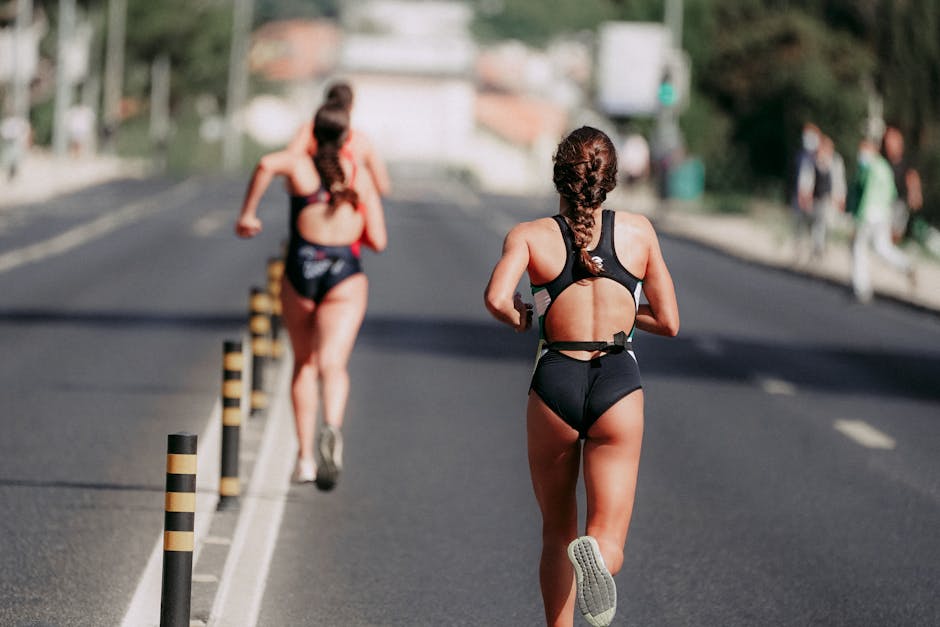
- Even small amounts of high-intensity exercise can have significant health benefits.
- Just 30 minutes of weekly exercise can improve cardiovascular fitness and reduce disease risk.
- High-intensity interval training (HIIT) triggers metabolic and vascular adaptations typically associated with longer endurance routines.
- Short bursts of intense exercise can be more effective than longer, steady-state workouts.
- Minimal exercise can add years to your life and improve overall health.
Imagine dashing up a flight of stairs, heart pounding, breath ragged, sweat beading on your forehead—not to catch a train, but to add years to your life. In a quiet university lab in Belfast, researchers watched as middle-aged volunteers sprinted on stationary bikes for 30 seconds, rested, then repeated the burst four more times. No fancy weights, no hour-long classes—just five intervals of all-out effort, totaling four minutes of movement. Over weeks, something remarkable emerged: participants’ cardiovascular fitness improved as much as those doing five times the exercise. This isn’t magic—it’s science. And it’s rewriting everything we thought we knew about how much physical effort our bodies actually need to thrive.
The Power of Minimal High-Intensity Workouts

Recent findings published in the journal Medicine & Science in Sports & Exercise suggest that just 30 minutes of high-intensity interval training (HIIT) per week—broken into short, intense efforts—can produce transformative health outcomes. In one landmark trial, adults who completed three 10-minute sessions of vigorous exercise weekly saw a 15% increase in VO2 max, a key measure of aerobic fitness, within 12 weeks. Equally striking, they reduced their risk of cardiovascular disease by up to 40% compared to sedentary peers. These bursts elevate heart rate to 85–95% of maximum, triggering metabolic and vascular adaptations typically associated with much longer endurance routines. According to lead researcher Dr. Martin Gibala of McMaster University, “It’s not about duration—it’s about intensity. The body responds powerfully to short, demanding efforts.”
How We Got Here: The Evolution of Exercise Science

For decades, public health guidelines emphasized sustained moderate activity—30 minutes a day, five days a week. But in the early 2000s, a shift began. Japanese scientists studying athletes noticed that brief, maximal sprints led to rapid gains in mitochondrial density, the cellular engines behind energy production. This inspired Gibala’s team to test whether ordinary people could benefit from similar protocols. Their 2006 study, where participants cycled intensely for 30 seconds followed by four minutes of rest—repeated just four to six times—showed fitness improvements matching those who cycled steadily for 45 minutes. Since then, over 100 studies have confirmed that HIIT enhances insulin sensitivity, lowers blood pressure, and reduces visceral fat more efficiently than moderate exercise. The World Health Organization has begun acknowledging these findings in updated physical activity recommendations.
The Scientists and Practitioners Behind the Movement

Dr. John Little, co-author of The One-Minute Workout, was among the first to bring HIIT to the public, motivated by his father’s heart disease. “I wanted to find a way for busy people to protect themselves,” he says. Meanwhile, physiologist Dr. Stuart Phillips at McMaster focuses on how intense exercise preserves muscle mass in aging populations, a critical factor in preventing frailty. On the clinical side, cardiologists like Dr. Bethany Barone Gibbs at the University of Pittsburgh are integrating micro-bursts into rehabilitation programs for patients with limited mobility. Their shared belief? That exercise should be accessible, not burdensome. “We’re not telling people to train like Olympians,” Gibbs explains. “We’re showing them that even a 20-second stair climb, done with intent, counts.”
What This Means for Public Health and Individuals

These findings have profound implications for global health, especially as sedentary lifestyles contribute to rising rates of diabetes, heart disease, and dementia. For time-poor individuals, the barrier to entry is now dramatically lower. Employers could integrate two-minute activity breaks into workdays; urban planners might design stairways to encourage vertical movement. Clinically, short-duration HIIT is being tested in cancer recovery, where fatigue often limits traditional exercise. Even for older adults, studies show that brief bouts of effort improve balance and cognitive function. As Dr. Gibala notes, “The dose-response curve is steeper than we thought—small efforts, if intense, yield outsized benefits.”
The World Health Organization now recognizes that any physical activity, especially vigorous bursts, contributes meaningfully to health.
The Bigger Picture
This shift challenges a cultural obsession with exercise volume—marathons, six-day gym routines, fitness trackers counting endless steps. Instead, it elevates intensity and consistency over time spent. It also democratizes fitness: a parent, a shift worker, a retiree—anyone can find 30 seconds to move hard. The science suggests we’ve been overcomplicating a fundamental biological need. Our bodies evolved to respond to bursts of effort—chasing, fleeing, lifting—not endless treadmill sessions. By aligning modern health strategies with these ancestral patterns, we may finally make lasting wellness achievable for millions.
What comes next is a reimagining of fitness in everyday life. Public health campaigns may soon promote “exercise snacks”—brief, intense efforts woven into daily routines. Researchers are exploring how combining these bursts with strength training or mindfulness could amplify benefits. One thing is clear: the era of “no time to exercise” may be ending. As the evidence grows, the message sharpens: move hard, move briefly, and your body will thank you for decades to come.
Recent studies in Nature continue to validate the long-term protective effects of high-intensity interval training on aging and disease.
Source: ScienceDaily