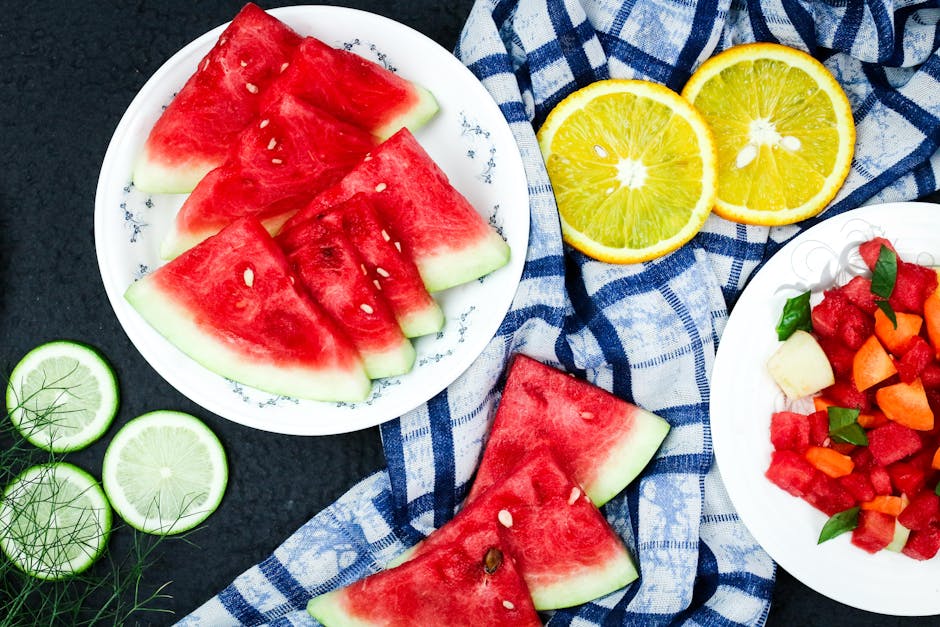
- Emerging science reveals watermelon as a functional food with measurable impacts on diet quality and cardiovascular function.
- Consuming watermelon is linked to higher-quality diets, with individuals consuming more fiber, magnesium, potassium, and vitamins A and C.
- Watermelon eaters tend to take in less added sugar and saturated fat, while meeting federal fruit intake recommendations.
- Watermelon may act as a dietary marker, indicating healthier eating behaviors in those who regularly consume it.
- The presence of watermelon in one’s diet could signal a more balanced and nutritious eating pattern.
On a sweltering afternoon in July, a family gathers on a backyard porch, laughing as juice dribbles down their chins from oversized wedges of watermelon. What feels like a simple seasonal indulgence may, in fact, be a quiet act of nourishment. Beyond its sweet taste and high water content, emerging science suggests that watermelon is far more than a refresher—it is a functional food with measurable impacts on diet quality and cardiovascular function. In communities across the U.S. and beyond, this humble fruit is being re-evaluated not as a mere treat, but as a dietary ally in the fight against chronic disease, quietly offering antioxidants, hydration, and metabolic support in every bite.
\n\n
Watermelon Linked to Higher Diet Quality

\n
Recent analyses of dietary patterns have revealed a consistent trend: people who regularly consume watermelon tend to have significantly higher-quality diets overall. A study published in the journal Nutrients found that watermelon eaters consumed more fiber, magnesium, potassium, and vitamins A and C than non-consumers, while simultaneously taking in less added sugar and saturated fat. These individuals were also more likely to meet federal fruit intake recommendations. The findings, drawn from data in the National Health and Nutrition Examination Survey (NHANES), suggest that watermelon may act as a dietary marker—its presence often indicating healthier eating behaviors. Researchers speculate that because watermelon is naturally sweet and satisfying, it may help displace less nutritious, sugar-laden snacks. Its low energy density and high micronutrient content position it as a rare indulgence that aligns with public health guidelines rather than undermining them. The CDC’s NHANES program continues to provide critical insights into how specific foods influence national health trends.
\n\n
The Rise of Functional Fruit Research

\n
This shift in perception didn’t happen overnight. For decades, fruit was broadly praised for its vitamins and fiber, but researchers rarely distinguished between types beyond sugar content. However, in the 2010s, scientists began probing deeper into the phytonutrient profiles of individual fruits. Watermelon, rich in lycopene, citrulline, and other bioactive compounds, emerged as a standout. Lycopene, the same antioxidant found in tomatoes, has been studied for its potential to reduce oxidative stress and inflammation. Even more intriguing is citrulline, an amino acid concentrated in watermelon’s white rind and flesh, which the body converts to arginine—a precursor to nitric oxide, a molecule essential for blood vessel dilation. These discoveries prompted clinical investigations into whether watermelon could offer functional benefits beyond basic nutrition, particularly for cardiovascular and metabolic health.
\n\n
Scientists and Farmers Shape the Narrative

\n
The push to understand watermelon’s health potential has been led by a blend of academic researchers and agricultural scientists. Dr. Penelope Perkins-Veazie, a post-harvest physiologist at North Carolina State University, has spent years studying how watermelon’s nutrient content changes with ripeness and storage. Her work has helped clarify how consumers can maximize citrulline intake. Meanwhile, plant breeders at institutions like the USDA and Texas A&M AgriLife Research have developed varieties with higher lycopene and citrulline levels, aiming to enhance both flavor and health impact. On the consumer side, dietitians and nutrition educators have begun incorporating watermelon into heart-healthy meal plans, especially for populations at risk for hypertension and obesity. For these stakeholders, the goal is not just to validate tradition, but to transform perception—elevating watermelon from a backyard staple to a clinically relevant food.
\n\n
Implications for Heart and Metabolic Health

\n
The most compelling evidence centers on vascular function. A randomized, crossover trial published in The American Journal of Clinical Nutrition found that drinking watermelon juice for six weeks improved aortic blood pressure and arterial stiffness in middle-aged adults with obesity. These effects were attributed to increased plasma levels of citrulline and arginine, which support endothelial function. Additionally, because watermelon has a low glycemic index despite its sweetness, it does not cause sharp insulin spikes, making it a viable option for people managing blood sugar. For public health professionals, these findings suggest that promoting whole fruits like watermelon could be a practical strategy to improve cardiovascular outcomes, especially in communities with limited access to fresh produce. Replacing soda or candy with watermelon may seem modest, but at scale, such swaps could reduce long-term disease burden.
\n\n
The Bigger Picture
\n
This growing body of research challenges the oversimplified view of food as merely calories or macronutrients. Watermelon exemplifies how whole foods can deliver complex physiological benefits that isolated supplements often fail to replicate. In an era of ultra-processed diets, rediscovering the value of minimally processed, nutrient-dense fruits is not just nostalgic—it’s urgent. The story of watermelon underscores a broader truth: public health may depend as much on reviving traditional, pleasurable eating habits as on medical innovation.
\n\n
As climate change affects growing seasons and food security, resilient crops like watermelon—drought-tolerant and nutrient-rich—could play a greater role in sustainable diets. Future studies may explore its potential in managing hypertension, muscle recovery, and even skin health. For now, the message is clear: beneath the rind lies more than refreshment. It’s a quiet revolution, one slice at a time.
Source: ScienceDaily