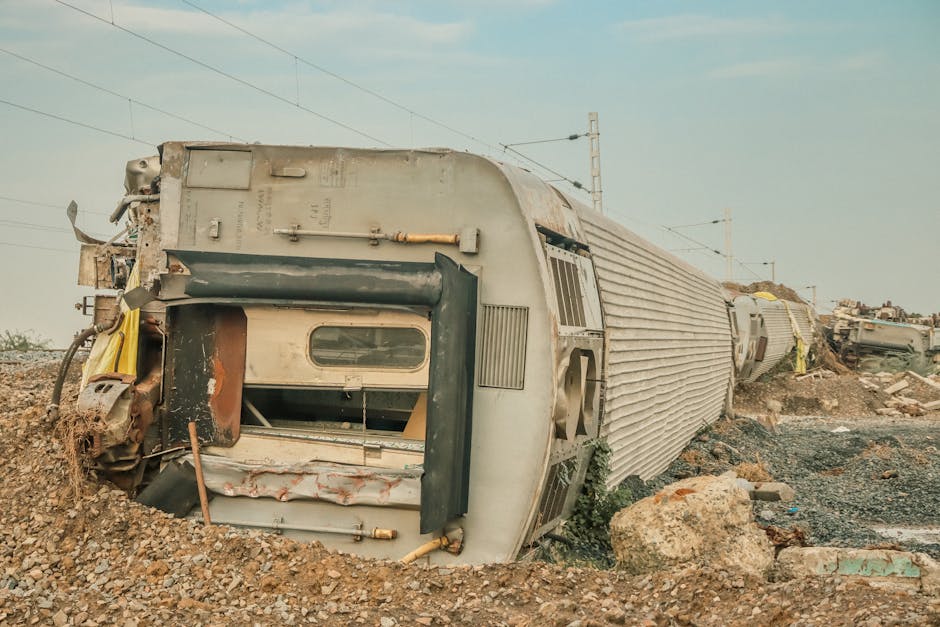
- A freight train crashed into a stalled passenger bus at a rail crossing in Bangkok, resulting in at least eight fatalities and 32 injuries.
- The collision occurred in a densely populated area with common traffic congestion, where aging infrastructure meets relentless urban growth.
- The bus failed to clear the crossing in time despite the train sounding its horn, leading to a catastrophic derailment and fire.
- Emergency crews battled flames and debris at the scene, with rescue teams arriving within minutes but facing a delayed response due to the intensity of the blaze.
- The incident raises questions about the functioning of the rail crossing signal and the frequency of such collisions in Bangkok.
What caused a routine morning commute to turn into one of Bangkok’s deadliest rail accidents in years? On a busy Thursday near Makkasan station, a freight train slammed into a passenger bus that had stalled at a rail crossing, triggering a fiery explosion that claimed at least eight lives and left 32 others injured. The crash, which also involved several cars and motorcycles, unfolded just steps from the Airport Rail Link, in a densely populated part of the Thai capital where traffic congestion is common. As emergency crews battled flames and debris, questions quickly emerged: Was the crossing signal functioning? Why was the bus on the tracks? And how often do such collisions occur in a city where aging infrastructure meets relentless urban growth?
What Happened at the Makkasan Rail Crossing?

The collision occurred in the early morning hours when a freight train operated by the State Railway of Thailand struck a privately operated bus that had either stalled or attempted to cross the tracks as the train approached. According to Pichet Chantharaksap, Deputy Minister of Transport, the train was traveling on schedule and sounded its horn, but the bus failed to clear the crossing in time. The impact was catastrophic—derailing several train cars and causing an immediate fire that consumed the bus and nearby vehicles. Rescue teams from the Bangkok Metropolitan Administration and the Thai Red Cross arrived within minutes, but the intensity of the blaze delayed recovery efforts. All eight confirmed fatalities were passengers on the bus, while the injured—many suffering from burns and fractures—were rushed to nearby hospitals including Vejthani and Police General Hospital.
What Evidence Supports the Official Account?

Surveillance footage from a nearby convenience store, reviewed by BBC News, shows the bus entering the crossing as warning lights were active but gates had not fully closed, suggesting either mechanical failure or human error. A preliminary investigation by Thailand’s Department of Railways indicates the freight train was traveling at approximately 60 km/h (37 mph), below the 80 km/h speed limit for that stretch. Eyewitnesses reported that traffic buildup may have forced the bus driver to proceed despite the flashing signals. “The train came fast, and the bus was stuck halfway,” said Nattapong Sriklin, a motorbike taxi driver who was waiting nearby. The fire, likely fueled by diesel from the bus and train, burned for over two hours, hampering rescue operations and destroying critical evidence. Authorities have since detained the bus driver, who survived with minor injuries, for questioning under Section 303 of the Thai Penal Code, which covers reckless operation resulting in death.
Are There Alternative Explanations or Criticisms?

While officials emphasize driver responsibility, transportation safety experts have pointed to systemic flaws in Thailand’s rail infrastructure. Some critics argue that automatic gate systems at many crossings, including Makkasan, are outdated or inconsistently maintained. According to a 2023 report by the Asian Development Bank, over 40% of Thailand’s 3,000 rail crossings lack modern signaling technology. Activist group Transport Watch Thailand has long warned that freight trains, which often run at night or dawn with reduced visibility, pose an increasing risk in urban zones. Others question why a freight line runs so close to a high-traffic public transit hub. “We’re treating symptoms, not causes,” said Dr. Anongnart Chaiyarat, a civil engineer at Chulalongkorn University. “Until we separate freight from passenger corridors or upgrade crossings nationwide, these tragedies will repeat.” There is also speculation—unconfirmed by authorities—that the bus may have experienced engine failure, a claim supported by charred mechanical remnants observed near the front axle.
What Is the Real-World Impact of the Crash?

The Makkasan collision has disrupted rail and road traffic in central Bangkok for days, affecting thousands of commuters reliant on the Airport Rail Link and surrounding transit routes. The State Railway of Thailand suspended freight operations on the line pending investigation, delaying shipments and raising concerns among logistics firms. In response, Prime Minister Srettha Thavisin announced an emergency review of all 127 rail crossings in Bangkok, with plans to accelerate the installation of smart barriers and CCTV systems. Families of the victims have begun receiving compensation—500,000 baht ($13,700) per fatality—from the transport ministry, though many say it is inadequate. The tragedy has also reignited public debate over private bus operators’ safety standards, with calls for mandatory vehicle inspections and real-time tracking. International observers, including the Reuters reporting team, have highlighted the incident as emblematic of broader infrastructure challenges across rapidly urbanizing Southeast Asia.
What This Means For You
For travelers and residents in Bangkok, this crash underscores the hidden risks of daily commutes through poorly regulated transit zones. It highlights the importance of infrastructure modernization and stricter enforcement of safety protocols, not just in Thailand but in cities worldwide facing similar urban pressures. While individual caution matters, systemic change—from automated signals to separated rail corridors—offers the best protection against future tragedies.
Could this accident have been prevented with smarter technology or better maintenance? And as cities grow denser, how can governments balance efficiency with safety in shared transit spaces? These questions remain urgent—and unanswered.
Source: The Guardian