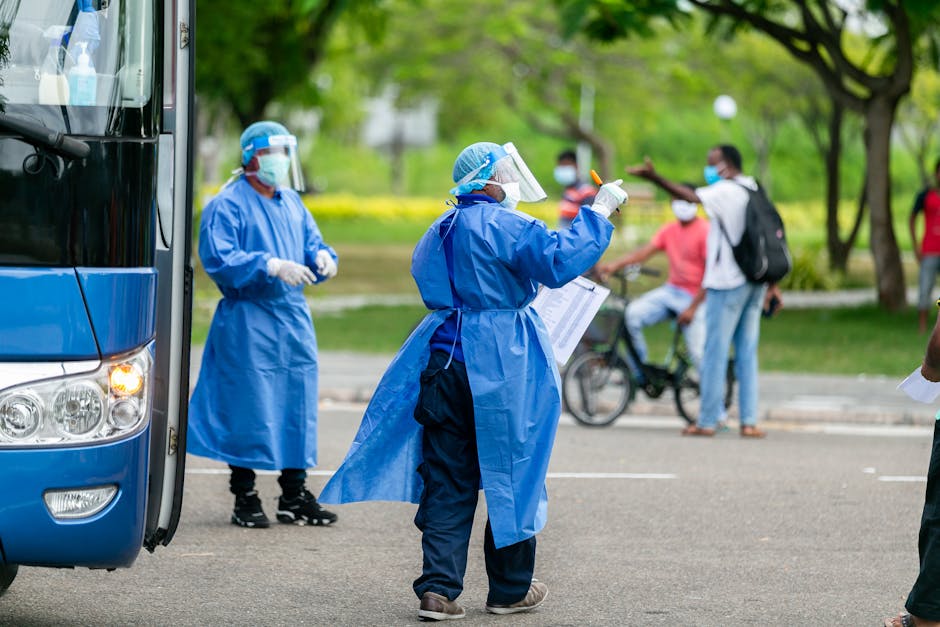
- Ebola has resurfaced in the Democratic Republic of the Congo, primarily in Ituri Province, amidst ongoing armed conflict and mass displacement.
- As of early 2025, 18 suspected Ebola cases have been reported, including nine fatalities, with a fatality rate consistent with previous outbreaks.
- The virus spreads through direct contact with infected bodily fluids, making containment efforts challenging due to the region’s weak public health infrastructure.
- The eastern DRC is experiencing one of its worst humanitarian emergencies in decades, with eastern regions facing instability and destruction of health centers.
- This is the DRC’s 15th Ebola epidemic since 1976, highlighting the recurring crisis of disease and conflict in the nation.
The Democratic Republic of the Congo is confronting a deadly resurgence of Ebola, with confirmed cases in the towns of Rwampara, Mongwalu, and Bunia in Ituri Province—regions already destabilized by years of armed conflict and mass displacement. As of early 2025, at least 18 suspected cases have been reported, including nine fatalities, signaling a fatality rate consistent with previous Ebola outbreaks. The virus, which attacks the body’s vascular system and causes severe hemorrhagic fever, spreads through direct contact with infected bodily fluids. With weak public health infrastructure, ongoing violence from over 120 armed groups, and more than 6.9 million people internally displaced—the highest number in Africa—containment efforts face near-insurmountable odds. This outbreak marks the DRC’s 15th Ebola epidemic since 1976, underscoring a recurring crisis in a nation where disease and conflict are deeply intertwined.
Why This Outbreak Is Especially Dangerous

The current Ebola resurgence comes at a time when eastern DRC is experiencing one of its worst humanitarian emergencies in decades. Ituri Province, where the outbreak originated, has seen a sharp escalation in violence between the Allied Democratic Forces (ADF), a jihadist-affiliated militia, and the Congolese military, supported by UN peacekeepers. This instability has led to the destruction of health centers, targeted attacks on medical workers, and widespread population displacement—factors that significantly increase the risk of viral transmission. According to the World Health Organization (WHO), only 40% of health facilities in the region remain functional. Compounding the crisis, misinformation and community distrust—fueled by years of broken promises from government and international actors—have led to resistance against vaccination campaigns and safe burial practices, both critical tools in curbing Ebola’s spread.
Outbreak Hotspots and Response Challenges

The initial cases were detected in Rwampara, a remote village with no paved roads or reliable communication lines, delaying both diagnosis and response. From there, the virus spread to Mongwalu, a gold-mining town with high population mobility, and to Bunia, the capital of Ituri, which hosts over 500,000 people and is a regional hub for trade and transport. This pattern mirrors past outbreaks where urban centers became amplification points due to dense populations and cross-border movement with Uganda and South Sudan. The Ministry of Health, with support from WHO and Médecins Sans Frontières, has deployed rapid response teams, begun contact tracing, and initiated vaccination using the rVSV-ZEBOV vaccine, which proved effective during the 2018–2020 Kivu outbreak. However, access remains a critical bottleneck: humanitarian corridors are frequently blocked by armed groups, and medical convoys have been attacked. In early February, a WHO epidemiologist was abducted near Bunia, further chilling international engagement.
Root Causes: Conflict, Poverty, and Systemic Neglect

The recurring emergence of Ebola in eastern DRC cannot be understood without addressing the region’s entrenched political and social instability. Decades of state neglect, ethnic tensions, and competition over mineral resources have created a vacuum filled by armed militias that control territory, exploit local populations, and resist state authority. These groups often view health workers with suspicion, accusing them of espionage or foreign interference. Additionally, extreme poverty and lack of basic services mean many communities rely on traditional healers or avoid clinics altogether. A 2023 study published in The Lancet found that areas with high armed group presence were three times more likely to experience delayed outbreak detection. Furthermore, climate change has intensified flooding and landslides, disrupting supply chains and increasing zoonotic spillover risks as humans encroach on wildlife habitats. Ebola, therefore, is not merely a health crisis but a symptom of systemic failure.
Human and Regional Consequences

The implications of this outbreak extend far beyond Ituri. With porous borders and frequent cross-border movement, neighboring Uganda—which experienced its own Ebola outbreak in 2022—is on high alert. Ugandan health authorities have increased screening at border crossings and are prepositioning vaccines. Within the DRC, the outbreak threatens to overwhelm an already fragile health system, diverting resources from other pressing needs like malaria, malnutrition, and maternal care. Children and women are disproportionately affected, both as caregivers and as targets of violence in displacement camps. Economically, trade disruptions and movement restrictions could deepen poverty in a region where 75% of the population lives below the poverty line. If the outbreak is not contained within the next 12 weeks, modeling by the Global Outbreak Alert and Response Network suggests it could spread to five additional provinces, potentially infecting over 1,200 people.
Expert Perspectives
Experts are divided on the best path forward. Dr. Jean-Jacques Muyembe, director of the DRC’s National Institute for Biomedical Research, emphasizes the need for accelerated vaccination and community engagement: “We have the tools to stop Ebola, but only if people trust us.” In contrast, Dr. Paul Spiegel, a public health specialist at Johns Hopkins University, warns that “without addressing the conflict, any medical response is a temporary band-aid.” He points to the failure of past interventions that prioritized biomedical solutions over local peacebuilding. Meanwhile, humanitarian agencies stress the need for UN protection forces to secure health zones, while acknowledging the limitations of military involvement in public health crises.
Looking ahead, the success of the response hinges on coordination between health actors, local leaders, and security forces—a balance that has proven elusive. The international community must increase funding for both emergency response and long-term health system resilience. A key question remains: can Ebola be contained in a war zone? Without sustained political will and community-centered strategies, the answer may be a grim repetition of history.
Source: Al Jazeera