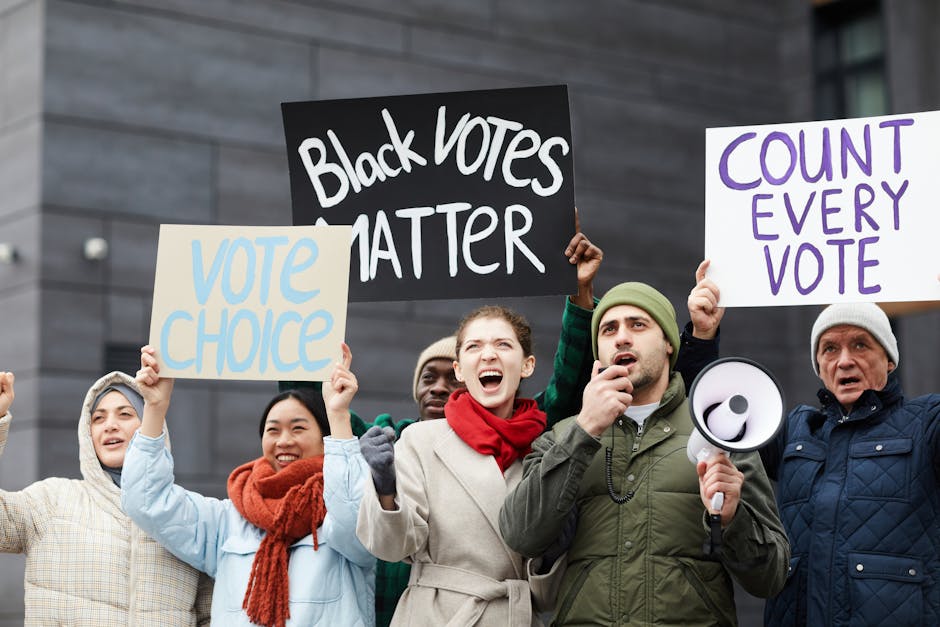
- The US Supreme Court’s decision in Louisiana v Callais has dealt a significant blow to the 1965 Voting Rights Act, allowing states to dilute African American voting power.
- Southern states have rushed to erase majority-Black districts following the ruling, exacerbating voting rights issues for African Americans.
- The decision has already led to the erosion of voting rights in several states, with many more expected to follow suit.
- The Voting Rights Act has been slowly eroded over the years, with successive court rulings and legislative changes undermining its effectiveness.
- The ruling has sparked a voting rights crisis ahead of the midterm elections, leaving many voters feeling disenfranchised and disconnected.
The sun was setting over the southern United States, casting a golden glow over the landscape, but the mood was far from optimistic. The US supreme court’s decision in Louisiana v Callais had sent shockwaves throughout the country, dealing a devastating blow to the 1965 Voting Rights Act. The ruling, which stated that states cannot consider race in redistricting, has sparked chaos for the upcoming midterm elections, with southern states from Tennessee to Alabama rushing to erase majority-Black districts.
The Current State of Voting Rights

The fallout from the decision has been swift and severe. Southern states, which have a long history of voter suppression, have been quick to take advantage of the ruling, redrawing district lines to dilute the voting power of African Americans. This has left many voters feeling disenfranchised and disconnected from the democratic process. According to the New York Times, the decision has already led to the erosion of voting rights in several states, with many more expected to follow suit.
A History of Voter Suppression

The story behind the story is one of systemic racism and voter suppression. The Voting Rights Act, which was passed in 1965, was a landmark piece of legislation that aimed to protect the voting rights of African Americans. However, over the years, the act has been slowly eroded, with successive court rulings and legislative changes weakening its provisions. The current decision is the latest in a long line of attacks on voting rights, which have been perpetrated by those seeking to maintain their power and privilege. As NPR notes, the history of voter suppression in the United States is complex and multifaceted, with roots stretching back to the civil war.
The People Behind the Movement

So, who is shaping this movement, and what are their motivations? For Stacey Abrams, a voting rights activist and former Georgia house minority leader, the answer is clear. Abrams, who has dedicated her life to fighting for voting rights, believes that the gutting of the Voting Rights Act is ‘evil’ and a direct attack on democracy. She argues that the decision is not just a blow to African Americans, but to all Americans who value fairness and equality. As she notes on her website, staceyabrams.com, the way forward lies in engaging more voters to participate in democracy.
The Consequences of Inaction

The consequences of inaction are stark. If the Voting Rights Act is not restored, the effects will be felt for generations to come. The decision will not only disenfranchise African Americans but also undermine the very foundations of democracy. As the Centers for Disease Control and Prevention notes, voter suppression can have serious consequences for public health, with marginalized communities often bearing the brunt of poor health outcomes.
The Bigger Picture
So, why does this matter in a broader context? The answer is simple: democracy is at stake. The Voting Rights Act is not just a piece of legislation; it is a cornerstone of American democracy. If it is allowed to be eroded, the consequences will be far-reaching, with implications for every aspect of American life. As the BBC notes, the health of democracy is closely tied to the health of voting rights, with countries that protect voting rights tends to have stronger, more resilient democracies.
In conclusion, the gutting of the Voting Rights Act is a devastating blow to democracy, with far-reaching consequences for American society. As Stacey Abrams notes, the way forward lies in engaging more voters to participate in democracy, but this will require a concerted effort from all Americans who value fairness and equality. The question is, will we rise to the challenge, or will we allow democracy to be eroded? Only time will tell, but one thing is certain: the future of American democracy hangs in the balance.
Source: The Guardian