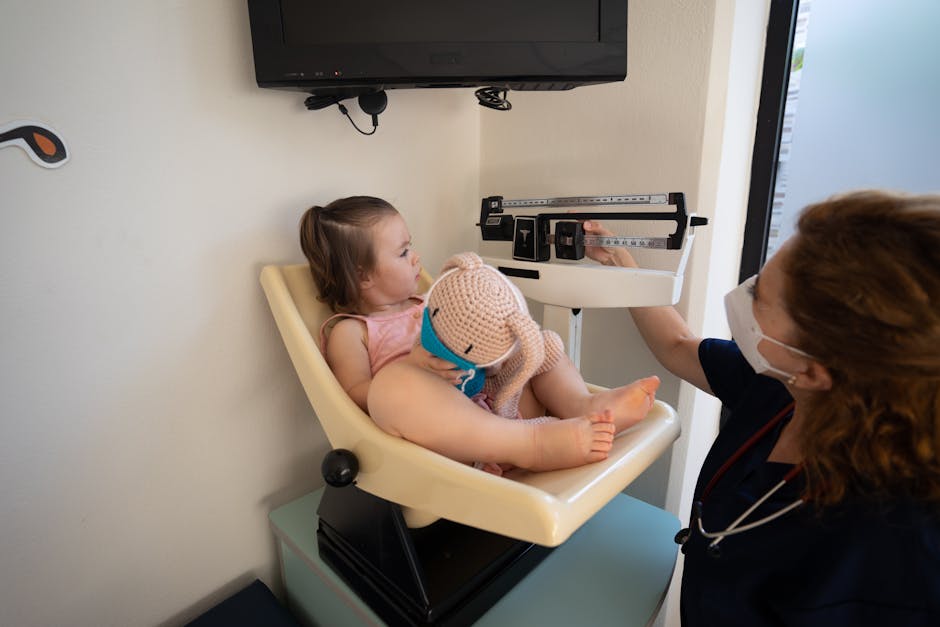
- Alternating Hemiplegia of Childhood (AHC) is a rare neurological disorder characterized by recurring episodes of muscle weakness and paralysis.
- Decades of uncertainty about prognosis are being replaced by emerging longitudinal data and genetic insights.
- Early diagnosis and multidisciplinary care can help children with AHC achieve meaningful developmental milestones.
- Research suggests that many children with AHC can survive into adulthood, altering clinical approaches and family planning.
- 74% of AHC cases are linked to mutations in the ATP1A3 gene, which disrupts ion transport and leads to neuronal hyperexcitability.
Alternating hemiplegia of childhood (AHC) is a devastatingly rare neurological disorder characterized by recurrent episodes of muscle weakness or paralysis that alternate between sides of the body, developmental delays, seizures, and frequent movement disorders. For decades, families faced profound uncertainty about prognosis, with many fearing rapid deterioration or shortened lifespans. Now, emerging longitudinal data and genetic insights are reshaping the medical understanding of AHC, revealing a more stable long-term trajectory than previously assumed. While the condition remains severe and lifelong, recent evidence suggests that with early diagnosis and multidisciplinary care, many children can achieve meaningful developmental milestones and survive into adulthood, altering both clinical approaches and family planning.
Genetic and Clinical Evidence from Long-Term Cohorts

Recent studies, including a 2023 multicenter cohort analysis published in Nature Reviews Neurology, have tracked over 300 patients with AHC for up to 25 years, providing the most comprehensive picture of disease progression to date. The research confirms that 74% of cases are linked to mutations in the ATP1A3 gene, which encodes a critical sodium-potassium pump in neurons. These mutations disrupt ion transport, leading to neuronal hyperexcitability and episodic paralysis. Crucially, the data show that while motor and cognitive impairments are present from infancy, they typically plateau after early childhood rather than progressively worsen. Episodic hemiplegic attacks, which can last minutes to days, decrease in frequency after age 10 in nearly 60% of patients. EEG and MRI studies further indicate that while 80% of children experience epileptic seizures, only 30% develop treatment-resistant epilepsy, challenging earlier assumptions of inevitable neurological decline.
Key Players: Researchers, Clinicians, and Advocacy Groups

The shift in understanding stems from coordinated efforts among specialized pediatric neurology centers, genetic researchers, and patient advocacy organizations. The Alternating Hemiplegia of Childhood Foundation (AHCFF), founded in 1994, has funded over $5 million in research and established an international patient registry with data from 12 countries. This registry has been instrumental in enabling large-scale studies. Clinicians at institutions such as Boston Children’s Hospital and Great Ormond Street Hospital in London have developed standardized care protocols, including the use of flunarizine—a calcium channel blocker shown to reduce attack frequency by 40–50% in controlled trials. Meanwhile, researchers at the University of Utah and the NIH’s National Institute of Neurological Disorders and Stroke (NINDS) are advancing gene-targeted therapies, with preclinical models showing promise in restoring ATP1A3 function. These actors are transforming AHC from a poorly understood diagnosis into a condition with defined benchmarks and emerging treatment pipelines.
Trade-Offs in Diagnosis, Treatment, and Quality of Life

Early diagnosis of AHC remains challenging, often delayed by two to four years due to symptom overlap with epilepsy, cerebral palsy, and migraine disorders. While genetic testing for ATP1A3 mutations is now widely accessible, false negatives occur in 20–25% of clinically diagnosed cases, creating diagnostic uncertainty. Flunarizine, the most commonly prescribed preventive medication, carries risks of depression and extrapyramidal side effects, particularly in younger children, necessitating careful monitoring. Families also face significant psychosocial and financial burdens: 70% report at least one parent leaving the workforce to manage care, and access to specialized therapies like physical, occupational, and speech intervention is inconsistent across regions. However, the benefits of structured care are clear—children in comprehensive programs show 30% greater gains in motor and language development by age eight compared to those without coordinated care.
Why Now: The Timing of Medical Advancement

The current shift in understanding AHC is the result of converging advances in genomic sequencing, international data sharing, and patient-led research advocacy. Next-generation sequencing, now standard in pediatric neurology, has enabled rapid identification of ATP1A3 and rarer associated genes like ATP1A2 and CACNA1A. Simultaneously, digital health platforms and global registries have allowed researchers to pool data across small patient populations, overcoming the statistical limitations of ultra-rare disorders. The past decade has also seen increased NIH and EU funding for rare disease research, including the 2019 launch of the International Rare Diseases Research Consortium (IRDiRC) target to deliver 1,000 new therapies by 2027. These systemic changes have created a window of opportunity for conditions like AHC that were previously overlooked.
Where We Go From Here
In the next 6–12 months, three scenarios are likely: First, broader implementation of newborn screening for ATP1A3 mutations in high-risk populations could shorten diagnostic delays and enable earlier intervention. Second, phase I clinical trials for targeted molecular therapies—such as read-through compounds for nonsense mutations—may begin in late 2024, offering the first disease-modifying treatment prospects. Third, expanded telehealth networks could improve access to specialized care for rural and low-income families, reducing disparities in outcomes. Each path depends on sustained funding, regulatory flexibility, and continued collaboration between researchers and patient communities. The trajectory of AHC research now mirrors that of other rare neurodevelopmental disorders, such as Rett syndrome and spinal muscular atrophy, where once-dismal prognoses have been transformed by science and advocacy.
Bottom line — with earlier diagnosis, coordinated care, and emerging therapies, alternating hemiplegia of childhood is shifting from a condition of uncertainty to one of managed prognosis, offering families not just answers, but actionable hope.
Source: MedicalXpress