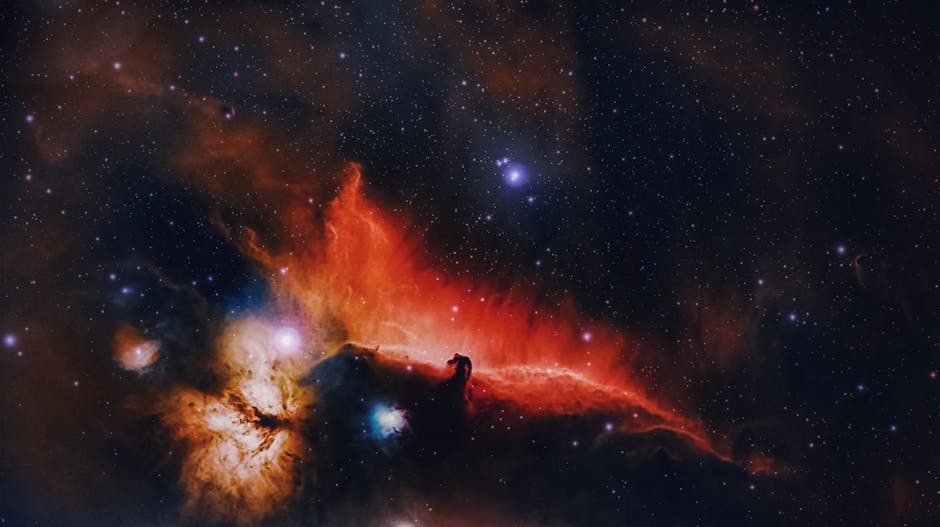
- Astronomers detected 98% of light from universe’s first stars in an ultra-faint galaxy observed 450 million years after the Big Bang.
- The James Webb Space Telescope (JWST) revealed an unusual abundance of ionized oxygen and a near absence of heavier elements in the galaxy.
- The chemical signature of primordial stars matches theoretical models, confirming the universe’s early star formation processes.
- The discovery opens a direct observational window into the cosmic ‘dark ages’ and the ignition of the first light in the universe.
- The galaxy’s chemical composition suggests massive, short-lived Population III stars exploded as pair-instability supernovae.
For the first time, astronomers have uncovered definitive evidence of remnants from the universe’s earliest stars—known as Population III—in an ultra-faint galaxy observed just 450 million years after the Big Bang. Using the James Webb Space Telescope (JWST), researchers detected an unusual abundance of ionized oxygen and a near absence of heavier elements like carbon and iron, a chemical signature predicted for stars formed exclusively from primordial hydrogen and helium. This finding, published in Nature, not only confirms long-standing theoretical models but also opens a direct observational window into the cosmic ‘dark ages’ and the processes that ignited the first light in the universe.
Chemical Fingerprint of Primordial Stars

The breakthrough emerged from spectroscopic analysis of the galaxy J0810+4120, located at a redshift of z ≈ 9.6, placing it among the most distant galaxies ever observed. JWST’s Near-Infrared Spectrograph (NIRSpec) revealed a strong emission line at 0.77 microns, corresponding to doubly ionized oxygen (O III), but critically, no detectable lines from carbon (C III), nitrogen (N II), or iron (Fe II)—elements typically forged in subsequent generations of stars. The oxygen present appears to have been produced in massive, short-lived Population III stars that exploded as pair-instability supernovae, which can generate large amounts of oxygen while dispersing little of other metals. According to the study, the metallicity of the galaxy is less than 1% of the solar value, and the oxygen-to-iron ratio is over 100 times higher than in the Sun, aligning precisely with simulations of first-star nucleosynthesis. These data, gathered over 42 hours of integration time, represent the strongest empirical evidence to date for the existence of Population III stars.
Key Players in the Cosmic Hunt

The discovery was led by an international team from the Max Planck Institute for Astronomy, the University of California, Santa Cruz, and the Space Telescope Science Institute. Their work is part of the JWST Advanced Deep Extragalactic Survey (JADES), a collaborative program designed to probe the early universe with unprecedented sensitivity. Researchers leveraged machine-learning algorithms to isolate faint spectral signals from background noise, allowing them to distinguish the unique chemical profile of J0810+4120 from more evolved galaxies. NASA and the European Space Agency jointly operate JWST, whose infrared capabilities are essential for observing high-redshift objects whose light has been stretched into longer wavelengths. Theoretical astrophysicists from the Massachusetts Institute of Technology contributed models predicting the spectral output of pair-instability supernovae, which were instrumental in interpreting the data. This synergy between observation, instrumentation, and simulation marks a new era in early-universe cosmology.
Trade-Offs in Interpreting the Signal

While the evidence is compelling, scientists caution that alternative explanations cannot yet be ruled out entirely. Some researchers suggest that the observed oxygen excess could stem from extreme starburst activity in a low-metallicity galaxy dominated by later-generation stars, rather than true Population III remnants. Additionally, the spatial resolution of JWST, though groundbreaking, cannot yet resolve individual stars at such distances, meaning the signal represents an integrated light from a stellar population. Confirming the findings will require deeper spectroscopy and the detection of additional elemental lines—such as helium-3 or lithium—that are uniquely tied to primordial nucleosynthesis. On the upside, if verified, this discovery enables new constraints on the initial mass function of early stars, many of which may have exceeded 100 solar masses. It also strengthens the case for future missions, such as the Large UV/Optical/Infrared Surveyor (LUVOIR), designed to directly image the first stars.
Why the Timing Is Transformative

The detection comes just four years after JWST began operations, marking a pivotal moment in astrophysics. Prior to its launch, the search for Population III stars was largely theoretical, hindered by the inability to observe galaxies from the first billion years of the universe. Ground-based telescopes lacked the sensitivity and spectral resolution, while Hubble could not peer far enough into the infrared. The combination of JWST’s 6.5-meter mirror, cryogenic instrumentation, and stable orbit at L2 has finally made such observations feasible. Moreover, advances in data processing and artificial intelligence have allowed researchers to extract faint signals from noisy datasets. The timing also coincides with refined cosmological models from the Simons Observatory and DESI, which have better predicted where and how to search for primordial signatures.
Where We Go From Here
In the next 6–12 months, the JADES team plans to observe ten additional ultra-faint galaxies at similar redshifts to determine whether J0810+4120 is an isolated case or part of a broader population of primordial systems. One scenario suggests that multiple detections will confirm Population III stars were common in small, dark-matter-dominated halos. A second possibility is that only rare, chemically isolated environments produced such stars, implying a patchy reionization of the early universe. A third, more radical scenario involves detecting direct collapse black holes—another predicted outcome of massive Population III remnants—which could explain the rapid growth of supermassive black holes seen in quasars less than a billion years after the Big Bang. Each outcome would reshape our understanding of galaxy formation and cosmic evolution.
Bottom line — this discovery provides the first observational foothold into the era of the first stars, transforming a once-theoretical frontier into a testable domain of astrophysics.
Source: Nature