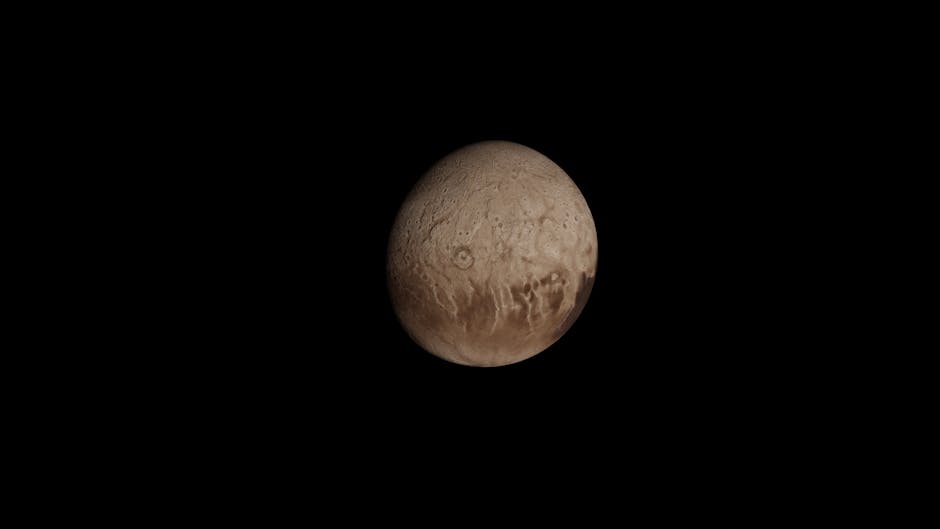
- Scientists have detected a thin atmosphere around 2002 XV93, a trans-Neptunian object, which could redefine our understanding of atmospheric retention.
- The discovery suggests that volatile ices can sublimate under extremely cold and low-energy conditions, challenging long-standing assumptions.
- A stellar occultation event revealed a gradual dimming and re-brightening of starlight, indicating the presence of a tenuous atmosphere.
- The atmospheric pressure is estimated to be less than one-millionth of Earth’s, likely composed of gases.
- This finding hints at a more dynamic and chemically active outer solar system than previously believed.
Scientists have detected compelling evidence of a thin atmosphere around 2002 XV93, a trans-Neptunian object orbiting far beyond Pluto—a discovery that could redefine our understanding of atmospheric retention in the outer solar system. If confirmed, this would be the first known atmosphere around a small celestial body in the distant Kuiper Belt, suggesting that volatile ices can sublimate even under extremely cold, low-energy conditions. The finding, derived from a rare stellar occultation event, challenges long-standing assumptions about the limits of atmospheric formation and hints at a more dynamic and chemically active outer solar system than previously believed.
Stellar Occultation Reveals Atmospheric Signature

In December 2023, astronomers observed a crucial stellar occultation—when 2002 XV93 passed in front of a distant star—using a network of ground-based telescopes across South America and the southern Atlantic. Precise photometric measurements revealed a gradual dimming and re-brightening of the starlight, rather than the sharp drop expected if the object had no atmosphere. This light curve asymmetry, analyzed by the Research and Education Collaborative Occultation Network (RECON) and confirmed by teams at the Southwest Research Institute (SwRI), strongly suggests the presence of a tenuous envelope of gases surrounding the 400-kilometer-wide object. The atmospheric pressure is estimated to be less than one-millionth of Earth’s, likely composed of nitrogen and methane vapors sublimating from surface ices. This data, published in Nature Astronomy, marks a pivotal advancement in outer solar system observation techniques.
Key Players: Observatories and Research Teams

The detection was a collaborative effort involving NASA’s Stratospheric Observatory for Infrared Astronomy (SOFIA) legacy data, RECON’s distributed telescope array, and researchers from SwRI, MIT, and the Observatório Nacional in Brazil. Dr. Eliot Young, a senior program manager at SwRI and lead author of the study, emphasized the role of coordinated ground-based networks in capturing fleeting occultation windows. Meanwhile, the European Space Agency’s Gaia mission provided critical star position data, enabling precise prediction of the occultation path. These teams have been refining occultation observation methods for over a decade, with prior successes including atmospheric studies of Pluto and Charon. The 2002 XV93 observation demonstrates how small, decentralized observatories can contribute to high-impact planetary science, especially in regions too distant for current spacecraft missions like New Horizons.
Trade-Offs: Scientific Gain vs. Observational Limits

While the discovery offers unprecedented insights into volatile transport in the outer solar system, it also underscores the limitations of Earth-based astronomy for such faint, distant objects. Confirming the atmosphere’s composition will require either additional rare occultations or next-generation instruments like the Vera C. Rubin Observatory, set to begin full operations in 2025. Furthermore, the transient nature of such atmospheres—likely collapsing and re-forming as the object moves along its 300-year elliptical orbit—introduces uncertainty about long-term stability. On the upside, if 2002 XV93 can sustain even a fleeting atmosphere, similar processes may be common among mid-sized Kuiper Belt objects, suggesting a broader class of ‘active’ dwarf bodies. This reopens questions about heat sources, internal structure, and the role of radiogenic heating in driving sublimation far from the Sun.
Why Now? The Timing of a Rare Alignment

The detection was only possible due to a confluence of precise orbital predictions, improved sensor sensitivity, and favorable alignment between 2002 XV93, the background star, and Earth. Advances in astrometry from Gaia have reduced positional uncertainties to milliarcseconds, enabling accurate forecasts of occultation paths just weeks in advance. Additionally, increased coordination among amateur and professional astronomers has expanded observational coverage, turning what was once a needle-in-a-haystack effort into a targeted campaign. The timing also coincides with heightened interest in the outer solar system following New Horizons’ 2019 flyby of Arrokoth, which revealed unexpectedly complex geology. These factors together created a unique window to probe 2002 XV93’s environment in ways impossible even a decade ago.
Where We Go From Here
In the next 6 to 12 months, scientists anticipate two to three additional occultation opportunities that could confirm and refine atmospheric models for 2002 XV93. If the atmosphere is confirmed, space agencies may consider it a candidate for future mission targeting, potentially influencing trajectory planning for proposed interstellar probe concepts. Alternatively, if follow-up observations fail to detect the atmosphere, it may indicate a transient outgassing event—possibly triggered by an impact or internal heat pulse—rather than a stable envelope. A third scenario involves discovering similar atmospheres around other distant objects, which would suggest that 2002 XV93 is not an anomaly but part of a new class of volatile-rich bodies in the outer solar system.
Bottom line — single sentence verdict: The potential atmosphere around 2002 XV93 represents a paradigm shift in planetary science, suggesting that even the smallest, coldest bodies at the edge of the solar system may harbor dynamic, evolving environments driven by subtle thermal and chemical processes.
Source: Sciencenews