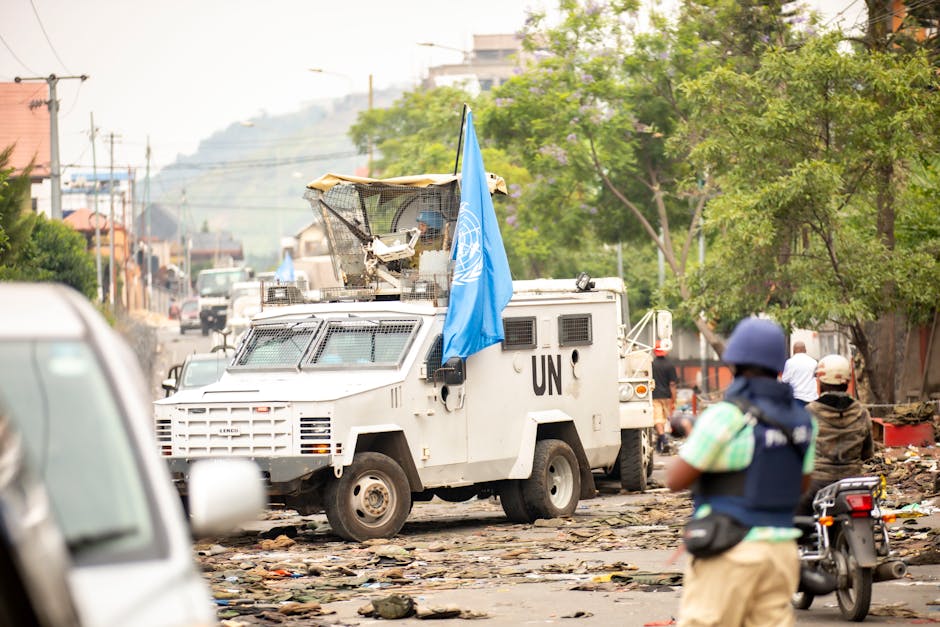
- The UN vehicles were clearly marked with white paint and the UN insignia, raising questions about their targeting by drones in Ukraine.
- The destruction of these vehicles challenges long-standing norms protecting civilian and neutral actors during armed conflict.
- The UN vehicles were operating in a designated humanitarian corridor, delivering food, medicine, and emergency supplies to civilians.
- The targeting of UN vehicles may be considered a potential war crime under international law.
- The incident raises concerns about the safety of humanitarian workers and vulnerable populations in war zones.
How can clearly marked United Nations vehicles be struck by drones in a war zone, and what does this mean for the future of humanitarian missions? The recent targeting of UN-affiliated transport in Ukraine—vehicles painted in unmistakable white with prominent UN insignia—has sent shockwaves through the international community. These vehicles were operating in a designated humanitarian corridor, delivering food, medicine, and emergency supplies to civilians trapped in active combat zones. Their destruction by drone attacks, confirmed by UN officials, challenges long-standing norms protecting civilian and neutral actors during armed conflict. If even the most visible symbols of neutrality are no longer safe, what protections remain for humanitarian workers and the vulnerable populations they serve?
Were the UN Vehicles Legally Protected Under International Law?

Yes, unequivocally. Under the Geneva Conventions and Additional Protocol I, United Nations humanitarian vehicles are considered protected objects due to their non-combatant, life-saving role. These vehicles must be clearly marked with the UN emblem and operate without military support to maintain protected status. The fact that these vehicles were painted in standard UN livery and operating under coordinated humanitarian protocols strengthens the claim that their targeting constitutes a potential war crime. The United Nations has issued a formal statement condemning the attacks as a “serious violation of international humanitarian law.” Legal experts at the International Committee of the Red Cross emphasize that deliberate attacks on protected humanitarian assets undermine the foundational rules of armed conflict and risk eroding global trust in neutral aid operations.
What Evidence Confirms the Use of Drones in the Attacks?

Multiple sources, including UN field reports and geolocated video footage analyzed by conflict monitors, confirm that drones—likely quadcopter-type unmanned aerial systems equipped with explosive payloads—were used in the strikes. Satellite imagery reviewed by BBC News shows the aftermath of at least seven vehicles destroyed or damaged near the eastern Ukrainian city of Bakhmut, a region that has seen prolonged frontline fighting. Ukrainian military analysts suggest the drones may have been operated by Russian-affiliated forces, though no group has officially claimed responsibility. The precision of the strikes—hitting slow-moving aid convoys rather than nearby military units—raises concerns about intent. Humanitarian coordinators report that flight paths were shared in advance with all parties through the UN’s deconfliction mechanism, a standard procedure meant to prevent such incidents.
Are There Alternative Explanations for the Attacks?

Some military analysts caution against immediate attribution, noting that battlefield confusion and sensor limitations can lead to tragic mistakes—even with marked vehicles. In high-intensity combat environments like eastern Ukraine, drones often rely on thermal imaging and automated targeting systems that may misidentify vehicles, especially if operating near military supply routes. Additionally, there are concerns about so-called ‘spoofing,’ where one side stages an attack on neutral assets to discredit the other. While the UN maintains that its convoy coordination was properly communicated, critics suggest that communication breakdowns or deliberate disregard for deconfliction protocols may have played a role. Skeptics also point out that while the vehicles bore UN markings, their cargo or escort patterns might have raised suspicions—though no evidence has emerged to suggest these convoys violated neutrality.
What Are the Real-World Consequences of These Attacks?

The immediate effect has been the suspension of several UN-led aid missions in high-risk areas of eastern Ukraine, leaving thousands of civilians without critical supplies. Humanitarian organizations report increased reluctance among drivers and volunteers to participate in frontline deliveries. In one instance, a World Food Programme operation was delayed for 72 hours due to security reassessments. Beyond logistics, the psychological impact is profound: if the UN—a globally recognized symbol of neutrality—can be targeted with impunity, other aid groups may face even greater risks. The attacks could also embolden other armed actors in global conflicts to disregard humanitarian protections, setting a dangerous precedent in regions like Sudan, Gaza, and Myanmar where aid workers already face high levels of violence.
What This Means For You
While the attacks occurred thousands of miles away, they reflect a growing erosion of international norms that uphold human dignity during war. The safety of humanitarian missions affects global stability and moral accountability. When neutral aid is threatened, civilian suffering increases—and conflicts become harder to resolve. As taxpayers and citizens, public support for diplomatic pressure and accountability mechanisms can influence how such violations are addressed. The principles at stake are not abstract; they determine whether help can reach children in bombed-out hospitals or families in besieged towns.
Now, the central question remains: how can the international community effectively deter attacks on humanitarian missions when existing accountability systems often lack enforcement power? With investigations ongoing and sanctions under discussion at the UN Security Council, the response—or lack thereof—will signal whether the rules protecting aid workers are still binding, or merely symbolic.
Source: Ktla