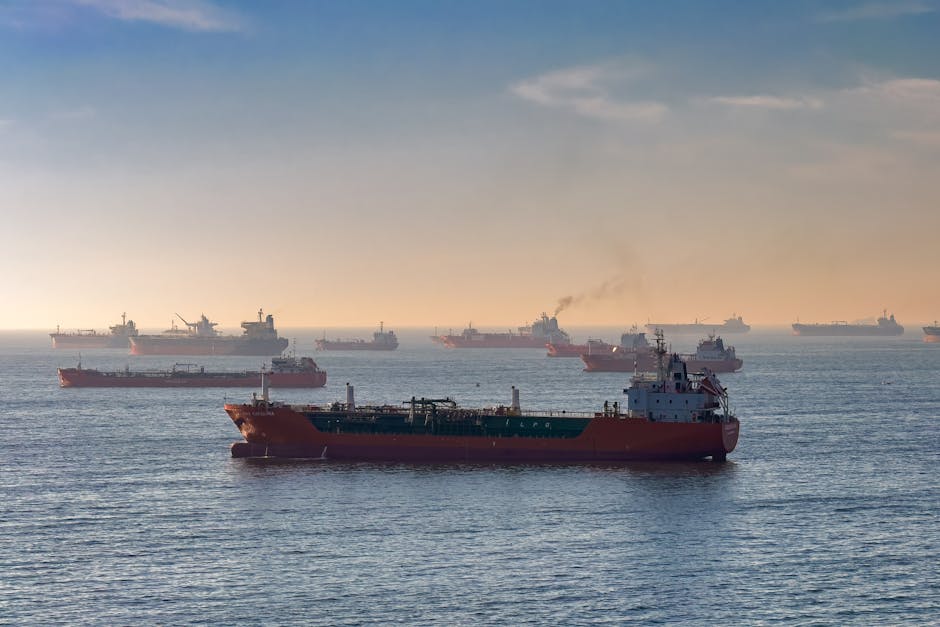
- Iran is poised to disrupt global energy markets by imposing tolls on vessels passing through the Strait of Hormuz, a 21-mile-wide passage.
- The move could strangle maritime commerce and ignite a broader conflict in the Middle East, where tensions are escalating.
- The Strait of Hormuz is a strategic waterway through which 20% of the world’s oil supply passes daily.
- Iran’s plan to impose tolls is framed as a sovereignty assertion over what Tehran calls ‘national waters’.
- The move has the potential to ignite a conflict with other countries, including Israel, which is intensifying its bombardment across Lebanon and Gaza.
Smoke rises in spirals over Beirut’s southern suburbs, where the scent of burnt concrete mixes with the acrid tang of missile residue. In Gaza, children are pulled from rubble with glassy eyes and bandaged limbs, while in Tehran, military officials convene behind closed doors, maps of the Persian Gulf spread across polished oak tables. The Strait of Hormuz—narrow, strategic, and historically volatile—hangs in the balance. Every oil tanker that slips through its 21-mile-wide passage carries not just crude, but the fragile equilibrium of global energy markets. Now, Iran is poised to disrupt that balance, preparing to announce a controversial toll system for vessels transiting the waterway, a move that could strangle maritime commerce and ignite a broader conflict just as Israel’s military intensifies its bombardment across Lebanon and Gaza, killing dozens and wounding hundreds more.
Iran’s Strategic Move in the Strait of Hormuz

Iran is preparing to unveil a plan that would require foreign vessels passing through the Strait of Hormuz to pay tolls enforced by the Islamic Revolutionary Guard Corps Navy (IRGCN). While officials have not yet disclosed the exact fee structure or implementation timeline, sources within Iran’s Ministry of Defense suggest the move is framed as a sovereignty assertion over what Tehran calls ‘national waters.’ The strait, through which about 20% of the world’s oil supply passes daily, is governed by the United Nations Convention on the Law of the Sea (UNCLOS), which guarantees freedom of navigation for commercial shipping. Iran is not a signatory to UNCLOS, a fact it has long used to justify unilateral actions. The proposed tolls could be leveraged as both an economic tool and a geopolitical threat, particularly if paired with increased naval patrols or the detention of vessels deemed noncompliant. The U.S. Fifth Fleet, based in Bahrain, has already placed additional destroyers on high alert, while commercial insurers are reassessing risk premiums for Gulf transits.
From Sanctions to Strategic Leverage

The current crisis is rooted in decades of regional friction, economic isolation, and failed diplomacy. Since the 1979 Islamic Revolution, Iran has viewed the Strait of Hormuz as both a lifeline and a weapon. In 2011 and 2019, Tehran threatened to close the strait during periods of heightened tension with the West, particularly after U.S. sanctions crippled its oil exports. The 2015 Joint Comprehensive Plan of Action briefly eased hostilities, but the U.S. withdrawal in 2018 under President Donald Trump reignited hostilities. Since then, Iran has incrementally expanded its naval capabilities, deploying fast attack craft and coastal missile batteries capable of targeting shipping lanes. The toll proposal reflects a shift from outright closure threats to a more calculated strategy: monetizing access while maintaining plausible deniability in disrupting global trade. This evolution mirrors Iran’s broader pattern of asymmetric deterrence, using proxies, cyber operations, and naval harassment to project power beyond its borders.
The Key Players in a High-Stakes Game

The decision to impose tolls emerges from a complex web of Iranian power centers. Supreme Leader Ayatollah Ali Khamenei, the ultimate authority on national security, has long advocated for ‘resistance economics’ in the face of Western pressure. President Masoud Pezeshkian, a relative moderate elected in 2024, supports the tolls as a means of generating revenue without formally escalating conflict. Meanwhile, the IRGC, particularly its elite Quds Force under Brigadier General Esmail Ghaani, sees the strait as a theater of influence, using maritime operations to counter U.S. presence and support allies like Hezbollah. On the international stage, Israeli Prime Minister Benjamin Netanyahu has justified recent strikes in Lebanon and Gaza as necessary responses to Hezbollah rocket fire and Hamas mobilization. Former U.S. President Donald Trump, now campaigning for a return to the White House, has warned Iran of a ‘very bad time’ if it interferes with shipping, echoing his 2019 ‘maximum pressure’ doctrine.
Global Repercussions of a Chokepoint Under Siege

If Iran enforces tolls or restricts access to the Strait of Hormuz, the economic fallout could be immediate and severe. Oil prices, already elevated due to Middle East instability, could spike by 30% or more, triggering inflationary pressures worldwide. Asian economies—particularly China, Japan, and South Korea, which rely on Gulf oil—would face acute supply risks. The U.S. and European Union may respond with expanded sanctions, while maritime nations could form naval coalitions to ensure freedom of navigation, risking direct confrontation with Iranian forces. For regional populations, the human cost is already mounting: over 150 people were killed in Israeli strikes across southern Lebanon in the past 72 hours, and Gaza’s health system, long strained, is nearing collapse. Humanitarian corridors remain blocked, and aid deliveries are inconsistent.
The Bigger Picture
This moment is not merely about tolls or oil—it is about the fragility of international order in an era of resurgent authoritarianism and eroding multilateralism. The Strait of Hormuz has long been a barometer of global stability. When warships gather and insurance rates soar, it signals a breakdown in the norms that have, however imperfectly, governed the postwar world. Iran’s actions challenge the principle that critical maritime routes must remain open to all. At the same time, repeated military interventions by Israel and the U.S. fuel cycles of retaliation that undermine long-term peace. The world is witnessing not just a regional conflict, but a systemic test of whether diplomacy can prevail over coercion.
What comes next may depend on quiet backchannel talks now underway in Oman and Qatar. If Iran proceeds with tolls and the U.S. responds with force, the region could spiral into open war. But if diplomatic off-ramps are found—perhaps through renewed nuclear negotiations or third-party mediation—there remains a narrow path to de-escalation. The coming days will reveal whether leaders choose brinkmanship or restraint in one of the planet’s most perilous flashpoints.
Source: Al Jazeera