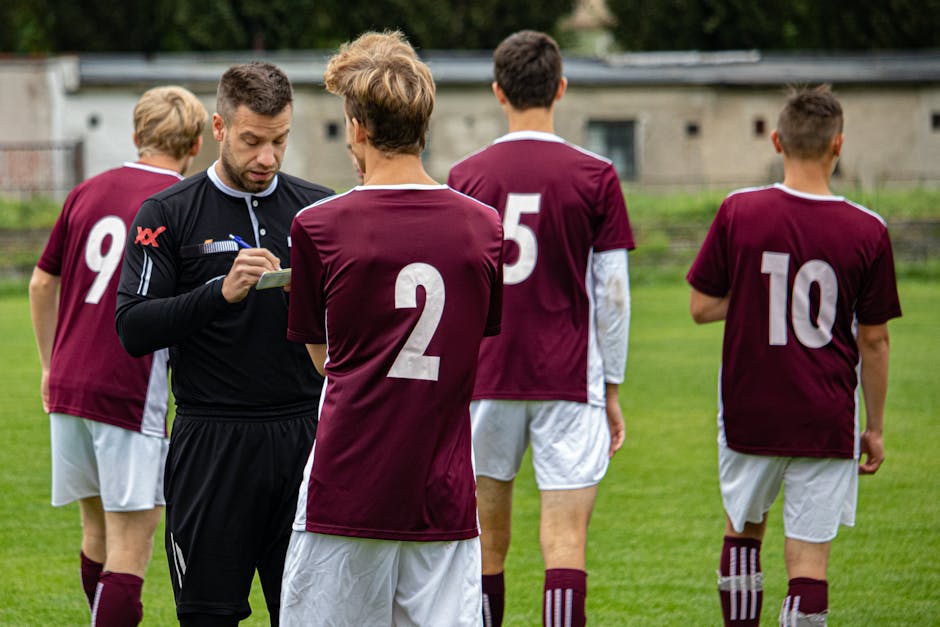
- A referee’s mistake led to Neymar’s premature substitution in a soccer match due to a misidentified jersey number.
- The error occurred during a routine substitution sequence in the second half of Santos’ home match against Coritiba.
- The on-field referee mistakenly pointed to Neymar, wearing number 10, instead of his teammate wearing number 17.
- Video footage clearly shows the official glancing at the board before making the error.
- The substitution mistake caused confusion among the players and the crowd, leading to a stunned silence in the stadium.
The artificial turf shimmered under the harsh stadium lights of Vila Belmiro, the air thick with anticipation and the murmur of 15,000 spectators. Fans waved white flags emblazoned with Santos FC’s iconic black and white stripes, their eyes fixed on the number 10 gliding across the pitch. Neymar, back in familiar territory after years abroad, moved with the languid confidence of a man reclaiming his throne. A feint here, a flick there — the crowd roared at every touch. But in the 63rd minute, a surreal moment unfolded: the referee gestured for Neymar to leave the field. Confused, he exchanged glances with teammates, then reluctantly walked off — not due to injury or tactical shift, but because the official had mistaken his number 10 for number 17, belonging to a teammate due to be subbed. The stadium fell into stunned silence before erupting in disbelief.
Referee Confusion Triggers Incorrect Substitution

The pivotal error occurred during a routine substitution sequence in the second half of Santos’ home match against Coritiba. As the fourth official held up the illuminated board displaying ‘17’ and ‘7’ for the incoming player, the on-field referee pointed directly at Neymar, wearing number 10. Video footage clearly shows the official glancing at the board, then motioning to Neymar, who had been nowhere near the substitution zone. Team staff scrambled to correct the mistake, waving frantically from the sideline, but by the time the error was acknowledged, Neymar had already exited the field and the substitute had entered. Play continued for nearly three minutes before the fourth official realized the discrepancy and halted the game. According to Brazilian Football Confederation (CBF) regulations, such mistakes can be rectified only if caught before the restart, but in this case, Coritiba had already launched an attack. Ultimately, the match resumed with the incorrect substitution reversed, but the damage to rhythm and morale was done. Santos, despite dominating possession, drew 1–1, a result that dampened their playoff aspirations.
The Rules of Substitution and How They Were Breached

The Laws of the Game, as defined by the International Football Association Board (IFAB), stipulate that substitutions must be clearly communicated between the fourth official, the referee, and the players involved. The board displays the outgoing player’s number, and the referee confirms identity by visual verification before signaling for the change. In high-pressure environments, such checks are meant to prevent exactly this kind of error. Yet, despite technological aids like electronic boards and communication headsets, human oversight remains central. This isn’t the first such incident — in 2018, a similar confusion occurred in a Swiss Super League match when FC Basel’s player was wrongly pulled off — but it’s exceptionally rare at the professional level, particularly involving a globally recognized figure like Neymar. The CBF has since opened an internal review into the officiating crew, emphasizing that referees undergo rigorous pre-match briefings to avoid such lapses. Still, the incident underscores systemic vulnerabilities in live decision-making, where split-second errors can alter the narrative of a game.
The People Behind the Misstep

Referee Raphael Claus, a seasoned official with over 200 Brasileirão matches under his belt, was at the center of the controversy. Known for his calm demeanor and precise whistle control, Claus is typically regarded as one of Brazil’s top referees. Yet even the most experienced officials are prone to lapses, particularly when managing fast-paced substitutions under crowd pressure. Neymar, returning to Santos in a highly publicized homecoming meant to inspire a new generation, was visibly frustrated but refrained from public rebuke. His role now extends beyond performance — he’s a mentor, a symbol, and a stabilizing force for a club rebuilding its identity. Meanwhile, the actual number 17, reserve midfielder Lucas Braga, remained unaware he was supposed to be substituted until after the fact, adding to the farcical nature of the event. Club officials later stated they would file a formal complaint with the CBF, not for result reversal — which is impossible under current rules — but to demand procedural reforms.
Consequences for Santos and Brazilian Football

While the match ended in a draw, the psychological impact on Santos cannot be understated. Neymar’s brief removal disrupted the team’s attacking flow, and the confusion may have contributed to their failure to convert several late chances. More broadly, the incident has reignited criticism of officiating standards in Brazil’s top flight, where inconsistent refereeing has long been a point of contention among clubs and fans. Unlike leagues with Video Assistant Referee (VAR) support for substitutions — such as Germany’s Bundesliga, which uses VAR to verify player identity during changes — Brazil relies solely on on-field judgment. This gap in oversight could prompt calls for expanded VAR protocols. For Neymar, the episode was a bizarre footnote in a comeback narrative already under scrutiny; his fitness and leadership are being closely watched as Santos fights for relevance in a competitive league.
The Bigger Picture
This moment, absurd as it may seem, reflects a deeper issue in modern sports: the tension between human judgment and technological precision. As games grow faster and stakes rise higher, the margin for error shrinks. Football, traditionally resistant to over-automation, now faces pressure to integrate smarter safeguards. Mistaking a player’s number might seem trivial, but when it involves a figure like Neymar, it becomes symbolic — a reminder that even the most choreographed systems depend on fallible individuals. Other sports, from tennis to rugby, have embraced digital verification for line calls and player challenges. Football’s reluctance to extend such tools to administrative acts like substitutions now appears increasingly anachronistic.
What comes next may hinge on how seriously the CBF treats this incident. Will it be dismissed as a one-off comedy of errors, or will it catalyze reform? For now, the image of Neymar walking off the pitch, bewildered by a mistake no one saw coming, lingers — not just as a viral moment, but as a quiet demand for accountability in the beautiful game. The lights will dim at Vila Belmiro again, but the conversation won’t fade with them.
Source: V