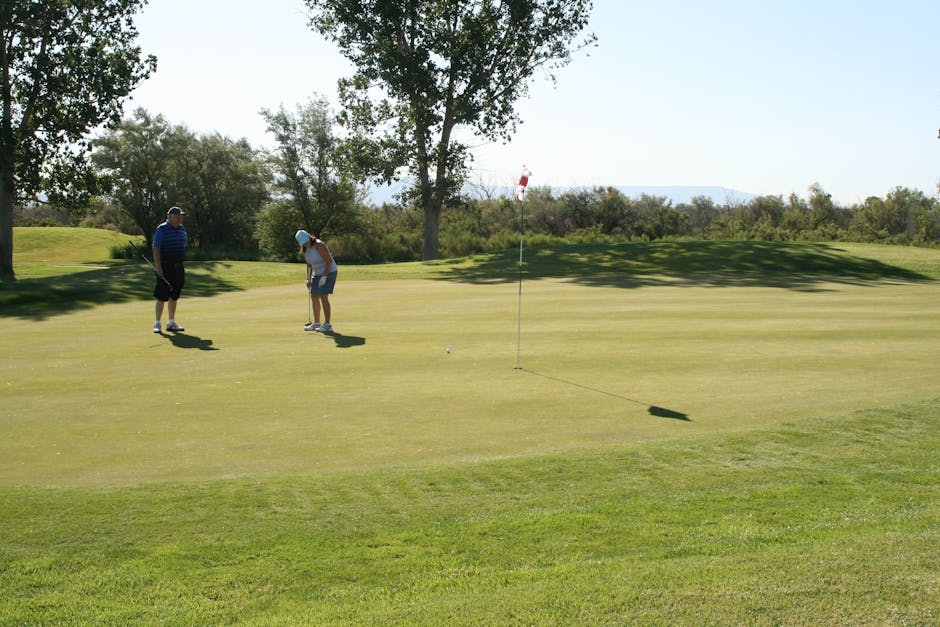
- Aronimink’s challenging layout with firm greens and narrow fairways played a crucial role in the 2026 PGA Championship’s final leaderboard.
- Only 12 players finished under par at Aronimink, highlighting the course’s punishing conditions.
- England’s Matt Wallace secured his first major championship victory at the 2026 PGA Championship.
- Wallace’s win marks the first time an Englishman has won the PGA Championship since 2010.
- The dramatic final round at Aronimink Golf Club was shaped by weather delays and the course’s treacherous 17th and 18th holes.
England’s Matt Wallace has claimed his first major championship with a one-stroke victory at the 2026 US PGA Championship, completing a dramatic final round at Aronimink Golf Club under fading daylight after weather delays. The 34-year-old from Kent held his nerve on the treacherous 18th hole, saving par after a wayward drive, to finish at 10-under 270, edging past American contender Collin Morikawa. Wallace becomes the first Englishman to win the PGA Championship since 2010, breaking a national drought in men’s majors and cementing himself among the sport’s elite. His win, achieved without a top-10 finish in a major since 2021, underscores a remarkable resurgence fueled by technical adjustments and mental resilience.
Final Round Scoring and Course Conditions

Aronimink’s par-70 layout proved as punishing as expected, with the final leaderboard shaped by its firm greens, narrow fairways, and the psychological toll of the 17th and 18th holes. Only 12 players finished under par, and the scoring average on Sunday was 73.6, nearly three strokes over the course rating. Wallace fired a 69 in the final round—the lowest among the top 10—after navigating a morning delay of nearly two hours due to thunderstorms. The rain softened the greens but added mental strain, with players forced to reframe their approach mid-round. Shane Lowry closed with a 68 to finish at +2, a resilient performance after his 82 at the Cognizant Classic earlier in the season. Morikawa, who led by two at the turn, bogeyed 15 and 17 to finish at -9, while Scottie Scheffler faded with a 74 after three early bogeys. Data from the PGA Tour’s ShotLink system shows Wallace gained 3.4 strokes on putting, the highest in the field, and lost only 0.8 on approach shots, a significant improvement from his previous major outings.
Key Players and Their Final Round Performances

Matt Wallace’s victory marks a career-defining moment for a player once ranked outside the world’s top 500 after a series of missed cuts and confidence lapses. His 2023 swing rebuild under coach Pete Cowen appears to have fully matured, with Wallace now averaging 305 yards off the tee and striking 74% of fairways this week—up from 63% in 2024. Collin Morikawa, aiming for his third PGA title, showed flashes of brilliance with an eagle on the 4th but faltered under pressure, missing three putts inside 10 feet. Scheffler, the world No. 1, admitted post-round that he “never got into a rhythm,” a rare lapse for the consistent Texan. Viktor Hovland, starting the day two back, imploded with a triple bogey on the 8th after hitting into a creek and finished at -5. Meanwhile, rising star Nicolai Hojgaard, 23, impressed with a 70 to finish solo fourth at -7, signaling a potential shift in European golf’s next generation.
Trade-Offs: Risk, Reward, and Tournament Strategy

Victory at Aronimink hinged on balancing aggression with course management, particularly on the inward nine. The 17th, a 192-yard par-3 over water, played to a 4.1 stroke average on Sunday, the most difficult hole all week. Eleven players found the hazard, including Morikawa, whose tee shot barely cleared the front bunker but spun back into the drink. Wallace’s decision to lay up on 18 with a 3-iron off the tee, despite being within driver range, paid off when his second shot found the center of the green, setting up a two-putt finish. This conservative yet calculated approach contrasted with Hovland’s high-risk line, which led to disaster. Analysts note that the winning score of -10 was the highest in a PGA Championship since 2018, underscoring the course’s challenge. While power players like Bryson DeChambeau struggled to control their ball flight in the wind, Wallace’s precision and short-game poise offered a blueprint for success on tight, tree-lined courses.
Why the 2026 PGA Feels Like a Turning Point

The 2026 PGA Championship arrives at a transitional moment in professional golf, with the PGA Tour, LIV Golf, and the International Federation still negotiating governance and ranking access. Wallace, who rejected LIV overtures in 2024 to remain on the European Tour and PGA Tour co-sanctioned events, stands as a symbolic figure of the traditional pathway’s viability. His win not only secures a five-year major exemption and entry into all other majors through 2031, but also boosts the Race to Dubai standings in a season where European Tour visibility has waned. Moreover, Aronimink’s successful hosting—after criticism over 2025’s chaotic setup at another venue—reaffirms the PGA of America’s course selection rigor. The presence of record crowds, estimated at over 220,000 for the week, and a 28% increase in global streaming, per PGA data, signals renewed fan engagement post-pandemic and post-split.
Where We Go From Here
In the next six to twelve months, three scenarios could unfold. First, Wallace could parlay this win into a sustained run, possibly contending at the 2026 Open Championship at Royal Liverpool, where links conditions may suit his iron play. Second, Morikawa may refine his short game to reclaim major dominance, especially with the 2027 Masters favoring precision over power. Third, the broader landscape may see increased pressure on LIV to integrate with official world rankings, especially if more players like Wallace achieve success outside its structure. The PGA Tour’s 2026 FedEx Cup playoffs could also see shifted dynamics as players recalibrate form ahead of the Ryder Cup qualifying cycle.
Bottom line — Matt Wallace’s 2026 PGA Championship victory is not just a personal redemption arc, but a reaffirmation of skill, patience, and strategic discipline in modern golf’s increasingly fractured ecosystem.
Source: The Guardian