- A sophisticated drone strike severely damaged a major Russian fertilizer plant, disrupting the country’s ammonium nitrate production.
- The Nevinnomysskiy Azot chemical plant is a strategic target in Russia’s war economy, producing 30% of the nation’s ammonium nitrate.
- Ammonium nitrate is a dual-use chemical, essential for fertilizers but also a key ingredient in military-grade explosives.
- The plant’s proximity to the Caucasus mountains may have helped the drone evade radar, indicating growing sophistication in drone warfare tactics.
- The strike is one of the deepest and most strategically significant attacks on Russian industrial infrastructure since the war began.
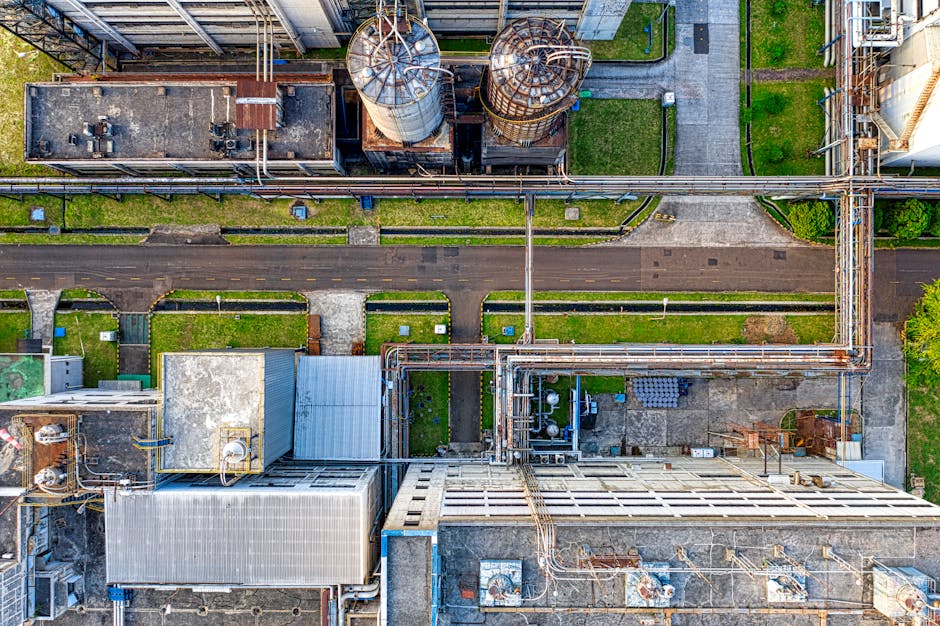
In a bold escalation of the shadow war beyond the front lines, a sophisticated drone strike has severely damaged the Nevinnomysskiy Azot chemical plant in southern Russia, a facility responsible for up to 30% of the nation’s ammonium nitrate production. Ammonium nitrate is a dual-use chemical—essential for agricultural fertilizers but also a key ingredient in military-grade explosives. Satellite imagery and local emergency reports confirm a large explosion followed by intense fires that burned for over 12 hours, destroying storage silos and damaging critical processing units. Russian authorities confirmed the incident was a targeted aerial attack, likely launched from Ukrainian-controlled territory, marking one of the deepest and most strategically significant strikes on Russian industrial infrastructure since the war began. The plant’s proximity to the Caucasus mountains may have been exploited to evade radar, indicating a growing sophistication in drone warfare tactics.
Strategic Target in Russia’s War Economy

The Nevinnomysskiy Azot facility, located in Stavropol Krai roughly 600 kilometers from the Ukrainian border, has long been a cornerstone of Russia’s chemical industry. Founded in 1930, it employs over 4,000 workers and produces more than 1.5 million tons of nitrogen-based compounds annually. While publicly classified as a civilian enterprise, the plant has been under U.S. and EU sanctions since 2022 due to its documented role in supplying precursors for Russian artillery and mortar shells. Ammonium nitrate from Nevinnomysskiy is processed into TNT-ammonium mixtures used in 152mm and 122mm shells—ammunition types extensively deployed in Donbas offensives. The strike’s timing is critical: Russian forces have been consuming artillery at unprecedented rates, with Western estimates suggesting up to 10,000 shells fired per day. Disrupting supply at this scale could force Moscow to ration munitions or divert resources from other sectors, potentially slowing battlefield momentum.
Execution and Attribution

While no group has officially claimed responsibility, military analysts point to a likely Ukrainian Special Operations Forces (SOF) or intelligence-linked operation, possibly executed with Western-supplied long-range drones. Open-source investigators have identified similarities between the attack pattern and previous strikes on Russian fuel depots and airfields, including the use of coordinated drone swarms flying at low altitudes to avoid detection. Flight path reconstructions suggest the drones may have been launched from the Kharkiv or Sumy regions, covering a distance exceeding 500 kilometers—within reach of modified FPV or jet-powered UAVs. Russia’s Ministry of Defense acknowledged the strike but downplayed its impact, stating that ‘minor damage’ had been sustained and that production would resume ‘within weeks.’ However, satellite data from Reuters analysis contradicts this, showing complete destruction of at least two ammonium storage domes and a damaged ammonium synthesis unit, repairs for which could take months.
Broader Implications for Dual-Use Infrastructure

The attack underscores a shifting doctrine in asymmetric warfare: the deliberate targeting of dual-use industrial assets to degrade military capacity under the guise of civilian protection. Russia has repeatedly bombed Ukrainian power and water infrastructure, blurring the line between military and civilian targets. In response, Ukraine appears to be adopting a reciprocal strategy, focusing on facilities that sustain Russia’s war machine while avoiding direct civilian casualties. Economically, the strike could ripple through Russia’s agricultural sector, where ammonium nitrate shortages may affect spring planting—though the Kremlin has stockpiled fertilizer ahead of the season. More significantly, it exposes vulnerabilities in Russia’s domestic defense logistics, which rely heavily on a few centralized plants. As drone technology becomes cheaper and more capable, similar attacks could target other chemical facilities in Tolyatti, Dzerzhinsk, or Perm, further straining Moscow’s ability to sustain prolonged conflict.
Escalation and Strategic Risks

The strike carries significant escalation risks. While Ukraine has previously targeted military and energy sites within Russia, hitting a major chemical plant raises the specter of toxic fallout or secondary explosions that could endanger nearby populations. The Nevinnomysskiy plant sits just 10 kilometers from the city of Nevinnomyssk, home to over 130,000 people. Russian state media have framed the attack as ‘eco-terrorism,’ potentially laying groundwork for retaliatory strikes on Ukrainian chemical or nuclear facilities. Western nations, while privately supportive of efforts to degrade Russian logistics, have urged restraint. A full-scale campaign against industrial infrastructure could destabilize global markets, particularly in food and energy, and provoke unpredictable responses from Moscow. The International Committee of the Red Cross has reiterated the principles of distinction and proportionality under the Geneva Conventions, warning that even legitimate military targets must not cause disproportionate civilian harm.
Expert Perspectives
Security analysts are divided on the long-term efficacy of such strikes. Dr. Elena Korosteleva of Oxford’s Changing Character of War Centre argues that ‘targeting supply nodes like Nevinnomysskiy can impose real operational costs without crossing the nuclear threshold.’ In contrast, retired U.S. Air Force Colonel Mike Hostage warns that ‘degrading chemical production may not significantly impact shell output, as Russia can reconfigure civilian stocks or use alternative explosives.’ Some experts suggest the attack may be as much symbolic as strategic—a signal that Ukraine can project power deep into Russian territory despite asymmetric defenses.
Looking ahead, the strike sets a precedent for future operations. If Ukraine can repeatedly hit high-value industrial targets, it may force Russia to divert air defenses from the front lines to protect rear-area infrastructure. Conversely, Moscow could respond with intensified missile barrages or cyberattacks on European energy networks. The world will be watching whether this incident triggers a new phase of the conflict—one fought not just on battlefields, but in factories, refineries, and supply chains far from the front.
Source: Kyivindependent