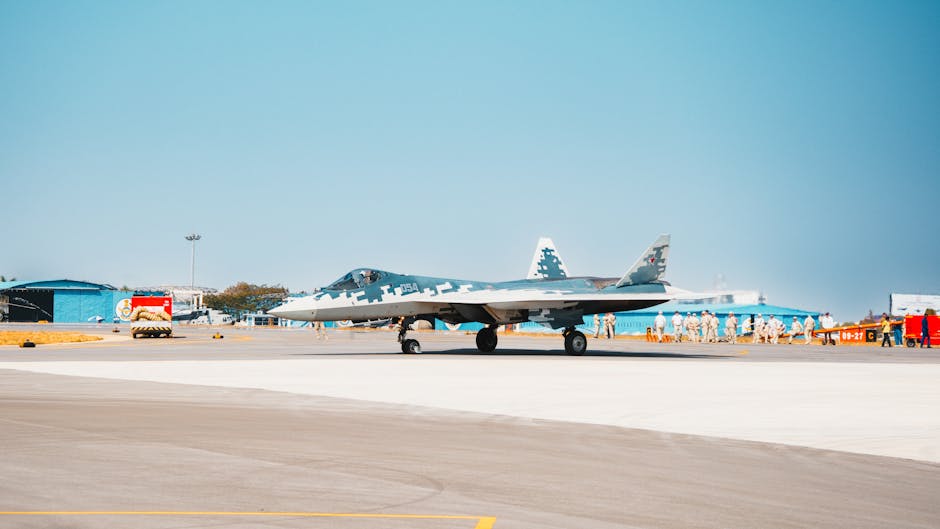
Ukraine has entered a new phase of its counteroffensive, conducting coordinated strikes against high-value Russian military assets deep within enemy territory. President Volodymyr Zelensky’s recent release of drone footage showing successful attacks on Russian airfields, fuel depots, and command centers underscores a deliberate shift in strategy: taking the war inside Russia to degrade Moscow’s capacity to sustain its invasion. These operations, previously limited in scope and impact, now appear to be part of a broader campaign to disrupt logistics, reduce airpower availability, and force the Kremlin to divert resources from the front lines. This marks a significant departure from defensive operations and signals Ukraine’s growing confidence in its long-range strike capabilities, supported by Western intelligence sharing and precision technology.
Expanding Reach: Evidence of Deep-Strike Operations

Over the past six weeks, satellite imagery and open-source intelligence confirm at least 14 Ukrainian strikes on Russian territory, including the destruction of two Su-34 fighter-bombers at the Morozovsk airbase in Rostov Oblast—over 300 kilometers from the front. According to data compiled by the Institute for the Study of War (ISW), Ukrainian drones have reached targets in Belgorod, Kursk, and Lipetsk, with one July 2024 mission damaging a S-400 air defense system near Voronezh. Russian state media acknowledged the downing of 57 drones over a 72-hour period in late June, the highest weekly total since the war began. While Moscow has long struck civilian infrastructure in Kyiv and Kharkiv, Ukraine’s ability to retaliate with precision against military objectives represents a strategic recalibration. The released footage, verified by BBC News, shows infrared drone feeds of explosions at fuel storage tanks and aircraft hangars, indicating advanced targeting systems likely aided by real-time NATO intelligence.
Key Players and Shifting Alliances

The campaign is being executed primarily by Ukraine’s Main Directorate of Intelligence (HUR), in coordination with the Air Force and Special Operations Forces. Dmytro Kovalenko, a senior HUR official speaking under condition of anonymity, confirmed that modified Soviet-era drones and newly supplied Western components have extended operational range. The United States and United Kingdom have not directly provided long-range strike weapons like ATACMS or Storm Shadow for use inside Russia, but they have shared geospatial intelligence and electronic warfare data that enable Ukrainian forces to plan deep missions. Meanwhile, Russia has responded by bolstering air defenses along its western borders and launching retaliatory strikes on Ukrainian energy infrastructure. Belarus has also tightened border surveillance, fearing spillover, while NATO has reiterated support for Ukraine’s right to self-defense—though with careful wording to avoid being seen as endorsing attacks on Russian soil.
Strategic Trade-Offs and Escalation Risks

While these strikes degrade Russian operational capacity, they carry significant geopolitical risks. By attacking inside Russia, Ukraine challenges Moscow’s narrative of invulnerability and forces the Kremlin to confront war fatigue among its population. However, such actions could provoke a broader Russian response, including intensified missile barrages, cyberattacks on Western targets, or even the use of tactical nuclear weapons—a scenario U.S. officials have repeatedly warned against. On the battlefield, the benefits are tangible: each destroyed fighter jet or fuel depot reduces Russia’s ability to conduct air operations in Donbas. Yet, the psychological impact may outweigh the material gains. As Reuters analysis noted, the strikes are eroding Russian civilian confidence in state protection, potentially undermining domestic support for the war. Still, Kyiv must balance military gains against the risk of triggering an uncontrollable escalation.
Why the Timing Now?

The shift in Ukrainian strategy coincides with several critical developments. First, the delivery of Western-supplied drones, electronic warfare systems, and intelligence platforms has matured, enabling longer-range missions. Second, stalled progress in the 2023 counteroffensive forced Kyiv to adopt asymmetric tactics to maintain pressure. Third, growing war-weariness in Russia—evidenced by declining enlistment and rising draft evasion—suggests that internal strain could be exploited. Finally, the upcoming U.S. elections have created a narrow window in which Ukraine must demonstrate battlefield momentum to ensure continued aid. These factors converge to make deep strikes both feasible and strategically necessary. As Russian forces remain entrenched in occupied territories, Ukraine’s ability to project power behind enemy lines offers one of the few viable paths to shifting the war’s trajectory.
Where We Go From Here
In the next six to twelve months, three scenarios are likely. First, Ukraine could expand its drone campaign, targeting rail hubs and energy nodes to further strain Russian logistics. Second, Russia may respond with increased sabotage in Western Europe or cyberattacks on NATO infrastructure, testing alliance cohesion. Third, if strikes significantly degrade Russia’s airpower, Ukraine could launch a new ground offensive in the east, aiming to sever land bridges to Crimea. Each path carries risks: overextension could deplete Ukraine’s limited drone inventory, while excessive escalation might fracture Western support. Yet, the current course suggests Kyiv is betting that controlled escalation is the only way to force negotiations on favorable terms. The coming months will test whether asymmetric pressure can achieve what conventional warfare could not.
Bottom line — Ukraine’s deep-strike campaign marks a calculated escalation that exploits newfound capabilities and Russian vulnerabilities, but its success hinges on maintaining Western support while avoiding uncontrollable escalation.
Source: Kyivindependent