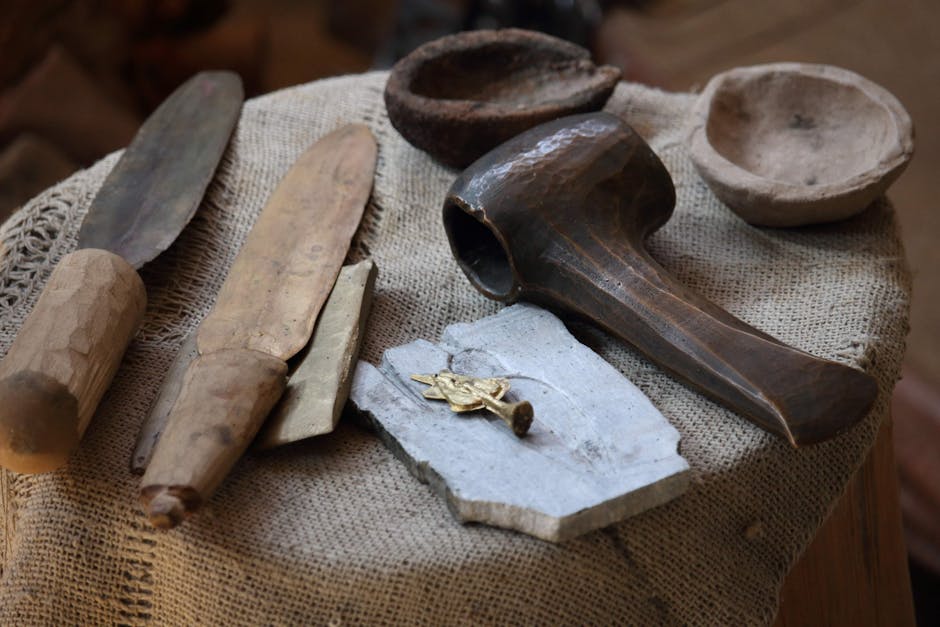
- Bronze Age miners in Wales repurposed animal bones to create tools, adapting old ways to a new industrial age.
- A comprehensive analysis of 150 artefacts revealed systematic bone tool use in Wales’ Parys Mountain copper mines.
- Bone tools were used alongside metal tools to extract ore from hard rock, showcasing resourceful mining culture.
- The discovery of bone tools in a metal age challenges the traditional narrative of technological progress.
- Researchers found microscopic wear patterns on bone tools, indicating repeated use in percussion and scraping.
Deep within the rugged hills of Snowdonia, where mist clings to the cliffs and the wind whispers through ancient rock, a quiet revolution once unfolded beneath the earth. Nearly 4,000 years ago, in the dim glow of flickering torchlight, Bronze Age miners chipped away at veins of copper-laden rock, their hands guided by both instinct and ingenuity. But amidst the stone and emerging metal, something unexpected has emerged from the archaeological record: tools carved from bone—ox ribs, deer antlers, and cattle leg bones—shaped with precision and purpose. These were not relics of a forgotten past but active components of a thriving mining culture, repurposed not out of scarcity, but strategy. The discovery paints a nuanced portrait of a society in transition, one that did not abandon old ways when metal arrived, but instead adapted them to serve a new industrial age.
Bone Tools in a Metal Age

A comprehensive analysis of 150 artefacts excavated from the Parys Mountain copper mines on the Isle of Anglesey, Wales, has revealed that Bronze Age Britons systematically crafted mining implements from animal bones long after metal tools became available. Researchers from the University of Liverpool and the Welsh Archaeological Trust found that chisels, wedges, and picks made from cattle and deer bones were used alongside early copper and bronze implements to extract ore from hard rock. Microscopic wear patterns on the tools indicate repeated use in percussion and scraping tasks, consistent with mining activity. Radiocarbon dating places their use between 1600 and 1200 BCE, squarely within the early to middle Bronze Age. Far from being crude stopgaps, these bone tools were expertly shaped, with sharpened tips and ergonomic grips, suggesting specialized craftsmanship. The persistence of bone tool use challenges the long-held assumption that metal immediately supplanted organic materials in toolmaking.
The Transition from Stone to Metal

The advent of metallurgy in Britain around 2500 BCE marked a technological turning point, but it did not instantaneously erase older traditions. For centuries, Neolithic communities had relied on stone, wood, and bone to build monuments, clear forests, and work the land. When copper and later bronze became available through trade and local smelting, they were initially rare and valuable—reserved for weapons, ornaments, and elite status symbols. Practical mining, however, demanded durability, availability, and shock resistance—qualities that bone, particularly dense long bones and antlers, could provide. At Parys Mountain, where miners faced quartz-veined ore that resisted early metal tools, bone wedges proved effective in fracturing rock without shattering. This continuity reflects a pragmatic adaptation: rather than discarding proven methods, Bronze Age communities integrated new materials into existing technological frameworks. The coexistence of bone and metal tools suggests a gradual, layered evolution rather than a sudden technological rupture.
The Miners Behind the Tools

The people who shaped these tools were likely specialized laborers within small, kin-based communities tied to the land and its resources. Evidence from nearby settlements indicates seasonal occupation of the mining area, with workers traveling from lowland farms to exploit the copper veins during warmer months. These miners were not primitive scavengers but skilled technicians who understood geology, material properties, and tool maintenance. The choice to use bone may have been as much cultural as practical—bone working was a deeply ingrained craft, passed down through generations. Crafting a pick from a cattle metapodial bone required knowledge of fracture mechanics and heat treatment to prevent splintering. Some tools even show signs of repair and reuse, reflecting a value system that prioritized resourcefulness over disposability. This blend of innovation and tradition underscores a society in flux, navigating the demands of a new economy without abandoning its ancestral wisdom.
Implications for Prehistoric Industry

The findings at Parys Mountain have broad implications for how archaeologists understand early mining and technological change. They suggest that the so-called “Bronze Revolution” was less a clean break and more a mosaic of overlapping practices. The widespread use of bone tools in metal mines indicates that organic materials remained functionally relevant long after metal’s introduction. This challenges simplistic narratives of progress and highlights the importance of context-specific innovation. For historians of technology, it underscores that material choices are shaped not just by availability, but by performance, skill, and cultural preference. Moreover, the discovery positions Wales as a key hub of early metallurgical activity, with Parys Mountain potentially supplying copper for artefacts found across Britain and continental Europe. The site may have been one of the earliest industrial landscapes in northwestern Europe.
The Bigger Picture
This discovery resonates beyond archaeology, offering a metaphor for human adaptation: progress is rarely a straight line. The Bronze Age miners of Wales did not reject the old when the new arrived—they folded it into their evolving world. Similar patterns can be seen in later technological shifts, from the coexistence of sail and steam to analog and digital tools today. The persistence of bone tools in metal mines reminds us that innovation is often conservative at its core, building on what already works. As modern societies face transitions—from fossil fuels to renewables, or manual labor to automation—the lessons of Parys Mountain endure: adaptation thrives not on replacement, but on integration.
What comes next is a reevaluation of other Bronze Age sites across Europe, where bone tools may have been overlooked in favor of more glamorous metal finds. Researchers are now applying similar microscopic and dating techniques to collections from Ireland, Germany, and Scandinavia. If bone tool use was widespread, it could rewrite the timeline of prehistoric industrialization. For now, the hills of Wales stand as a testament to a forgotten ingenuity—one carved not in bronze, but in bone.
Source: New Scientist