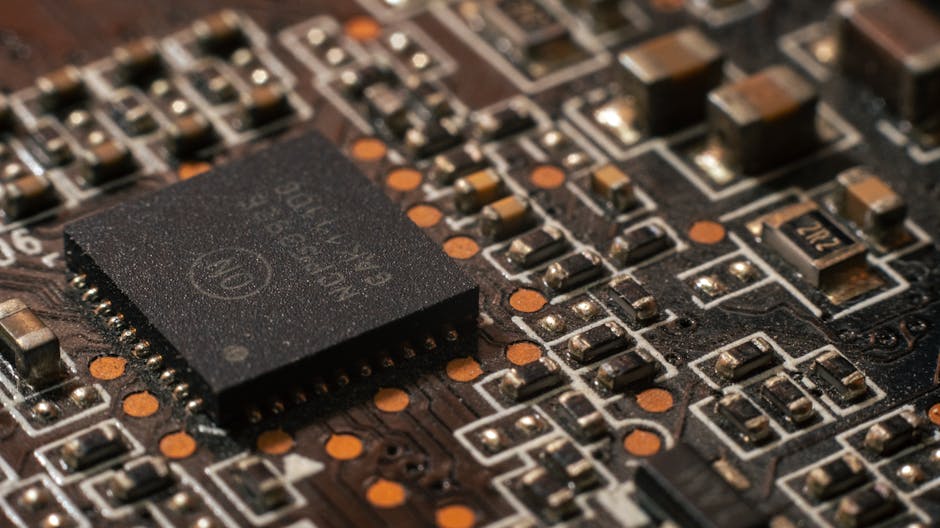
- Cerebras’s Wafer Scale Engine features 1.2 trillion transistors and 400,000 cores for AI training.
- The company was hemorrhaging cash at $8 million per month before its successful IPO.
- Cerebras’s Wafer Scale Engine enables seamless, high-speed communication across millions of cores.
- The company’s IPO valuation reached $60 billion in March 2026, making it the largest tech IPO of the year.
- Cerebras’s technology is in high demand for AI-specific hardware due to the strain on global data centers.
Inside a dimly lit warehouse in Sunnyvale, California, in early 2020, engineers huddled around a glowing wafer the size of a dinner plate—larger than any semiconductor ever built. Dust particles floated in the beam of a microscope as a technician adjusted a probe station, fingers trembling. This was no ordinary chip. It was Cerebras’s first Wafer Scale Engine, a single silicon canvas housing 1.2 trillion transistors and 400,000 cores, designed to accelerate artificial intelligence training in ways traditional GPUs could not. But behind the science stood a company hemorrhaging cash—$8 million per month—with venture capital dwindling and industry giants scoffing. If this test failed, Cerebras would be another footnote in Silicon Valley’s graveyard of audacious failures.
The AI Chip That Defied Convention

Cerebras Systems shocked the tech world in March 2026 with its initial public offering, reaching a market valuation of $60 billion—making it the largest tech IPO of the year. The surge was fueled by unprecedented demand for AI-specific hardware as global data centers strained under the weight of large language models. At the core of Cerebras’s appeal is its disruptive Wafer Scale Engine (WSE), a processor fabricated on an entire silicon wafer rather than diced into smaller chips. Unlike conventional designs limited by inter-chip bottlenecks, the WSE enables seamless, high-speed communication across millions of cores. Customers including Argonne National Laboratory and pharmaceutical giant AstraZeneca reported AI training times slashed from weeks to hours. According to Reuters, early institutional investors saw returns exceeding 300% on their initial stakes.
How Cerebras Cheated Collapse

The road to triumph was nearly fatal. Founded in 2016 by chip architect Andrew Feldman and a team of ex-IBM and Sun Microsystems engineers, Cerebras aimed to solve AI’s computational wall by rethinking the processor from the ground up. The vision required building chips at a scale previously deemed unmanufacturable. Traditional semiconductor fabs rejected the idea—wafers this large were prone to defects, making yields economically unviable. Yet Cerebras persisted, raising $720 million in private funding by 2022. Behind the scenes, however, the company burned through $8 million monthly on R&D, cleanroom access, and custom packaging. By late 2021, only three months of runway remained. A last-ditch $250 million investment from Abu Dhabi’s Mubadala Capital—secured after Feldman presented a single working wafer—kept the lights on. “We were building a skyscraper on quicksand,” a former executive confided anonymously.
The Architects of the Impossible

Andrew Feldman, Cerebras’s CEO, is a quiet but relentless engineer with a reputation for defying consensus. In interviews, he cites the limitations of Moore’s Law and the ‘memory wall’ as his driving motivations. His team, drawn from elite semiconductor backgrounds, embraced risk in a culture where failure was reframed as iteration. “We didn’t just want to make a better GPU,” Feldman told BBC News. “We wanted to rebuild the foundation.” Key hires included Gary Lauterbach, a packaging innovator who solved thermal dispersion across the massive wafer, and Sean Lie, who designed the mesh interconnect that routes data at terabit speeds. Their work attracted early believers like venture capitalist Martin Casado at Andreessen Horowitz, who called Cerebras “a moonshot with a roadmap.”
Consequences for the AI Hardware Race

Cerebras’s survival and success have sent shockwaves through the $1.3 trillion semiconductor industry. Nvidia, long dominant in AI accelerators, now faces a credible challenger in high-performance niches. While Cerebras’s systems remain too specialized and expensive for broad consumer adoption, they excel in hyperscale AI training environments where efficiency outweighs cost. Competitors like Intel and AMD have accelerated their own wafer-scale research, though none have matched Cerebras’s integration. For data centers, the implications are profound: faster training means quicker deployment of medical diagnostics, climate models, and autonomous systems. Yet questions linger about scalability and yield rates—only 60% of wafers pass final testing, according to internal documents.
The Bigger Picture
Cerebras represents more than a corporate turnaround—it signals a shift in how we build the brains of artificial intelligence. As models grow larger and more complex, the hardware that trains them must evolve beyond incremental improvements. The company’s gamble on monolithic, wafer-scale design challenges decades of semiconductor orthodoxy. It also underscores a broader trend: private capital is increasingly willing to fund extreme-technology ventures once deemed too risky. In an era defined by AI supremacy, nations and corporations alike are betting that the next breakthrough won’t come from software alone, but from reimagining the silicon beneath it.
What comes next for Cerebras may hinge on its ability to commercialize beyond elite research labs. The company is developing a smaller, lower-cost WSE variant for enterprise use and exploring partnerships in China and Europe. Meanwhile, its IPO has inspired a new wave of hardware startups aiming to disrupt AI compute. As one engineer at the Sunnyvale lab put it: “We proved the impossible wasn’t. Now, we have to make it inevitable.”
Source: TechCrunch