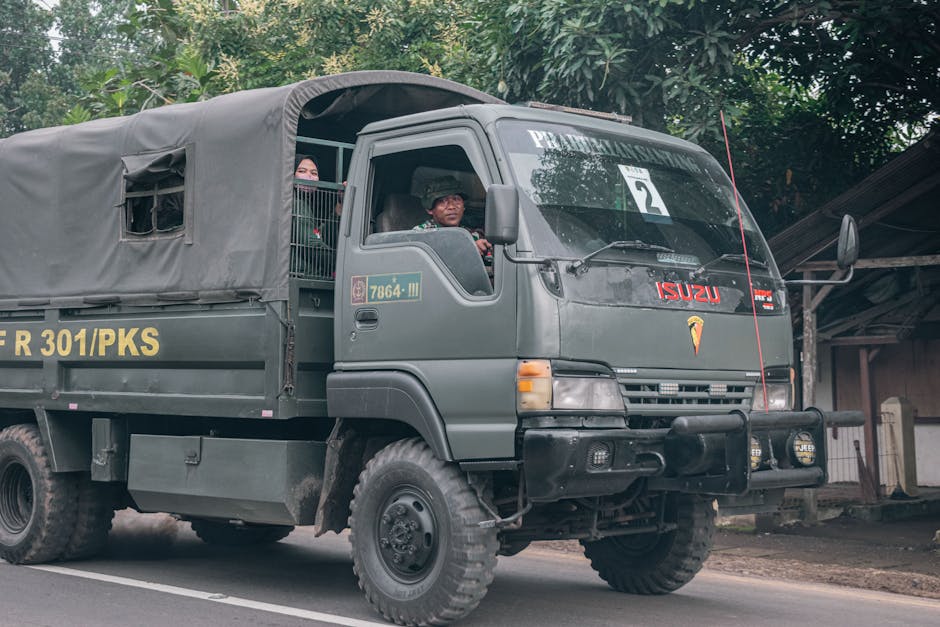
- Bolivia’s 11-day protest led to a government-deployed military intervention against its citizens.
- The military targeted key highways connecting major cities, aiming to restore economic activity.
- The protests primarily demanded greater political inclusion, land rights, and opposition to a highway project.
- The deployment of military police raised concerns about public order and the right to protest in Bolivia.
- The government arrested over 50 demonstrators and used tear gas to dismantle road blockades.
What happens when sustained civil unrest paralyzes a nation’s transportation networks and pushes a government to deploy its military against its own citizens? In Bolivia, this question became reality after 11 days of widespread protests that brought major highways to a standstill. Demonstrators, primarily from indigenous and cocalero (coca farmer) communities, blocked key roads to demand greater political inclusion, land rights, and opposition to a controversial highway project through protected territory. As economic losses mounted and essential goods failed to reach urban centers, the government faced mounting pressure to respond. The resulting military intervention—marked by arrests and the use of tear gas—raises urgent questions about the balance between public order and the right to protest in a fragile democracy.
The Government’s Response to Escalating Protests

Bolivia’s government, led by President Luis Arce, authorized the deployment of military police to dismantle road blockades after prolonged negotiations with protest leaders failed. The intervention, launched on the morning of June 20, targeted strategic routes connecting La Paz, Cochabamba, and Santa Cruz—economic arteries critical for food and fuel distribution. Interior Minister Eduardo del Castillo justified the action, stating that the blockades had caused “irreparable harm to the national economy and public safety.” According to official reports, over 50 demonstrators were arrested, and several were injured after security forces used tear gas and rubber bullets to disperse crowds. The government emphasized that the operation followed legal protocols under Bolivia’s state security laws, which allow military intervention when civilian unrest threatens national stability. Still, the move has sparked criticism from human rights organizations concerned about excessive force and suppression of dissent.
Evidence of Escalation and Civilian Impact

Footage from the protests, widely shared on social media and verified by Reuters, shows military vehicles advancing on makeshift barricades while protesters retreat amid clouds of tear gas. The Confederation of Indigenous Peoples of Bolivia (CIDOB) reported that at least three indigenous leaders were detained without formal charges. In a statement, the Inter-American Commission on Human Rights (IACHR) urged Bolivian authorities to “exercise maximum restraint” and reminded the government of its obligations under international law to protect protest rights. Economic data from Bolivia’s National Statistics Institute (INE) reveals that the blockades disrupted the transport of over 70% of agricultural goods to urban markets, leading to shortages and price spikes in cities like El Alto and Sucre. The situation underscores how civil disobedience, while a legitimate political tool, can quickly spiral into humanitarian and economic crises when sustained over days.
Opposing Views on the Use of Force

While the government defends its actions as necessary to restore order, critics argue that militarized responses risk deepening social divisions and criminalizing legitimate protest. Analysts from the Bolivian think tank Fundación Milenio warn that deploying the military against indigenous groups echoes patterns from past regimes, particularly during the 2003 Gas War and 2019 political crisis, both of which ended in violence and mass unrest. Some political opponents, including former President Evo Morales, accused the Arce administration of “abandoning its social base” by siding with business interests over grassroots movements. Conversely, business federations such as the Bolivian Chamber of Industry welcomed the military intervention, arguing that indefinite blockades undermine constitutional rights to free movement and economic activity. The debate reflects Bolivia’s broader tension between participatory democracy and state authority—a conflict that continues to shape its postcolonial governance.
Real-World Consequences Across Bolivia

The impact of the protests and subsequent crackdown has been felt most acutely in urban markets and rural communities alike. In La Paz, supermarket shelves emptied of staples like rice, cooking oil, and milk within days of the blockades intensifying. Meanwhile, coca farmers in the Chapare region report that their harvests rotted in fields due to lack of transport, wiping out months of income. In one documented case, a hospital in Cochabamba delayed surgeries after running low on oxygen supplies. The military’s success in reopening roads has brought temporary relief, but resentment lingers among protest leaders who feel their demands were dismissed. International observers, including the United Nations Office in Bolivia, have called for inclusive dialogue to address the root causes of discontent, particularly land disputes in the Isiboro Sécure National Park and Indigenous Territory (TIPNIS), a flashpoint for environmental and indigenous rights debates for over a decade.
What This Means For You
If you’re following global social movements, Bolivia’s latest crisis offers a stark reminder of how infrastructure blockades can amplify political demands—but also provoke severe state responses. For citizens, it highlights the fragile balance between exercising democratic rights and maintaining societal function. Governments worldwide face similar dilemmas when protests disrupt essential services, forcing tough choices between tolerance and control. The situation in Bolivia underscores the need for early mediation and inclusive policymaking to prevent unrest from escalating.
Yet, one question remains unresolved: Can a government protect both public order and the right to dissent when protest tactics directly impact the livelihoods of millions? As climate and indigenous rights movements gain momentum globally, this tension is likely to reemerge—in Bolivia and beyond—requiring new frameworks for conflict resolution that don’t rely on force.
Source: Al Jazeera