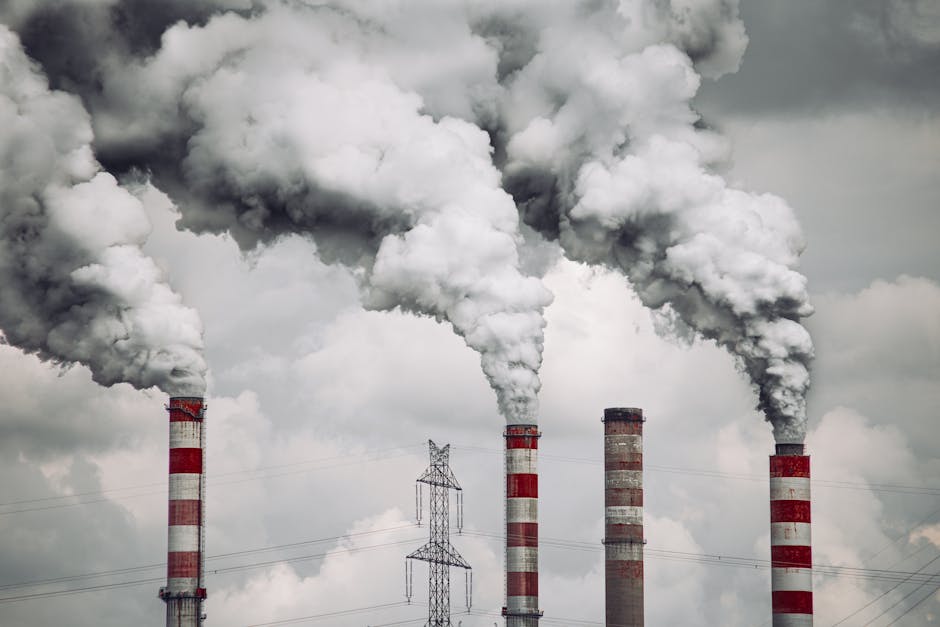
- Solar panels underperform due to microscopic aerosols from coal combustion, not equipment failure or clouds.
- These aerosols scatter and absorb sunlight, reducing the total irradiance that reaches photovoltaic surfaces.
- A 2023 study found that coal aerosols reduce global solar energy production by 10-25%, with spikes exceeding 30% in industrialized regions.
- The effect of coal aerosols on solar energy is most pronounced in South Asia, East China, and other heavily industrialized areas.
- The promise of clean energy is being eroded by the lingering grip of fossil fuels, particularly coal combustion.
On the sunbaked plains of northern India, rows of photovoltaic panels stretch to the horizon, their surfaces gleaming under what should be ideal conditions for energy generation. Yet, on many days, a persistent haze hangs in the air—a byproduct of nearby coal-fired power plants—dimming the sunlight these panels depend on. Engineers monitoring output notice a troubling trend: despite clear skies and optimal angles, the systems generate far less power than projected. This isn’t a flaw in the technology, but a betrayal by the atmosphere itself. Across the globe, from the Mojave Desert to the outskirts of Beijing, solar farms are operating below capacity, not because of clouds or equipment failure, but because microscopic aerosols from coal combustion scatter and absorb sunlight before it reaches the panels. The promise of clean energy is being quietly eroded by the lingering grip of fossil fuels.
Solar Underperformance Linked to Coal Aerosols

A 2023 study published in Nature Energy found that aerosols from coal combustion reduce global solar energy production by an average of 10 to 25 percent, with spikes exceeding 30 percent in heavily industrialized regions. These particles—sulfates, black carbon, and fly ash—reflect and absorb solar radiation, decreasing the total irradiance that reaches photovoltaic surfaces. The effect is most pronounced in South Asia, East China, and parts of Sub-Saharan Africa, where coal remains a dominant energy source and solar infrastructure is rapidly expanding. Researchers used satellite data, ground-based irradiance measurements, and atmospheric modeling to isolate the impact of coal emissions from other factors like dust or humidity. The findings reveal a troubling irony: nations investing in solar to combat climate change are simultaneously sabotaging their own efforts through continued reliance on coal. This ‘self-cannibalization’ of clean energy undermines both environmental goals and the economic viability of solar projects.
The Long Shadow of Fossil Fuel Dependence

The relationship between coal emissions and diminished solar output has roots in decades of industrial policy and energy infrastructure. Since the mid-20th century, coal has powered economic growth across Asia and the developing world, often without adequate pollution controls. While solar technology began gaining traction in the 2000s, many countries failed to phase out coal at a comparable pace. In India, for instance, coal still accounts for over 70 percent of electricity generation, even as the nation installs solar capacity at a record rate. The resulting aerosol emissions create a feedback loop: more coal means more particulates, which in turn reduce solar efficiency, prompting utilities to rely even more on coal to meet demand. This phenomenon, known as the ‘solar dimming effect,’ was first observed in the 1980s but was historically attributed to volcanic activity and general industrial pollution. Only recently have researchers been able to isolate coal’s specific role, thanks to advances in atmospheric spectroscopy and machine learning models that parse emission sources.
Engineers, Policymakers, and the Energy Paradox

Behind the data are engineers, urban planners, and government officials grappling with a complex dilemma. Solar project developers in Delhi or Jakarta must now factor in atmospheric losses when estimating return on investment, often leading to scaled-back plans or increased reliance on battery storage. Meanwhile, environmental scientists like Dr. Meera Patel at the Indian Institute of Climate Studies argue that policy must address both supply and obstruction. “We’re building solar farms as if the air is clean,” she says, “but the air isn’t clean. Until we regulate coal emissions aggressively, every new panel installed is fighting an uphill battle.” On the policy side, some governments are beginning to recognize the interplay. China, after years of unchecked coal use, has implemented stricter emission standards for power plants and linked air quality metrics to regional performance evaluations. Yet enforcement remains uneven, and economic pressures often favor short-term energy stability over long-term sustainability.
Consequences for Energy Markets and Climate Goals

The financial toll of coal-induced solar losses is mounting. Analysts estimate that reduced irradiance costs the global solar industry over $5 billion annually in forgone revenue. For developing nations, this represents a significant barrier to energy independence and green job creation. Moreover, the climate implications are profound: lower solar output means higher reliance on fossil fuels to meet energy demand, perpetuating the cycle of emissions and dimming. This undermines international climate commitments, including those under the Paris Agreement, where solar expansion is a cornerstone of decarbonization strategies. If current trends continue, the International Energy Agency warns that solar power could fall short of 2030 targets by as much as 15 percent—not due to lack of investment, but because of preventable atmospheric interference.
The Bigger Picture
This issue transcends energy metrics; it reflects a deeper flaw in how societies approach environmental transformation. Transitioning to renewables isn’t just about installing new technology—it’s about dismantling the systems that undermine it. The invisible veil of coal pollution reminds us that environmental problems are interconnected. Cleaning the air isn’t just a public health imperative; it’s a prerequisite for the clean energy future we seek. Without synchronized action on emissions and infrastructure, we risk building a green façade over a gray foundation.
What comes next may hinge on cross-sector collaboration. Emerging solutions include co-locating air quality sensors with solar farms, using real-time data to optimize output and pressure regulators. Satellite monitoring platforms, such as those developed by NASA’s Earth Observatory, are now being used to track aerosol density and forecast solar yield. As the cost of solar continues to fall, the economic case for phasing out coal grows stronger—not just for climate reasons, but for the efficiency of the clean grid itself. The sun hasn’t dimmed; our skies have. Restoring its full power may depend less on innovation and more on the will to enforce it.
Source: Ars Technica