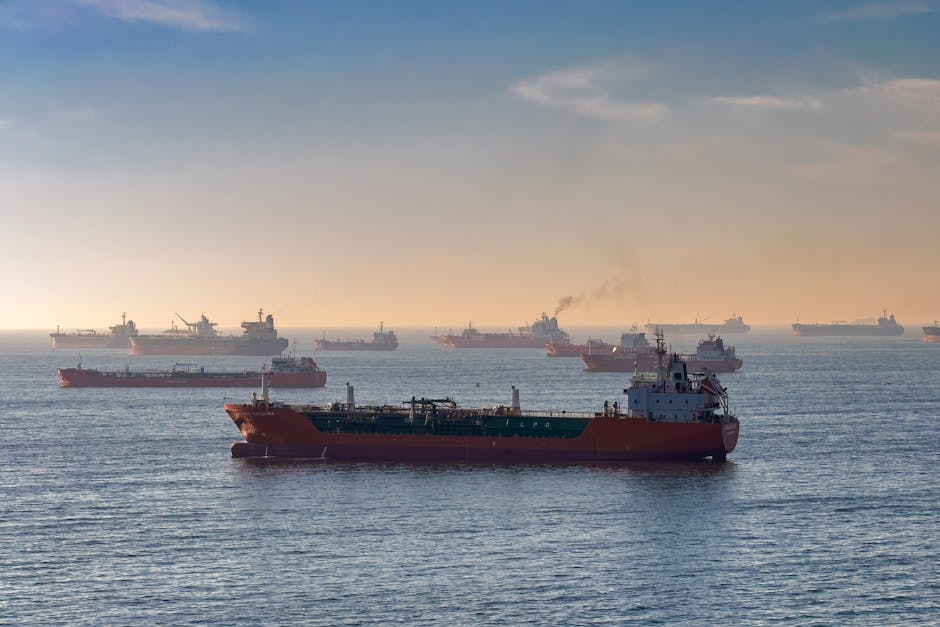
- The UAE is pursuing a strategy to reroute its crude exports away from the Strait of Hormuz to ensure uninterrupted access to global markets.
- The country aims to increase the capacity of its Fujairah oil terminal to over 2 million barrels per day by 2026.
- The UAE’s move is driven by its desire to reduce dependence on the Strait of Hormuz and ensure survival in a high-stakes region.
- The expansion of Fujairah oil terminal is a key component of the UAE’s plan to diversify its oil export infrastructure.
- The UAE’s strategy to bypass the Strait of Hormuz could have significant implications for global energy security.
Can a major oil exporter truly break free from one of the world’s most dangerous maritime chokepoints? As tensions with Iran simmer and the United Arab Emirates exits OPEC, that question has taken center stage in global energy markets. The UAE is now pursuing an ambitious strategy to reroute its crude exports away from the Strait of Hormuz — the narrow waterway through which nearly 20% of the world’s oil passes — to ensure uninterrupted access to global markets. With Iran having previously threatened to close the strait during geopolitical flare-ups, the UAE’s move is less about economics and more about survival in a high-stakes region. How viable is this plan, and what could it mean for global energy security?
Is the UAE Reducing Its Dependence on the Strait of Hormuz?

Yes — and with growing urgency. After officially stepping away from OPEC in 2023, the UAE has accelerated plans to diversify its oil export infrastructure. The centerpiece is the expansion of its Fujairah oil terminal on the Gulf of Oman, which lies outside the Strait of Hormuz. Currently, roughly 1.5 million barrels per day (bpd) of UAE crude are shipped through Fujairah, bypassing the strait entirely. The government aims to increase that capacity to over 2 million bpd by 2026. Additionally, the Abu Dhabi National Oil Company (ADNOC) has upgraded the Habshan–Fujairah pipeline, allowing it to transport nearly all of Abu Dhabi’s offshore and onshore crude to the safer eastern coast. This strategic pivot allows the UAE to maintain exports even if the strait is blocked or militarized during a crisis with Iran.
What Infrastructure and Data Support This Shift?

The UAE’s strategy is backed by significant investment and measurable progress. According to ADNOC, the 360-kilometer Habshan–Fujairah pipeline, completed in phases since 2012, now operates at 90% capacity and can carry 1.8 million bpd. The Fujairah terminal itself has become a global oil storage hub, with over 20 million barrels of storage capacity and direct access to Asian markets. A 2023 report by the International Energy Agency (IEA) noted that the UAE has the highest redundancy in Gulf export infrastructure, reducing its vulnerability compared to neighbors like Kuwait or Iraq. As Reuters reported, the UAE is also exploring floating storage and offloading systems to further decentralize risk. These developments signal a long-term commitment to energy resilience, not just a temporary hedge.
Are There Limits to This Strategy?

Despite progress, challenges remain. Some analysts argue that the UAE cannot fully decouple from the Strait of Hormuz, as much of its offshore oil production — particularly from the Upper Zakum and Bu Hasa fields — still relies on shared Gulf shipping lanes to reach the pipeline intake points. Moreover, maintaining a robust presence in Fujairah does not eliminate the risk of Iranian missile or drone attacks on coastal infrastructure. As noted by the Middle East Institute, Iran’s proximity allows it to project power across the UAE’s eastern coast, especially given recent attacks on Gulf shipping. Additionally, redirecting all exports via pipeline is costly and technically complex, with maintenance and security expenses adding to operational burdens. Skeptics also question whether the UAE’s OPEC exit is truly about strategy or merely a symbolic move to gain pricing autonomy without fully severing cartel ties.
How Is This Affecting Global Trade and Regional Power?

The UAE’s pivot is already reshaping energy logistics. Asian refiners are increasingly signing long-term contracts for Fujairah-delivered crude, drawn by its security and proximity. This shift strengthens the UAE’s leverage in pricing negotiations and reduces its reliance on Western insurance and maritime security frameworks. Regionally, the move signals a broader trend of Gulf states investing in strategic autonomy — Saudi Arabia is expanding its Red Sea ports, while Qatar is boosting LNG exports via alternate routes. For global markets, reduced dependence on the Strait of Hormuz could stabilize oil flows during crises, but it may also encourage more assertive posturing by Gulf states, potentially escalating regional rivalries. The U.S. Navy’s Fifth Fleet, long the guarantor of Gulf shipping, may see its role gradually diminished as local powers take greater control.
What This Means For You
If you rely on stable energy prices — whether as a consumer, investor, or policymaker — the UAE’s success in bypassing the Strait of Hormuz could mean fewer supply shocks triggered by Iran-Gulf tensions. It also underscores a global shift toward energy infrastructure resilience, where redundancy and geographic diversification are prioritized over cost efficiency. For the UAE, this strategy enhances its geopolitical standing and economic security in an unpredictable region.
Still, can any single nation fully insulate itself from the volatility of global chokepoints? And as Gulf states build parallel export systems, will this lead to greater stability — or a new era of competitive energy brinkmanship? The answers may shape the future of world energy markets.
Source: Townhall