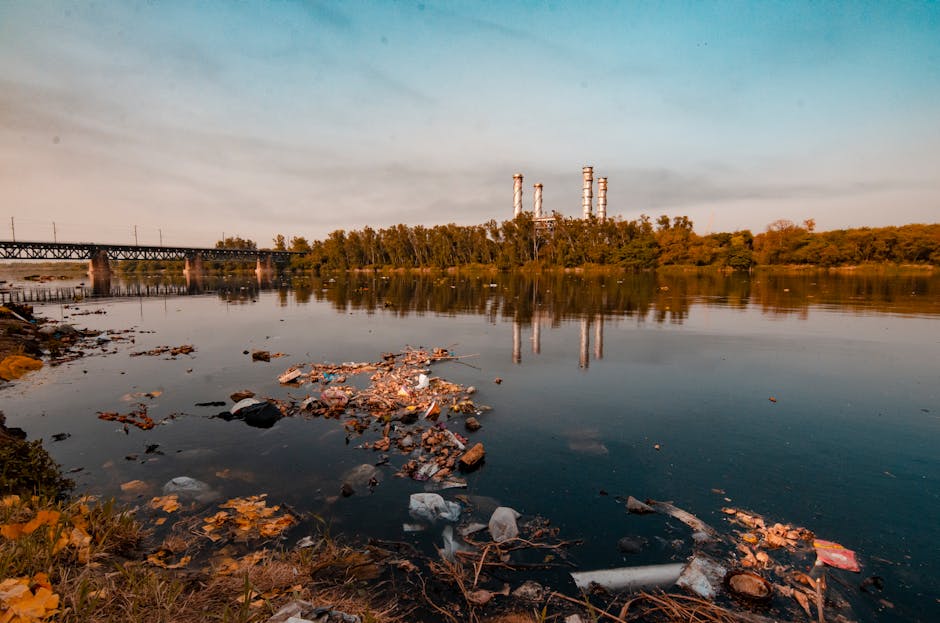
- Researchers develop genetically modified algae that removes up to 90% of microplastics from water, a significant advancement in water treatment.
- Conventional filtration methods often struggle with microplastics due to their small size, but this algae acts like a biological magnet to target them.
- This breakthrough leverages natural biological processes, offering a low-energy and scalable solution to microplastic pollution.
- Microplastic pollution has surged in the last two decades, with 11 million metric tons entering oceans annually, and expected to double by 2030.
- The algae selectively binds to microplastics, forming aggregates that can be easily skimmed or settled out, presenting a promising solution.
Every week, the average person ingests over 5 grams of microplastics—equivalent to a credit card’s weight—primarily through drinking water and food, according to a 2023 study published in ScienceDaily. Now, a team of environmental biotechnologists has unveiled a potential game-changer: a genetically modified strain of algae capable of removing up to 90% of these microscopic pollutants from water. Unlike conventional filtration methods that struggle with particles smaller than 5 micrometers, this algae acts like a biological magnet, selectively binding to microplastics and forming aggregates that can be easily skimmed or settled out. This approach not only targets a critical gap in water treatment but leverages natural biological processes to do so—offering a low-energy, scalable solution to one of the most insidious forms of environmental contamination.
Why This Breakthrough Matters Now

Microplastic pollution has surged in the last two decades, with an estimated 11 million metric tons entering oceans annually, a figure projected to double by 2030, according to the International Union for Conservation of Nature. These particles, often invisible to the naked eye, infiltrate drinking water supplies through runoff, degraded packaging, and synthetic textiles. Conventional wastewater treatment plants are ill-equipped to remove them, allowing microplastics to accumulate in human tissues and potentially disrupt endocrine function. With increasing regulatory scrutiny—from the U.S. Environmental Protection Agency to the European Chemicals Agency—the need for innovative remediation technologies is urgent. This algae-based method arrives at a pivotal moment, offering a biodegradable, cost-effective tool that aligns with global sustainability goals and circular economy principles.
Engineering Nature: How the Algae Works

The research team, led by scientists at the University of California, Berkeley, modified a strain of *Chlamydomonas reinhardtii*, a common freshwater algae, to overproduce limonene—a volatile terpene naturally found in citrus peels. Limonene is hydrophobic, meaning it repels water but readily adheres to similarly water-resistant surfaces like polyethylene and polystyrene, two of the most common microplastics. When introduced into contaminated water, the algae release limonene, which coats microplastic particles and causes them to aggregate around algal cells. These clumps, or flocs, grow large enough to be removed via sedimentation or low-cost filtration. Remarkably, the algae continue to photosynthesize and grow during this process, simultaneously reducing nitrogen and phosphorus levels in wastewater—effectively cleaning water twice over.
The Science Behind the Binding Mechanism

The effectiveness of this system lies in surface chemistry. Most microplastics are nonpolar and hydrophobic, making them resistant to conventional coagulants used in water treatment. Limonene, also hydrophobic, creates a molecular bridge between the algae and the plastics through van der Waals forces and hydrophobic interactions. In lab trials, the engineered algae removed 89% of 1–5 micrometer polystyrene beads within 72 hours, outperforming activated carbon filtration by 35%. Researchers used fluorescent tagging to confirm that plastic particles were physically bound to algal clusters rather than being degraded or absorbed. While the algae do not break down the plastics, their ability to concentrate them into harvestable masses opens doors for downstream recycling or safe disposal. The process operates at ambient temperatures and neutral pH, making it suitable for integration into existing water treatment infrastructure with minimal retrofitting.
Implications for Water Treatment and Public Health

If scaled successfully, this technology could transform municipal and industrial water treatment, particularly in regions lacking advanced filtration systems. Developing nations and rural communities could deploy algal bioreactors as low-cost, solar-powered purification units. For urban centers, integrating algae tanks into wastewater plants could reduce microplastic discharge into rivers and reservoirs, protecting aquatic ecosystems and reducing human exposure. Public health experts warn that long-term microplastic ingestion may contribute to inflammation, oxidative stress, and even neurodegenerative diseases, though causal links are still under investigation. By mitigating exposure at the source, this algae-based approach offers a preventive strategy that complements regulatory efforts and consumer awareness campaigns.
Expert Perspectives
Dr. Elena Torres, an environmental engineer at MIT not involved in the study, called the work “a clever exploitation of natural chemistry,” but cautioned about scalability: “Releasing genetically modified organisms into open water systems raises ecological concerns that must be addressed.” In contrast, Dr. Rajiv Mehta of the WHO’s Water Safety Program emphasized the potential: “In contained treatment facilities, bioengineered algae could be a force multiplier in achieving safe water for all.” Some researchers also question long-term stability and the fate of plastic-laden algal biomass, stressing the need for closed-loop systems to prevent secondary contamination.
Looking ahead, the team is exploring ways to enhance limonene yield and algal resilience under variable water conditions. Field trials are planned for 2025 in partnership with municipal water authorities in California and the Netherlands. A critical unanswered question remains: can this method be adapted to capture nanoplastics, particles below 1 micrometer that may pose even greater health risks? As regulatory frameworks evolve and detection methods improve, this algal solution may soon move from lab curiosity to frontline defense in the war against plastic pollution.
Source: ScienceDaily