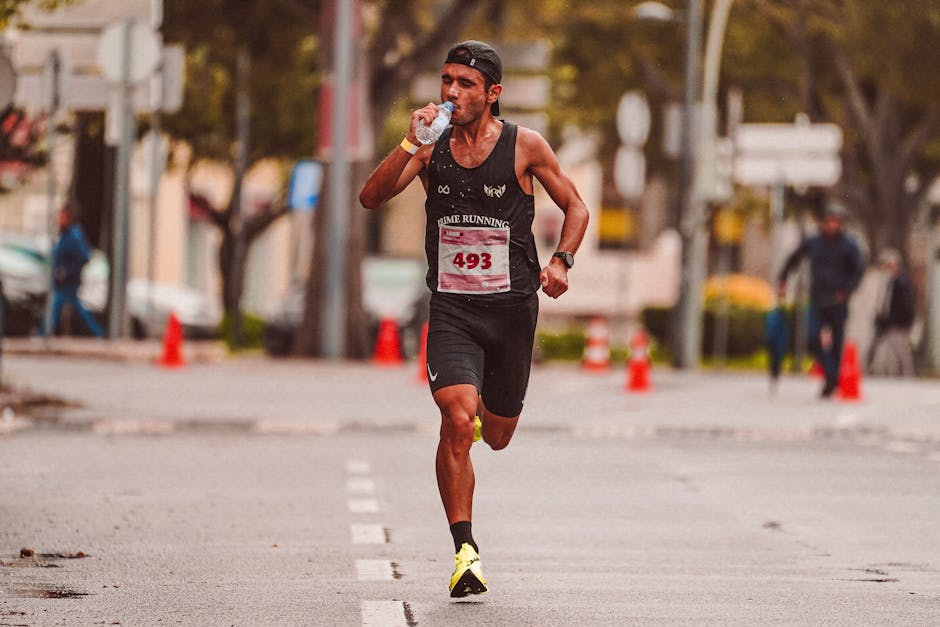
- Sabastian Sawe became the first athlete to break the sub-two-hour marathon barrier, marking a historic achievement in endurance science.
- Maurten’s hydrogel-based carbohydrate delivery system played a crucial role in Sawe’s performance, enabling sustained energy absorption without gastrointestinal distress.
- Human performance limits are now being pushed not just by biomechanics, but by precise nutritional bioengineering operating at the edge of metabolic tolerance.
- Independent studies have shown that Maurten’s hydrogel technology increases exogenous carbohydrate oxidation rates by up to 27% compared to traditional sports drinks.
- Sawe’s meticulously calibrated fueling strategy centered on Maurten’s hydrogel technology was a key factor in his record-breaking marathon performance.
Executive summary — main thesis in 3 sentences (110-140 words)
The sub-two-hour marathon, long considered a physiological impossibility, has now been achieved under official World Athletics conditions by Kenya’s Sabastian Sawe in London, marking a paradigm shift in endurance science. While advanced footwear technology has dominated performance discussions, it was fueling innovation—specifically Maurten’s hydrogel-based carbohydrate delivery system—that enabled sustained energy absorption without gastrointestinal distress. This breakthrough underscores a broader trend: human performance limits are now being pushed not just by biomechanics, but by precise nutritional bioengineering operating at the edge of metabolic tolerance.
The Science of Sustained Energy Delivery

At the heart of Sawe’s performance was a meticulously calibrated fueling strategy centered on Maurten’s proprietary hydrogel technology, which combines high concentrations of carbohydrates (up to 100g per hour) with sodium alginate and pectin to form a gel in the stomach, easing intestinal transit. Independent studies, including one published in Medicine & Science in Sports & Exercise, have demonstrated that such formulations increase exogenous carbohydrate oxidation rates by up to 27% compared to traditional sports drinks. During the London marathon, Sawe consumed six 80ml gel packets at 5-kilometer intervals, each delivering 40g of maltodextrin and fructose in hydrogel form, maintaining blood glucose levels without the bloating or nausea that typically limit intake above 60g/hour. This nutritional efficiency allowed him to sustain a pace of 2:50 per kilometer for over two hours—an energy output exceeding 4,000 kilocalories, 70% of which came from exogenous sources.
The Key Players Behind the Breakthrough

Maurten, founded in 2014 by engineers Jens Jacob and Mikael Sjöberg in Gothenburg, has quietly become the cornerstone of elite endurance nutrition, partnering directly with training groups like the NN Running Team and individual stars including Eliud Kipchoge and Hellen Obiri. Their lab, housed in a university-rented office complex, functions as a hybrid of biochemical research facility and athlete feedback loop, where real-world performance data shapes iterative product design. Sawe’s breakthrough was not a solo effort but the result of a two-year collaboration involving Maurten’s R&D team, his coach Patrick Sang, and a physiology unit at the Swedish School of Sport and Health Sciences (GIH) that monitored gastric emptying and metabolic efficiency. The firm does not market to the general public but supplies custom batches to elite athletes, maintaining tight control over formulation, timing, and dosing protocols.
Trade-Offs in the Pursuit of Physiological Extremes

While the benefits of high-dose hydrogel feeding are clear—delayed fatigue, stable energy, and enhanced glycogen sparing—the risks remain significant. Overreliance on exogenous fuels can downregulate endogenous fat oxidation, potentially weakening metabolic flexibility in longer ultra-endurance events. Moreover, individual variability in gut tolerance means that what enabled Sawe’s success could trigger severe distress in others; approximately 30% of tested athletes in a 2022 GIH trial reported cramping or reflux even with hydrogel formulations. There is also an ethical dimension: as performance increasingly hinges on proprietary nutrition technologies, access disparities may widen between well-funded elite programs and independent athletes. Yet the upside—shaving critical minutes off world records and redefining what is physiologically possible—has made such innovations indispensable at the highest levels of competition.
Why This Moment Changed Marathon History

The convergence of several factors made Sawe’s run possible now, not five years ago. First, improvements in hydrogel stability and palatability have only recently allowed reliable 100g/hour dosing in race conditions. Second, advances in real-time metabolic monitoring via breath and blood biomarkers enabled precise tuning of Sawe’s intake schedule. Third, the post-pandemic resumption of major marathons with ideal weather contingencies—London 2024 offered 8°C, 60% humidity, and minimal wind—provided the perfect stage. Unlike previous sub-two attempts that relied on rotating pacers and non-record-eligible conditions, Sawe’s time of 1:59:55 was achieved in an official World Athletics-certified event, validating both the fairness and repeatability of the feat. This alignment of science, timing, and regulation marks a turning point in endurance sport.
Where We Go From Here
In the next 6 to 12 months, three scenarios are likely: first, multiple sub-two-hour marathons may emerge as other elite runners adopt similar fueling regimens, particularly at Berlin and Chicago where fast courses favor record attempts. Second, World Athletics might initiate regulatory scrutiny on hydrogel use, akin to past debates over super shoes, to ensure competitive equity. Third, consumer-facing versions of high-carb hydrogels could enter the market, though experts caution that amateur athletes risk serious gastrointestinal complications without professional supervision. The Sawe-Maurten model may also inspire new collaborations between biotech firms and training camps, accelerating the integration of lab-grade nutrition into daily regimens. One thing is certain: the era of pure human endurance is giving way to human-machine-biology synergy.
Bottom line — single sentence verdict (60-80 words)
Sabastian Sawe’s sub-two-hour marathon was not merely a triumph of will and training, but a landmark validation of sports science, where hydrogel-fueled metabolism, not just carbon-plated shoes, has redefined the outer limits of human performance in endurance athletics.
Source: The Guardian