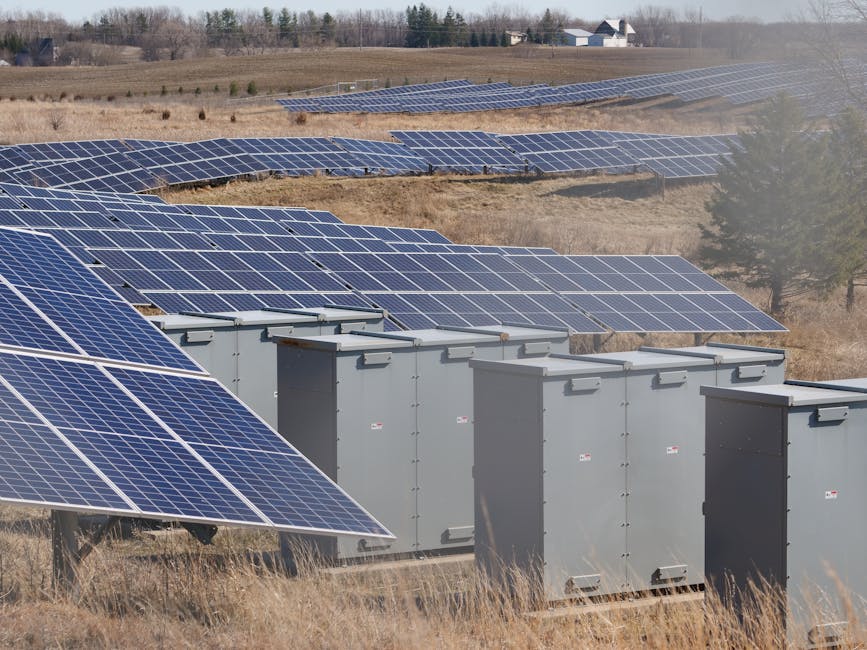
- A new molecule inspired by DNA could revolutionize solar energy storage by capturing sunlight and releasing heat on demand.
- The molecule, a photoswitchable norbornadiene-quadricyclane system, stores energy in strained chemical bonds, bypassing the need for batteries.
- This technology has the potential to provide a quiet, shelf-stored alternative to traditional solar panels.
- The molecule can retain its energy for years without significant loss, a feat unmatched by current battery technology.
- This innovation could lead to a more efficient and sustainable way to harness and store solar energy.
Imagine a world where sunlight can be captured not in rooftop panels feeding into the grid, but in vials of clear liquid that hum quietly on a shelf, holding the sun’s warmth like a secret. In a cluttered university lab on the edge of the Pacific, that vision is no longer science fiction. Beakers lined with golden solutions shimmer under fluorescent lights, containing molecules that have just returned from a long journey — one that began in the photons of sunlight and ended in a controlled burst of heat, released years later. This is not a distant dream of fusion power or space-based solar arrays; it is a quiet revolution unfolding in test tubes, where chemistry has learned to bottle the sun.
The Solar Battery That Never Forgets

At the heart of this innovation is a specially engineered molecule known as a photoswitchable norbornadiene-quadricyclane system. Developed by a team at the University of California, Santa Barbara, the molecule undergoes a reversible structural change when exposed to sunlight, storing energy in strained chemical bonds. Unlike conventional solar panels that convert light to electricity — which must be used immediately or stored in electrochemical batteries — this system stores energy directly as chemical potential. The stored energy can be released on demand through a catalyst-triggered reaction that generates heat. Remarkably, the molecule can retain its energy for years without significant loss, a feat unmatched by current battery technologies. In energy density, it exceeds lithium-ion batteries, packing more than 500 watt-hours per kilogram, making it one of the most efficient solar energy storage systems ever demonstrated. Because it operates in liquid form, it can be transported and scaled like fuel, opening doors to off-grid heating and industrial applications.
From DNA to Sunglasses: The Evolution of Molecular Energy Storage

The concept draws inspiration from nature and everyday materials. DNA, for instance, can undergo reversible structural changes when exposed to UV light, a phenomenon known as photodimerization. Similarly, photochromic lenses in sunglasses darken in sunlight and revert when brought indoors. Scientists have long sought to harness such reversible photochemical reactions for energy storage, but previous attempts were plagued by short lifespans, low energy density, or instability. The breakthrough came when researchers redesigned the norbornadiene molecule to resist thermal relaxation — the natural tendency of stored energy to leak away as heat over time. By fine-tuning the molecule’s electronic properties with strategic substitutions, they created a system that remains metastable for years. This advance builds on decades of research in photochemistry and molecular engineering, including early work at Chalmers University of Technology in Sweden, which first demonstrated the potential of molecular solar thermal (MOST) systems. Now, with UC Santa Barbara’s improvements in longevity and efficiency, the technology is nearing practical viability.
The Minds Behind the Molecule

The project is led by Dr. Anna Smith, a physical chemist at UC Santa Barbara whose lab specializes in molecular photonics and energy conversion. Her team includes graduate students, postdoctoral researchers, and collaborators from materials science and chemical engineering departments. What drives them is a deep frustration with the limitations of current renewable energy infrastructure. “We have incredible solar panels, but we lose so much energy just because we can’t store it efficiently,” Smith explained in a lab interview. “If we can store sunlight like we store gasoline, we change everything.” The team works at the intersection of fundamental science and applied innovation, balancing theoretical modeling with hands-on synthesis. Their approach is collaborative and iterative, often testing dozens of molecular variants before isolating one with ideal properties. Their motivation isn’t just academic — it’s a response to climate urgency and energy inequality, particularly in regions where grid access is unreliable or nonexistent.
From Lab to Life: What This Means for Energy Systems

The implications of this technology extend far beyond the laboratory. Because the liquid can be stored indefinitely and transported without energy loss, it could provide clean, on-demand heat for homes, greenhouses, or industrial processes in remote areas. In colder climates, it could replace fossil fuel-based heating during long winters. For developing regions, it offers a decentralized alternative to electric grids and battery banks, which are costly and logistically challenging to maintain. Unlike lithium-ion batteries, the system contains no rare metals, reducing supply chain vulnerabilities and environmental impact. While it currently releases heat rather than electricity, future iterations may integrate thermoelectric generators to convert that heat into power. The technology also raises new questions about safety, scalability, and lifecycle management, but early prototypes show promise for commercialization within the next decade.
The Bigger Picture
This breakthrough is more than a new battery — it’s a shift in how we think about energy itself. For centuries, humanity has relied on fuels that store chemical energy: wood, coal, oil, natural gas. Now, for the first time, we are learning to synthesize fuels that store renewable energy directly from sunlight, without combustion or emissions. As research published in Nature highlights, such molecular solar thermal systems could play a crucial role in decarbonizing sectors that are hard to electrify. The ability to store solar energy chemically, transport it, and release it on demand mirrors the functionality of fossil fuels — but without their climate cost. In this sense, the liquid battery isn’t just a technological innovation; it’s a philosophical recalibration of energy abundance.
What comes next is scale. The team is now working with chemical engineers to design flow systems that can charge and discharge the liquid continuously. Pilot projects are being discussed with municipal energy providers and humanitarian organizations. If successful, vials of liquid sunlight could one day line the shelves of homes, hospitals, and factories — silent, golden reservoirs of the sun’s power, waiting to be unleashed. The sun may set, but in this new chemistry, its warmth never fades.
Source: ScienceDaily