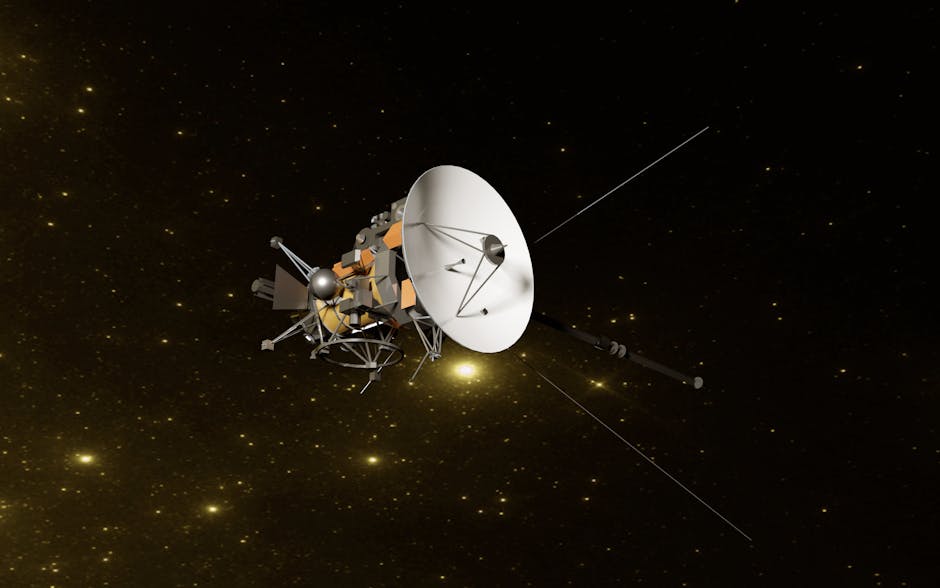
- Scientists discovered iron-60 in Antarctic ice cores, a radioactive isotope not naturally produced on Earth, indicating a distant star explosion’s remnants.
- The presence of iron-60 challenges long-standing assumptions about the composition and origin of the Local Interstellar Cloud.
- Iron-60 is exclusively forged in the extreme conditions of supernova explosions, making it a unique indicator of cosmic activity.
- The Local Interstellar Cloud contains remnants of ancient supernovae, deposited onto Earth’s surface as cosmic dust.
- This discovery highlights humanity’s connection to the wider galaxy and the ongoing impact of dead stars on our cosmic journey.
Deep within the icy layers of Antarctica, a silent record of Earth’s cosmic journey has been preserved for millennia. Buried in ice up to 80,000 years old, scientists have discovered traces of iron-60 — a rare, radioactive isotope not naturally produced on Earth. This ghostly fingerprint originates not from our planet or even our Solar System, but from a violent stellar explosion millions of years ago. As Earth orbits the Sun, our entire planetary system is drifting through a vast, tenuous cloud of interstellar gas and dust known as the Local Interstellar Cloud. Now, for the first time, researchers have shown that this cloud contains remnants of ancient supernovae, deposited steadily onto Earth’s surface as cosmic dust. The discovery offers unprecedented evidence that we are still flying through the debris of dead stars, a haunting reminder of our connection to the wider galaxy.
Why This Changes Our Understanding of Interstellar Space

The presence of iron-60 in Antarctic ice cores challenges long-standing assumptions about the composition and origin of the Local Interstellar Cloud. Unlike common elements such as hydrogen and helium, iron-60 is exclusively forged in the extreme conditions of supernova explosions — specifically, when massive stars collapse and detonate at the end of their lives. Because the isotope has a half-life of only 2.6 million years, any iron-60 found on Earth must have originated from relatively recent (in astronomical terms) stellar deaths. Its detection in ice spanning tens of thousands of years indicates a continuous influx, suggesting that our Solar System has been embedded in a supernova-enriched region of space for a significant period. This implies that the Local Interstellar Cloud itself may have been sculpted by one or more ancient supernovae, fundamentally altering how scientists model the environment surrounding our Sun.
Tracking Cosmic Ash Across Time and Ice

The breakthrough came from meticulous analysis of Antarctic ice samples collected from the Transantarctic Mountains, where cold, dry conditions preserve atmospheric particles with minimal contamination. A team led by physicists from the Technical University of Munich and the Australian National University used ultra-sensitive accelerator mass spectrometry to detect minute concentrations of iron-60. They identified a consistent layer of the isotope in ice dating back as far as 40,000 to 80,000 years, with no evidence of spikes tied to known geological or human events. Crucially, the iron-60 was found in particles small enough to have originated in space — likely incorporated into interstellar dust grains that survived entry into Earth’s atmosphere. The steady deposition pattern suggests a persistent source, rather than a single explosive event, pointing to an enduring presence of supernova remnants within the interstellar medium surrounding our Solar System. These findings were published in Nature, reinforcing the role of polar ice as a cosmic archive.
From Stellar Death to Earth’s Surface: The Journey of Iron-60

How does material from a star that died light-years away end up in Earth’s ice? The answer lies in the dynamics of interstellar space. When a massive star explodes, it ejects heavy elements like iron-60 into the surrounding medium at high velocities. Over millions of years, these elements mix with interstellar gas and dust, forming clouds that can span dozens of light-years. The Solar System entered the Local Interstellar Cloud roughly 100,000 years ago and is expected to remain within it for another 10,000 years. As the Sun moves through this cloud, it creates a bow wave that filters incoming dust particles, some of which make their way into the inner Solar System. These particles, carrying iron-60, eventually settle on Earth, particularly in pristine environments like Antarctica. The isotopic signature acts like a cosmic timestamp, allowing scientists to reconstruct not only the history of stellar explosions but also the trajectory and timing of our Sun’s movement through the galaxy.
Implications for Solar System Evolution and Cosmic Safety

The discovery raises important questions about the long-term influence of interstellar environments on planetary systems. If our Solar System is currently embedded in a supernova-shaped cloud, it suggests that such events may have played a role in seeding the galaxy with heavy elements essential for planet formation and life. However, the research also underscores a potential risk: while the current influx of iron-60 is harmless, a closer supernova — within 30 light-years — could bathe Earth in dangerous levels of radiation, potentially triggering mass extinctions. There is no evidence that the iron-60 detected came from such a nearby explosion, but its presence confirms that Earth is not isolated from galactic events. Future studies may use similar isotopic tracers to map the structure and history of other interstellar clouds, improving models of galactic ecology and planetary safety.
Expert Perspectives
“This is direct evidence that Earth is collecting debris from ancient stellar explosions,” says Dr. Anton Wallner, a nuclear physicist at the Australian National University and lead author of the study. “It’s like finding soot from a distant fire still drifting down years later.” Other scientists caution against overinterpretation. Dr. Brian Fields, an astrophysicist at the University of Illinois who was not involved in the study, notes, “While iron-60 is a clear tracer of supernovae, we must rule out alternative sources, such as multiple distant events or even local production by cosmic rays.” Still, the consensus is growing that interstellar dust carries a fossil record of galactic evolution, accessible right here on Earth.
Going forward, researchers plan to analyze even older ice cores and marine sediments to extend the timeline of iron-60 deposition. They also aim to detect other supernova-produced isotopes, such as plutonium-244, to confirm the source and better understand the frequency of nearby stellar explosions. The ultimate goal is to create a detailed map of Earth’s passage through the Local Interstellar Cloud and to determine whether such encounters influence climate or biological evolution over geologic timescales. As detection methods grow more sensitive, polar ice may emerge as one of the most powerful tools in observational astrophysics — not because it looks to the stars, but because it captures their ashes.
Source: ScienceDaily