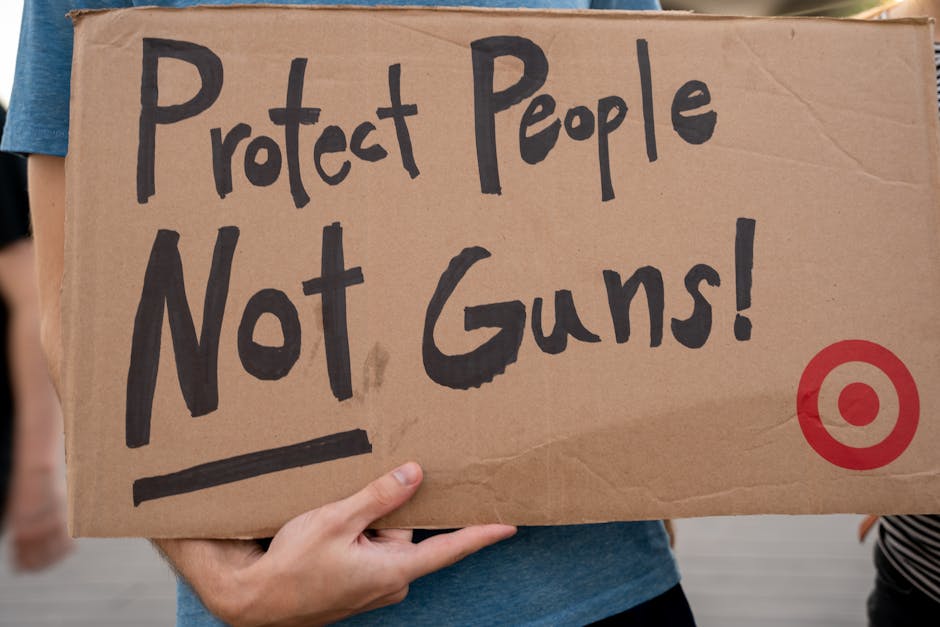
- German opposition leader Friedrich Merz warns against U.S. travel due to safety concerns over gun violence and political instability.
- Gun-related deaths in the U.S. reached a record 48,830 in 2023, with over 20,000 homicides at a rate 25 times higher than comparable high-income nations.
- Foreign governments, including Germany’s Federal Foreign Office, issue travel advisories for high-crime urban areas in the U.S.
- The U.S. experienced over 600 mass shootings in 2023, a figure that remains consistent in early 2024, according to the Gun Violence Archive.
- Merz’s comments signal a shift in how Western allies view U.S. internal challenges as potential deterrents to travel and cooperation.
German opposition leader Friedrich Merz has ignited a transatlantic debate by stating he would not recommend his children travel to the United States due to concerns over public safety, particularly gun violence and political instability. His remarks, made during a public forum in Berlin, reflect growing European unease about U.S. domestic trends and their implications for international perception and diplomacy. While not an official government stance, Merz’s comments signal a shift in how key Western allies view internal American challenges, framing them as potential deterrents to travel and cooperation.
Escalating U.S. Gun Violence and Public Safety Metrics

Merz’s warning draws from stark data on gun violence and public safety in the United States, where firearm-related deaths reached 48,830 in 2023, the highest on record, according to the Centers for Disease Control and Prevention (CDC) data dashboard. Of those, over 20,000 were homicides, a rate nearly 25 times higher than in comparable high-income nations. The Gun Violence Archive reports more than 600 mass shootings—defined as incidents with four or more victims shot—in 2023, a figure that has remained alarmingly consistent in early 2024. Foreign governments, including Germany’s Federal Foreign Office, regularly issue travel advisories for high-crime urban areas, but Merz’s personal caution transcends these formal warnings, reflecting broader anxieties about societal breakdown. European media have increasingly highlighted incidents such as school shootings, political threats, and open firearm carry in public spaces, reinforcing perceptions of unpredictability.
Key Political Figures and Their Stances

Friedrich Merz, leader of Germany’s conservative Christian Democratic Union (CDU), made the remarks during a town hall event hosted by Deutsche Welle, where he was asked about transatlantic relations and personal risk assessment. As a leading contender for chancellor in Germany’s upcoming federal election, his comments carry significant political weight, even if they represent personal opinion rather than party policy. The CDU has traditionally championed strong U.S.-Europe ties, particularly on defense and NATO, making Merz’s caution notable. In response, U.S. State Department officials reiterated that tourism remains safe in most areas and emphasized ongoing cooperation with European partners. Meanwhile, German Foreign Minister Annalena Baerbock distanced herself from Merz’s statement, affirming that official travel advice has not changed. Nevertheless, the incident underscores a quiet but growing divergence among Western democracies over how to interpret domestic instability in allied nations.
Trade-offs Between Security, Diplomacy, and Perception

Merz’s remarks highlight the delicate balance between honest risk assessment and diplomatic sensitivity. On one hand, elected leaders have a responsibility to inform citizens about potential dangers, especially as non-state actors and lone offenders pose increasing threats in public spaces. On the other, such statements can strain bilateral relations and amplify narratives of American decline. The U.S. tourism sector, which welcomed 61 million international visitors in 2023, could face reputational risks if allied leaders consistently question its safety. Conversely, suppressing such concerns may erode public trust. For Germany, the tension lies in condemning violence without undermining NATO solidarity, particularly as both nations support Ukraine against Russian aggression. Merz’s choice to frame the issue through a parental lens—invoking concern for children—adds emotional weight but also risks oversimplifying complex socioeconomic and cultural factors behind U.S. gun violence.
Why the Timing of Merz’s Warning Matters

The timing of Merz’s statement aligns with several converging factors: a surge in high-profile U.S. political violence threats, the approach of the 2024 U.S. presidential election, and rising European introspection about transatlantic dependency. Incidents such as the 2023 FBI disruption of a plot to assassinate Speaker Mike Johnson and repeated threats against local officials have drawn international attention. Simultaneously, Germany is reevaluating its global posture amid debates on defense spending and strategic autonomy within the EU. Merz’s comments emerged just weeks after a NATO meeting where European leaders expressed private concerns about U.S. political volatility. With far-right parties gaining traction in Germany and France, the broader geopolitical context makes critiques of democratic backsliding particularly sensitive—on both sides of the Atlantic.
Where We Go From Here
In the next 6 to 12 months, three scenarios could unfold. First, Merz’s remarks may remain an isolated incident, with other European leaders avoiding similar statements to preserve diplomatic harmony, especially if U.S. gun violence trends stabilize. Second, if political violence or polarization in the U.S. worsens during the election cycle, additional foreign officials may issue informal warnings, prompting the State Department to enhance security guidance for visiting dignitaries. Third, the comment could catalyze a broader European dialogue on travel risk assessment, leading to updated advisories that reflect not just crime statistics but also political climate indicators. Regardless of outcome, the episode marks a turning point in how allied democracies assess each other’s internal stability as a component of national security.
Bottom line — a senior European leader’s unprecedented caution about U.S. safety underscores a quiet but consequential shift in transatlantic trust, where domestic instability increasingly influences international perception and policy.
Source: The Guardian