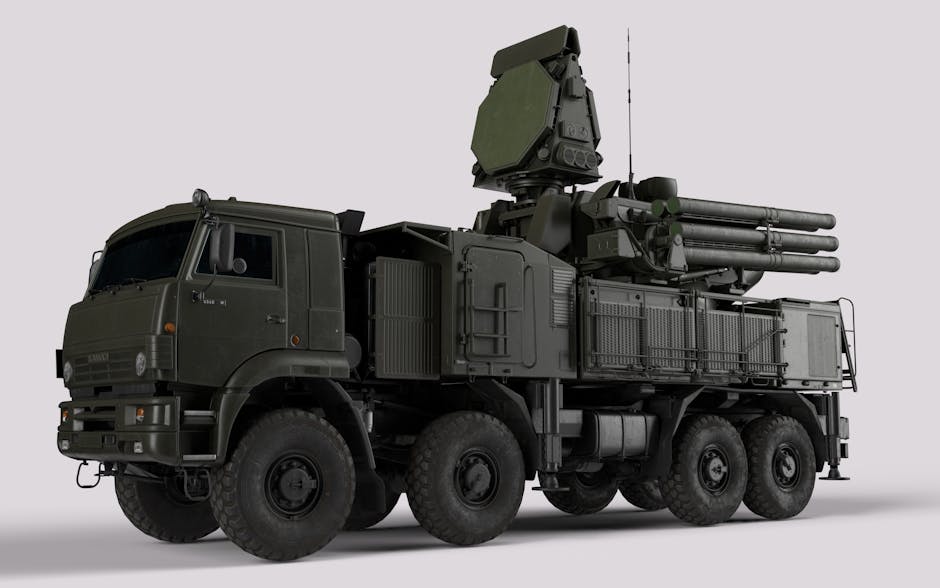
- France and Ukraine collaborate on co-developing a ballistic missile defense system.
- The proposed shield aims to intercept long-range projectiles before reaching populated areas, saving thousands of civilian lives.
- This initiative marks a first instance of a Western European power committing to co-develop strategic defense infrastructure with a non-NATO nation.
- Ukraine has endured over 2,000 missile and drone attacks since Russia’s full-scale invasion in 2022.
- The collaboration reflects a broader recalibration of military alliances in Eastern Europe.
In a significant escalation of European defense cooperation, Ukrainian President Volodymyr Zelensky announced that France is prepared to co-develop a ballistic missile defense system with Kyiv—a move that signals a profound shift in how NATO-aligned nations are responding to persistent missile threats from adversarial powers. Since Russia’s full-scale invasion in 2022, Ukraine has endured over 2,000 missile and drone attacks, according to Oryx, a defense monitoring group. The proposed shield aims to intercept long-range projectiles before they reach populated areas, potentially saving thousands of civilian lives. This initiative marks one of the first instances of a Western European power committing to co-develop strategic defense infrastructure with a non-NATO nation actively at war, reflecting a broader recalibration of military alliances in Eastern Europe.
Shifting Alliances in European Defense Strategy

The announcement comes amid growing unease across Europe over the vulnerability of civilian infrastructure to precision-guided missile strikes. Zelensky framed the collaboration with France as an “important step” toward long-term national security, emphasizing that Ukraine is no longer seeking only battlefield aid but enduring strategic partnerships. For Paris, the move aligns with President Emmanuel Macron’s vision of a more autonomous European defense posture, less reliant on U.S. military guarantees. As NATO debates the future of collective security, the France-Ukraine pact could serve as a blueprint for deeper military integration between member states and partner nations. Analysts at the International Institute for Strategic Studies (IISS) note that such initiatives may encourage other European powers, including Germany and Poland, to pursue similar co-development projects.
Framework of the Proposed Defense System

While specific technical details remain classified, Zelensky indicated the system will integrate French radar and command technologies with Ukrainian launch platforms and early-warning networks. The development phase is expected to begin in early 2025, with initial deployment targeted for 2027. French defense contractor MBDA, a leader in missile systems, is likely to play a central role, potentially adapting its Aster missile family for land-based interception. Ukraine has already demonstrated proficiency in operating Western air defense systems, including the U.S.-made NASAMS and Patriot batteries. The collaboration will also involve training Ukrainian engineers and military personnel in France, fostering long-term technical independence. This approach mirrors the model used in Ukraine’s drone warfare expansion, where decentralized innovation has yielded battlefield advantages.
Strategic Implications and Regional Deterrence

The joint missile defense project carries significant strategic weight, potentially altering the calculus of long-range strikes in Eastern Europe. Unlike point-defense systems that protect specific locations, a ballistic missile shield could intercept mid-flight projectiles across broad swaths of territory, reducing the effectiveness of saturation attacks. According to a 2023 report by Reuters, Russia has increasingly relied on Kinzhal hypersonic missiles and Shahed drones to bypass existing air defenses. A Franco-Ukrainian shield could complicate such strategies, forcing adversaries to reassess targeting and resource allocation. Moreover, the initiative strengthens the norm of European-led defense innovation, reducing dependency on American systems at a time of domestic political uncertainty in the U.S.
Impact on Civilian Safety and Military Readiness

Civilian populations in cities like Kyiv, Kharkiv, and Odesa stand to benefit most from enhanced missile interception capabilities. Persistent air raids have displaced millions and damaged over 200,000 buildings, per UN estimates. A functional defense shield could mitigate psychological trauma, stabilize urban life, and support economic recovery. Militarily, the system would free up Ukrainian air defense units currently stretched thin across multiple fronts. By delegating long-range interception to a dedicated network, Kyiv could redeploy Patriot and IRIS-T systems to tactical roles near the front lines. However, challenges remain—chief among them the system’s vulnerability to electronic warfare and the high cost of sustained operations.
Expert Perspectives
Military analysts are divided on the project’s feasibility. Dr. Elena Korosteleva of the London School of Economics cautions that “co-developing strategic systems with a nation under active attack introduces unprecedented logistical and security risks.” In contrast, retired French General Jean-Louis Py views it as a “strategic necessity,” arguing that “Europe must build layered defenses before threats evolve further.” There is broad consensus, however, that success will depend on interoperability with NATO’s broader air defense architecture and sustained political will in Paris and Brussels.
Looking ahead, the project’s progress will be closely watched as a test of Europe’s ability to innovate under pressure. Key milestones include finalizing funding mechanisms, establishing secure communication links, and conducting joint simulation exercises. If successful, the France-Ukraine missile shield could become a cornerstone of European collective security, setting a precedent for future defense collaborations beyond NATO’s formal boundaries.
Source: Kyivindependent