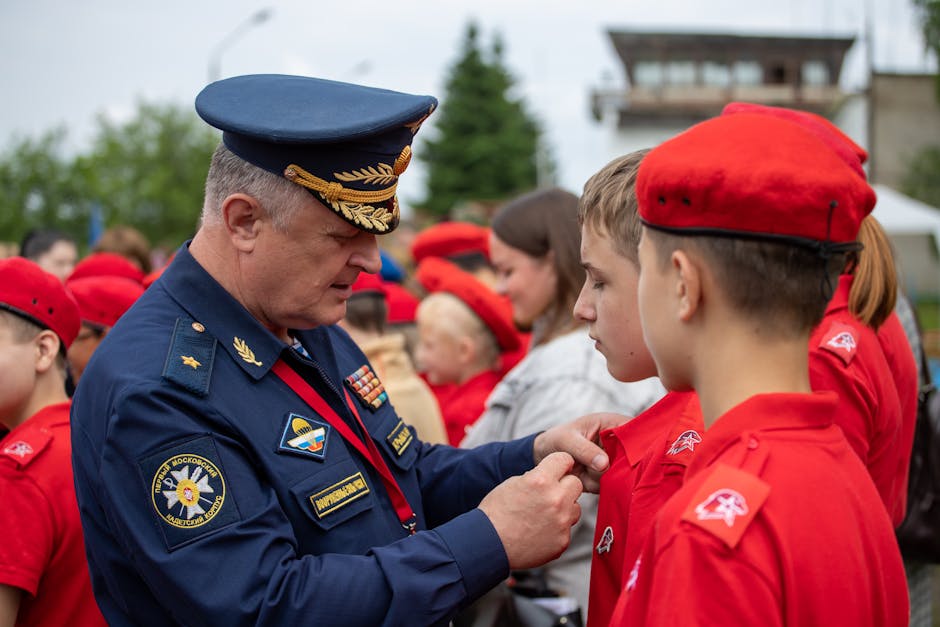
- More than 50,000 Russian university students have enlisted in military programs since 2022, focusing on drone operations.
- Federal and regional universities are promoting military specialty tracks combining academic coursework with drone piloting and surveillance training.
- Students are promised no frontline infantry deployment, career advancement, and academic credits for military service.
- Russia’s Ministry of Education and Defense have formalized partnerships with over 120 universities for military training centers.
- University students are earning engineering credentials while undergoing military certification in dual-degree programs.
More than 50,000 university students across Russia have reportedly enlisted in military programs since 2022, many funneled into drone operations units amid the country’s intensifying reliance on unmanned systems in Ukraine. According to data compiled by independent Russian media outlet Verstka, federal and regional universities are actively promoting military specialty tracks that combine academic coursework with drone piloting, electronic warfare, and surveillance training. Unlike earlier mobilization waves that sparked mass emigration and protests, this latest drive targets a more strategic demographic: technically trained youth with skills in engineering, computer science, and robotics—precisely the profile needed for modern drone warfare. These students are promised no deployment to frontline infantry roles, access to career advancement, and even academic credits for military service, creating a structured pipeline from campus to combat zone—albeit from behind a screen.
The Campus Mobilization Machine

Russia’s Ministry of Education and Defense have formalized partnerships with over 120 universities to establish “military training centers” focused on unmanned systems, cyber defense, and reconnaissance operations. Institutions like Bauman Moscow State Technical University and Novosibirsk State University now offer dual-degree programs where students earn engineering credentials while undergoing military certification. Recruitment materials, obtained by BBC Russian Service, emphasize safety: “Serve your country without going to the front—operate drones from secure bases.” These assurances are critical, as fear of conscription into direct combat has remained a potent social pressure point since the 2022 mobilization of 300,000 reservists. By branding drone piloting as a technical, non-combat role, authorities are reframing military service as a career-enhancing, patriotic duty rather than a perilous obligation. This shift reflects a broader adaptation in Russia’s war strategy—relying less on manpower and more on precision technology and remote warfare.
Recruitment Tactics and Student Incentives

Universities are deploying a mix of carrots and subtle coercion to boost enlistment. Students who join military training programs receive monthly stipends ranging from 30,000 to 50,000 rubles (approximately $330–$550), priority housing, and guaranteed post-graduation employment in defense or state tech sectors. Some institutions, including ITMO University in St. Petersburg, offer academic credits for military coursework, effectively shortening degree timelines. Meanwhile, regional governors have tied enlistment to broader social benefits, such as preferential access to government jobs and housing subsidies. While officials insist participation is voluntary, students report increasing pressure from administrators, including mandatory attendance at recruitment briefings and visits from military recruiters during class hours. In some cases, refusal to attend these sessions has been framed as unpatriotic, creating a climate of implicit coercion. This institutionalized push underscores the state’s need to sustain its war machine without triggering another wave of public backlash.
Drone Warfare and the Future of Russian Military Strategy

The emphasis on drone operators reflects a decisive shift in Russian military doctrine. Since 2022, Moscow has significantly expanded its use of unmanned aerial vehicles (UAVs) for reconnaissance, artillery targeting, and direct attacks—particularly in Ukraine’s eastern Donbas region. According to a 2024 report by the Royal United Services Institute (RUSI), Russia now conducts over 10,000 drone missions per month, deploying domestically produced systems like the Lancet loitering munition, which has destroyed Western-supplied tanks and air defense units. However, operating these systems requires skilled personnel proficient in navigation, signal processing, and real-time decision-making—capabilities increasingly found among university STEM students. By embedding military training within higher education, Russia is institutionalizing a long-term reserve force tailored to 21st-century warfare. This model not only addresses immediate personnel shortages but also ensures a steady supply of technically adept operators for future conflicts, mirroring trends seen in China and Iran.
Implications for Students and Academic Freedom

The militarization of Russian universities raises serious concerns about academic autonomy and student choice. Human rights groups, including Memorial and OVD-Info, warn that the blending of education and conscription undermines the principle of neutral learning environments. Students who resist participation risk social stigma, academic disadvantages, or even surveillance by campus security services. Moreover, the promise of “no frontline duty” may not hold under evolving battlefield conditions; past assurances during earlier mobilizations were frequently broken. As drone operators become high-value targets—subject to electronic jamming, cyberattacks, and even physical strikes on command centers—the distinction between combat and non-combat roles is increasingly blurred. For many students, the decision to enlist is less about patriotism and more about economic necessity or fear of reprisal, highlighting the fragile line between incentive and coercion in authoritarian systems.
Expert Perspectives
Analysts are divided on the long-term effectiveness of Russia’s student recruitment strategy. “This is a sustainable way to build technical capacity without draining the general population,” says Maria Lipman, a scholar of Russian politics at Columbia University. “They’re tapping into a resource that’s both skilled and ideologically malleable.” Conversely, military historian Dmitry Gorenburg argues that the model may backfire: “If students feel deceived or exploited, it could fuel resentment, especially if casualties among drone units rise.” Western intelligence officials note that while Russia is producing more operators, training quality varies widely, and attrition due to stress and moral injury remains a concern, as reported in Reuters investigations into operator fatigue.
Looking ahead, the success of this initiative will depend on whether Russia can maintain the illusion of safe, voluntary service while sustaining high operational tempo. As drone warfare becomes more central to modern conflict, other nations may study Russia’s campus recruitment model—with caution. The key question remains: at what point does technical training cross into complicity, and how will a generation of students reckon with their role in a prolonged war?
Source: Ars Technica