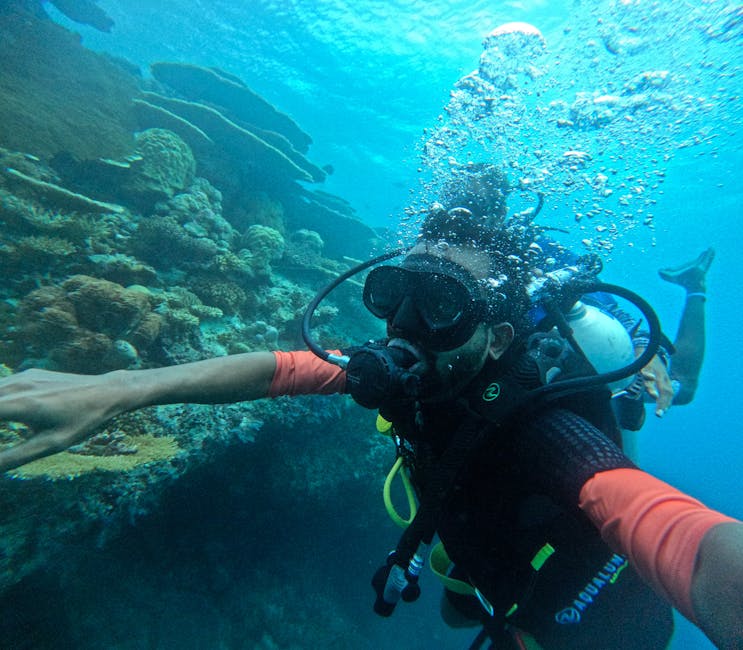
- Five tourists, including a marine biology professor and her daughter, died during a deep dive in the Maldives near the atoll of Fuvahmulah.
- The group descended to approximately 42 meters, a depth requiring advanced certification and careful planning, but the cause of death remains unknown.
- Investigators are focusing on a recovered GoPro camera, which may contain the only visual record of the final, fatal minutes of the dive.
- The Maldives attracts over 1.7 million tourists annually, many for scuba diving, but deep diving poses significant risks including equipment failure and human error.
- Fuvahmulah is known for its population of tiger sharks and deep reef walls that plunge beyond 100 meters, drawing advanced divers seeking rare marine encounters.
In one of the deadliest scuba diving accidents in recent Maldivian history, five tourists lost their lives during a deep dive near the remote atoll of Fuvahmulah. Among the deceased were Dr. Eleanor Whitmore, a 52-year-old marine biology professor from the University of Queensland, and her 24-year-old daughter, Lydia. The group, which included three other experienced divers from Australia and the UK, descended to approximately 42 meters—a depth that requires advanced certification and careful planning. Emergency responders recovered the bodies within two hours, but the exact cause of death remains unknown. Now, investigators are focusing on a recovered GoPro camera, which may contain the only visual record of the final, fatal minutes of the dive. If the footage is intact, it could provide critical insights into whether equipment failure, human error, or environmental factors led to the tragedy.
The Allure and Danger of Deep Diving in the Maldives

The Maldives, renowned for its crystal-clear waters and vibrant coral reefs, attracts over 1.7 million tourists annually, many of whom come specifically for scuba diving. While most dives occur at safe recreational depths of 18 to 30 meters, the archipelago’s deeper channels and shark-rich drop-offs draw advanced divers seeking adrenaline and rare marine encounters. Fuvahmulah, in particular, is known for its population of tiger sharks and deep reef walls that plunge beyond 100 meters. However, diving at such depths increases the risks of nitrogen narcosis, decompression sickness, and rapid oxygen depletion. Despite mandatory dive certifications, oversight of private dive operators remains inconsistent, especially on less-regulated outer atolls. This incident has reignited debate over whether current safety standards are sufficient to protect foreign visitors in remote areas where emergency medical response can take hours.
Who Was Involved and What Went Wrong?

The dive group was led by a 38-year-old Maldivian dive master employed by Blue Horizon Expeditions, a locally licensed but independently operated dive shop. The team entered the water at approximately 9:15 a.m. local time, with planned bottom time of 25 minutes at 42 meters. Surface support staff lost contact with the group around 9:40 a.m. when none of the divers surfaced as scheduled. A search team located the group on the reef slope, motionless and still equipped with their tanks. All five showed signs of distress, with two found entangled in fishing line—a legacy of illegal fishing in protected zones. The dive master, the only survivor, surfaced with severe decompression sickness and was airlifted to a hyperbaric chamber in Malé. Investigators have not ruled out the possibility of a sudden current, equipment malfunction, or a cascade of panic-induced errors. The GoPro, retrieved from Dr. Whitmore’s wrist mount, is currently undergoing digital analysis by forensic specialists from Australia’s Divers Alert Network (DAN).
Analyzing the Risks Behind the Tragedy

Experts point to a confluence of risk factors that may have contributed to the accident. At 42 meters, divers breathe compressed air at five times atmospheric pressure, increasing the likelihood of nitrogen narcosis—a condition that impairs judgment akin to intoxication. Without proper gas mixtures like trimix, which substitutes helium for some nitrogen, deep dives become significantly more dangerous. Records show the group used standard air tanks, not mixed gases, though they were certified for advanced diving. Additionally, environmental data from BBC reports indicate strong, unpredictable currents in the area that morning. Dr. Anil Silva, a diving medicine specialist at the University of Colombo, stated, ‘Even experienced divers can succumb to a perfect storm of narcosis, poor visibility, and entanglement. One mistake compounds another quickly at that depth.’ The presence of fishing debris further suggests inadequate reef monitoring, undermining conservation and safety efforts.
Implications for Tourism and Dive Safety

The deaths have sent shockwaves through the Maldives’ tourism sector, which contributes over 28% of the nation’s GDP. While the government has temporarily suspended operations at Blue Horizon Expeditions pending investigation, broader concerns remain about enforcement of safety standards across hundreds of independent operators. Families of the victims are calling for international oversight, similar to aviation safety protocols. For dive certification bodies like PADI and SSI, the incident raises questions about how rigorously they audit affiliated centers abroad. Moreover, the tragedy highlights a gap in emergency response infrastructure; Fuvahmulah has no hyperbaric chamber, delaying critical treatment. If negligence is found, it could lead to legal action and stricter regulations, potentially reshaping how dive tourism is managed in ecologically sensitive but economically vital regions.
Expert Perspectives
Opinions are divided on where responsibility lies. Some diving safety advocates, like Catherine Lee of Reuters, argue that ‘local operators cut corners to cater to thrill-seeking tourists.’ Others, including veteran dive instructor Mark Rutherford, emphasize that ‘no amount of regulation can eliminate human error in high-risk environments.’ Meanwhile, Maldivian officials stress that the dive master followed protocol and that the accident may have been unavoidable. The upcoming release of the GoPro footage could shift public and expert opinion dramatically, either vindicating the crew or exposing systemic failures.
As forensic teams work to recover usable video from the GoPro, the world watches closely. The footage could set a precedent for using wearable technology in diving accident investigations. In the meantime, governments, certification agencies, and tour operators must confront difficult questions about risk, accountability, and the hidden costs of adventure tourism. One thing is certain: what happens next in the Maldives could reshape global standards for underwater exploration.
Source: News