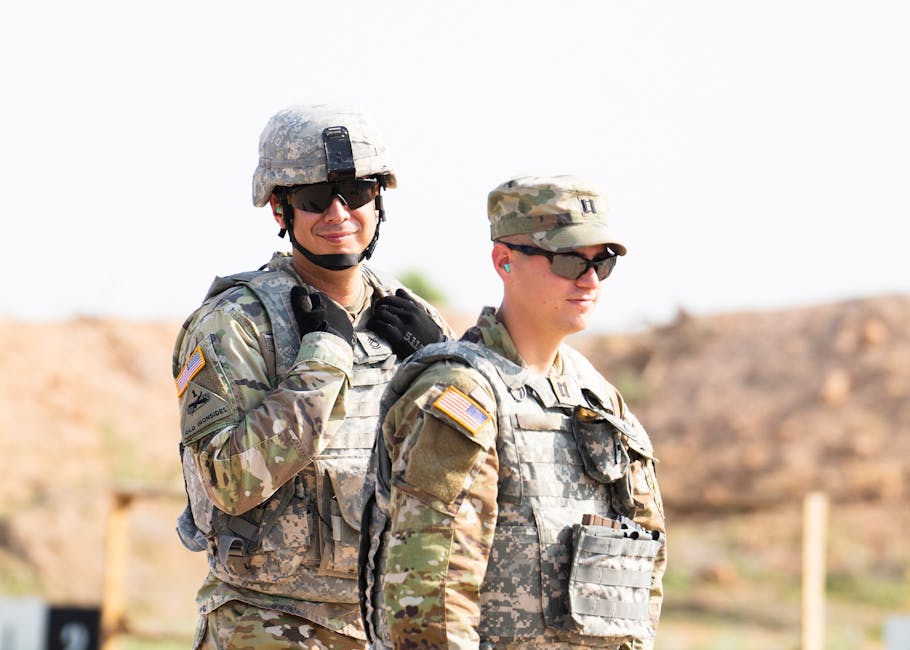
- Two US soldiers, Spc Mariyah Symone Collington and Spc Kendrick Lamont Key Jr, died during an unauthorized hike in Morocco.
- The incident occurred near the town of Tazmalt in northern Morocco, where the terrain is steep and unforgiving.
- The soldiers were not wearing personal tracking devices as the activity was unsanctioned and not part of official operations.
- A multinational search effort involving military aircraft and advanced AI tools was launched to locate the missing soldiers.
- The incident has raised questions about safety protocols for service members on leave and recreational activities in foreign environments.
What led to the tragic deaths of two young US soldiers during a routine off-duty hike in Morocco? Spc Mariyah Symone Collington and Spc Kendrick Lamont Key Jr, both 19 and stationed in Europe, vanished during a weekend trek near the North African kingdom’s rugged coastline. Their disappearance triggered a high-stakes, multinational search effort involving military aircraft, naval units, and advanced artificial intelligence tools designed to scan terrain and detect human remains. The incident has raised urgent questions about safety protocols for service members on leave and the risks associated with recreational activities in foreign, often unpredictable, environments.
What Happened During the Hike in Morocco?

The US Army Europe and Africa confirmed that both soldiers died after falling from a cliff during an unauthorized hike near the town of Tazmalt in northern Morocco. The incident occurred during a scheduled military training exercise, but the hike itself was off-duty and not part of official operations. Spc Mariyah Symone Collington of Taveres, Florida, and Spc Kendrick Lamont Key Jr of Atlanta, Georgia, were reported missing on June 14 after failing to return to their unit. The terrain in the area is steep and unforgiving, with loose rock and limited access points, complicating both the search and the circumstances of the fall. The army stated that neither soldier was wearing personal tracking devices at the time, as the activity was unsanctioned.
How Did the Search Operation Unfold?

The recovery mission mobilized military and civilian resources from the US, Morocco, and NATO allies, marking one of the most technologically advanced peacetime search efforts in recent memory. According to Pentagon officials, drones equipped with thermal imaging, Moroccan naval patrols along the Mediterranean coast, and AI-powered satellite analysis were deployed to scan over 80 square miles of difficult terrain. Reuters reported that AI algorithms processed topographical data to identify potential impact zones and predict debris fields, significantly narrowing search parameters. After five days, Key’s remains were recovered on June 18; Collington’s were located two days later, about 300 meters below the cliff edge, in a remote ravine. The US Army praised the collaboration with Moroccan authorities, calling it “a model of international military cooperation.”
Are There Concerns About Off-Duty Safety for Deployed Troops?

While military leaders have emphasized personal responsibility, some experts argue that the incident exposes systemic gaps in off-duty risk management. “We train soldiers to survive combat, but we often assume they’ll make sound decisions in leisure time,” said Dr. Elena Martinez, a defense policy analyst at the Atlantic Council. “But young service members, especially those stationed abroad, may underestimate environmental hazards or feel pressure to explore.” Others point to inconsistent enforcement of leave regulations. Although the US military prohibits high-risk activities like unsupervised hiking in hazardous zones, compliance relies heavily on self-reporting. Some troops say that fear of disciplinary action discourages them from seeking guidance or approval for outdoor recreation. The incident has prompted internal reviews within US Africa Command about whether recreational safety briefings should be standardized and whether tracking protocols should extend to off-duty periods.
What Are the Real-World Consequences of the Tragedy?

The deaths have reverberated across military communities in the US and Europe, prompting grieving families, mourning units, and diplomatic conversations. Collington’s family released a statement calling her “a light to everyone she met,” while Key’s mother said he “dreamed of serving his country.” Back at their home base in Germany, fellow soldiers held a candlelight vigil, and commanders mandated grief counseling for affected personnel. Beyond the emotional toll, the incident has practical implications: the US Department of Defense is now evaluating whether to revise its off-base activity guidelines for troops deployed in mountainous or coastal regions. There are also discussions about expanding GPS-enabled safety gear for service members, even during personal time, though privacy and logistical concerns remain. The Moroccan government has offered condolences and pledged to improve signage in high-risk natural areas near military training zones.
What This Means For You
If you or someone you know is in the military, this tragedy underscores the importance of balancing personal freedom with safety awareness, especially when stationed abroad. Even routine hikes can turn deadly in unfamiliar terrain. Service members should consult base safety officers before engaging in outdoor activities and consider using location-sharing tools with trusted contacts. For families, it highlights the unpredictable risks military life entails, even outside combat zones. While protocols will evolve, personal vigilance remains the first line of defense.
As investigations conclude, a deeper question lingers: how can military institutions better protect the well-being of young service members during their downtime? And could technology—from AI search tools to wearable safety devices—play a more proactive role in prevention, not just recovery?
Source: The Guardian