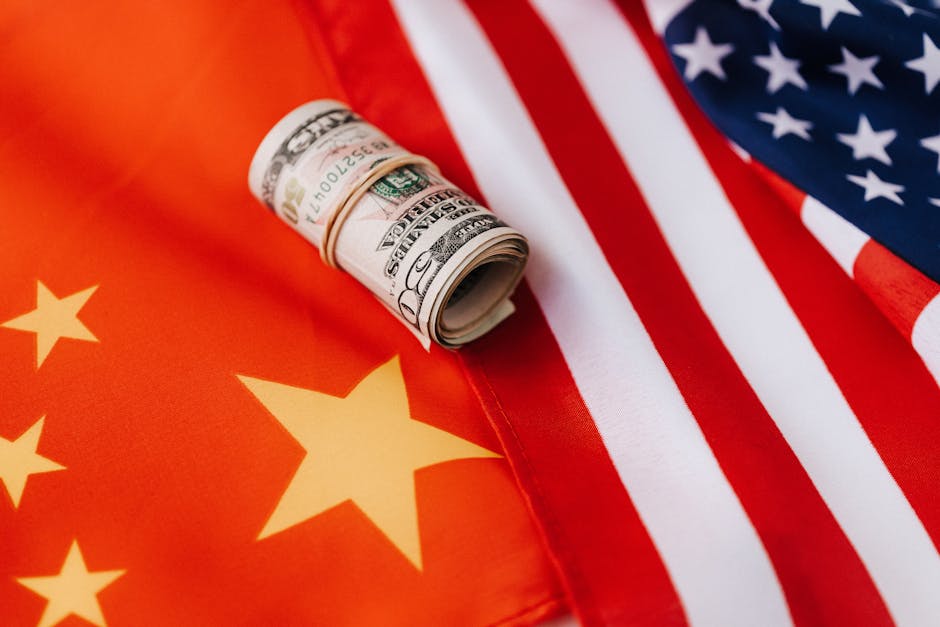
- President Trump’s visit to Beijing marks the first meeting between him and Chinese President Xi Jinping in nine years, amidst high tensions.
- The US-China trade war, fueled by tariffs and intellectual property theft, has been escalating for months and affects economies worldwide.
- Tensions between the two nations are also fueled by the US sale of military equipment to Taiwan, which China claims as its own territory.
- The situation with Iran, where the US has imposed strict sanctions while China has chosen to ignore them, further strains US-China relations.
- Experts warn that the trade war between the US and China is having a significant impact on the global economy.
As the world watches, President Trump is set to meet with Chinese President Xi Jinping in Beijing, marking their first meeting in nine years. The high-stakes visit comes at a time when tensions between the two nations are running high, with trade wars, Taiwan, and Iran all on the table. The question on everyone’s mind is: can these tensions be contained, or will they escalate into something more?
Understanding the Core Issues

The meeting between Trump and Xi is not just a simple diplomatic visit, but rather a complex negotiation with far-reaching implications. At its core, the discussion will center around the ongoing trade war between the US and China, which has been escalating for months. The US has imposed billions of dollars in tariffs on Chinese goods, citing unfair trade practices and intellectual property theft. China, on the other hand, has retaliated with its own tariffs, leading to a stalemate that has affected economies around the world. Additionally, the US has recently increased tensions with China over Taiwan, with the sale of military equipment to the island nation, which China claims as its own. The situation with Iran also looms large, as the US has imposed strict sanctions on the country, which China has chosen to ignore, further straining relations.
Supporting Evidence and Expert Opinion

According to experts, the trade war between the US and China is having a significant impact on the global economy. Reuters reports that the trade war has resulted in a loss of over $1 trillion in economic output worldwide. Furthermore, the situation with Taiwan and Iran is also causing concern, with many experts warning of the potential for military conflict. The New York Times notes that the US sale of military equipment to Taiwan has been seen as a provocation by China, which could lead to further escalation. As one expert notes, “The situation is highly volatile, and any miscalculation could have serious consequences.”
Counter-Perspectives and Criticisms

Not everyone agrees that the US is taking the right approach with China, however. Some critics argue that the trade war is hurting American businesses and consumers, and that the US should be seeking a more diplomatic solution. Others argue that the US is being too aggressive in its dealings with China, and that this could lead to a backlash from other nations. For example, the Guardian reports that some European nations are beginning to question the US approach, and are seeking to establish their own trade deals with China. As one critic notes, “The US needs to be careful not to isolate itself from the rest of the world.”
Real-World Impact and Consequences

The real-world impact of the tensions between the US and China is already being felt. Companies such as Apple and Boeing are being forced to navigate the complex web of tariffs and regulations, which is affecting their bottom line. Additionally, the situation with Taiwan and Iran is causing concern among military leaders, who warn of the potential for conflict. For example, BBC News reports that the US has increased its military presence in the region, which China sees as a threat. As one military leader notes, “The situation is highly unstable, and we need to be prepared for any eventuality.”
What This Means For You
So what does this mean for the average person? In short, the tensions between the US and China have the potential to affect us all. From the prices we pay for goods to the stability of the global economy, the outcome of this meeting will have far-reaching implications. As one expert notes, “The US and China need to find a way to work together, or risk causing a global economic downturn.”
As we watch the events unfold, one question remains: what will be the outcome of this high-stakes meeting? Will the US and China be able to find common ground, or will tensions continue to escalate? Only time will tell, but one thing is certain: the world will be watching with bated breath.
Source: Al Jazeera