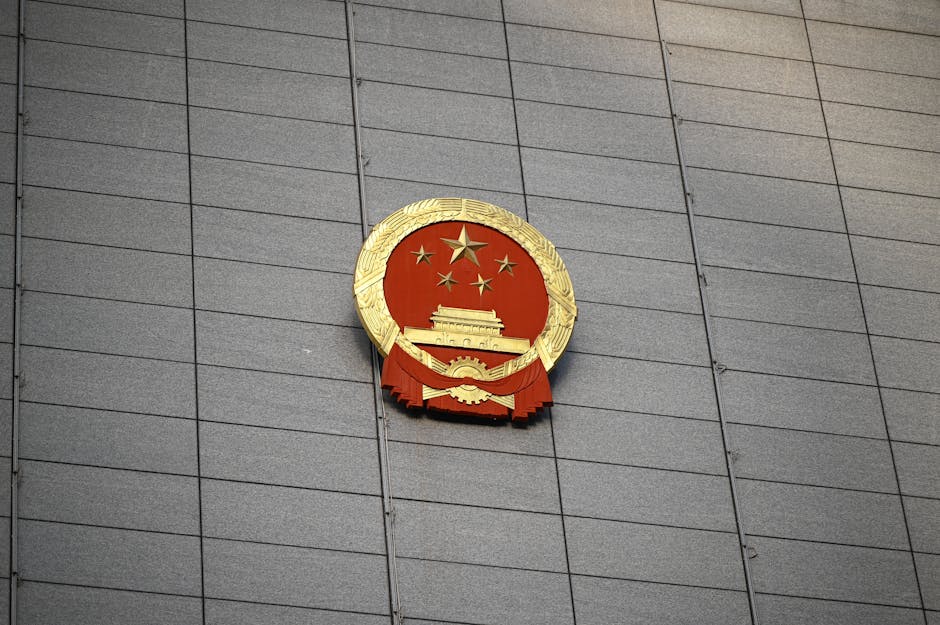
- Former US President Donald Trump claims Chinese President Xi Jinping offered to broker a peace deal between Washington and Tehran.
- China’s potential mediation role in Iran-US relations challenges American dominance in Middle Eastern diplomacy.
- President Xi’s offer is part of China’s broader pattern of emphasizing diplomatic mediation in its foreign policy.
- China has doubled its participation in multilateral peace initiatives since 2020, with 14 such initiatives to date.
- Beijing’s 2023 rapprochement between Iran and Saudi Arabia sets a precedent for its diplomatic efforts in the region.
Former U.S. President Donald Trump has claimed that Chinese President Xi Jinping offered to help broker a peace agreement between Washington and Tehran, a revelation that highlights China’s expanding influence in global security affairs. If confirmed, the overture would mark a significant development in U.S.-China-Iran relations, suggesting Beijing is positioning itself as a neutral diplomatic actor in volatile regions. This potential mediation role challenges traditional American dominance in Middle Eastern diplomacy and raises questions about the future balance of power in conflict resolution.
\n\n
China’s Diplomatic Overture to Iran and the U.S.

\n
New details from Trump’s public statements and subsequent media reports indicate that during a private conversation, President Xi expressed willingness to facilitate dialogue between the United States and Iran—two nations with decades of tense relations. While no formal documentation of the offer has been released, Trump’s account aligns with broader patterns in Chinese foreign policy under Xi, which has increasingly emphasized diplomatic mediation. According to data from the United Nations and independent tracking by the International Crisis Group, China has participated in 14 multilateral peace initiatives since 2020, doubling its prior decade’s engagement. Notably, in 2023, Beijing brokered a surprise rapprochement between Iran and Saudi Arabia, a feat long eluding Western powers. This precedent lends credibility to Trump’s assertion, suggesting that China is leveraging its economic ties and non-interventionist stance to gain diplomatic capital. Furthermore, China is Iran’s largest trading partner, importing over $13 billion in oil and goods annually, according to Reuters, giving Beijing unique leverage in Tehran.
\n\n
Key Players and Their Strategic Calculations

\n
The central figures in this unfolding diplomatic narrative are Donald Trump, Xi Jinping, and Iranian Supreme Leader Ayatollah Ali Khamenei, each operating with distinct geopolitical interests. Trump, campaigning for a 2024 presidential return, may highlight the anecdote to underscore his foreign policy credentials and unique access to world leaders. For Xi, positioning China as a peacemaker advances the vision of a multipolar world order, reducing U.S. hegemony. This aligns with China’s Global Security Initiative, launched in 2022, which promotes ‘indivisible security’ and non-alignment. Meanwhile, Iran, under severe U.S. sanctions and domestic unrest, may welcome Beijing’s involvement as a counterbalance to Western pressure. Iran’s foreign ministry has not confirmed the specific offer but has praised China’s ‘constructive role’ in regional stability. On the American side, current and former officials remain skeptical: a senior State Department official, speaking anonymously to BBC News, cautioned that ‘China’s neutrality is transactional, not principled,’ citing ongoing military cooperation between Beijing and Tehran.
\n\n
Strategic Trade-Offs and Geopolitical Risks

\n
Accepting Chinese mediation presents complex trade-offs for all parties involved. For the United States, collaborating with China on Iran policy could yield breakthroughs in nuclear negotiations and regional de-escalation, particularly given stalled talks in Vienna. However, it risks legitimizing Beijing’s influence at the expense of traditional U.S. alliances and could incentivize further Chinese entrenchment in the Middle East. For Iran, Chinese involvement may ease economic isolation but could also deepen dependence on Beijing, limiting Tehran’s strategic autonomy. China, in turn, stands to gain soft power and enhanced regional access, but risks being drawn into intractable conflicts or perceived as enabling Iranian provocations. Moreover, any agreement brokered by China may lack enforcement mechanisms, as seen in the fragile Saudi-Iran détente, where tensions have simmered beneath the surface. The absence of transparency and independent verification in Chinese-led diplomacy raises concerns about accountability and long-term sustainability.
\n\n
Why This Revelation Matters Now

\n
The timing of Trump’s disclosure coincides with escalating U.S.-China competition and renewed volatility in the Middle East. With the 2024 U.S. presidential election approaching, foreign policy narratives are gaining prominence, and Trump’s claim serves both as a personal endorsement of his global stature and a critique of Biden’s diplomatic record. Simultaneously, Iran’s nuclear program has advanced significantly, with the International Atomic Energy Agency reporting uranium enrichment up to 60%—a step from weapons-grade. In this context, any credible pathway to de-escalation is politically urgent. China’s demonstrated willingness to engage, contrasted with U.S. paralysis, underscores a shifting paradigm in crisis diplomacy. The window for preventive diplomacy is narrowing, making third-party mediation not just appealing but potentially necessary, even if it means ceding influence to strategic rivals.
\n\n
Where We Go From Here
\n
In the next 6 to 12 months, three scenarios could unfold. First, the U.S. and Iran might enter indirect talks facilitated by China, leading to a temporary freeze on enrichment in exchange for limited sanctions relief—a cautious but achievable outcome. Second, the offer could collapse under mutual distrust, with Washington rejecting Chinese involvement and Iran accelerating its nuclear program, increasing the risk of military confrontation. Third, China could expand its regional footprint by brokering broader security accords involving Gulf states, transforming itself into a permanent diplomatic player in the Middle East—regardless of U.S. participation. Each scenario hinges on the interplay of domestic politics, strategic patience, and the credibility of China’s neutrality.
\n\n
Bottom line — while unverified, Trump’s claim reflects a tangible shift in global diplomacy, where China is no longer a passive observer but an active mediator in high-stakes conflicts, challenging American primacy and redefining the rules of international engagement.
Source: Time