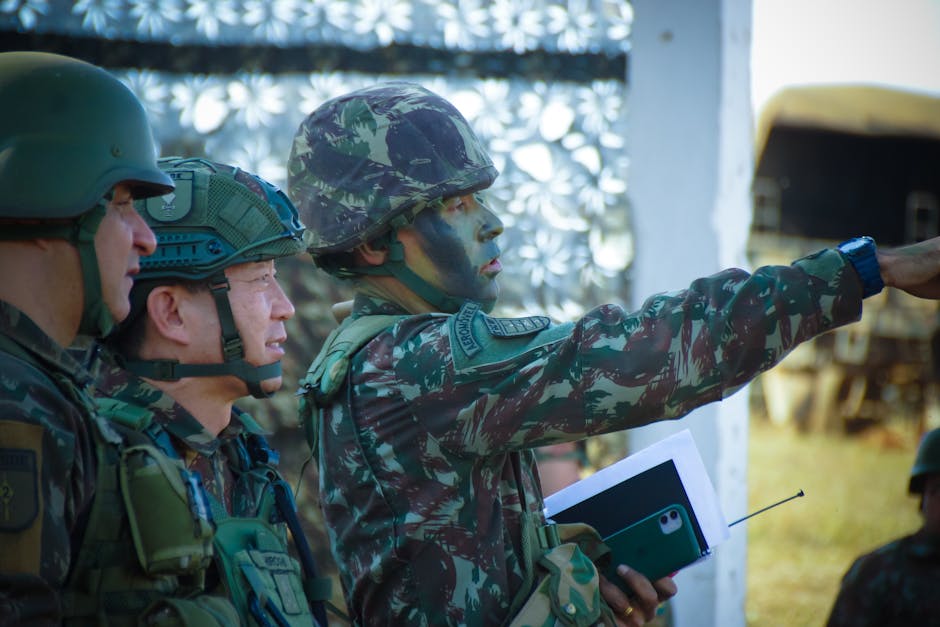
- US Special Operations Command commander Adm. Brad Cooper downplayed civilian casualties in recent Iran strikes.
- Cooper stated that only one incident may have involved civilian harm, a strike on an Iranian school.
- The Pentagon’s Joint Incident Assessment Team reviewed intelligence before determining the primary targets were military assets.
- The US military acknowledges the potential for collateral damage in recent operations.
- Debate over battlefield transparency and intelligence accuracy continues following Cooper’s assessment.
Did U.S. military operations in Iran result in widespread civilian casualties, or were such incidents isolated—and possibly overreported? That’s the question reverberating through defense circles and international watchdog groups after a top U.S. commander downplayed the scale of non-combatant harm. Adm. Brad Cooper, commander of U.S. Special Operations Command, recently stated that a strike on an Iranian school may have been the only instance involving civilian casualties throughout the recent campaign. Given the intensity of the strikes and Iran’s claims of dozens killed, including women and children, Cooper’s assessment has sparked debate over battlefield transparency, intelligence accuracy, and the fog of war.
What Did the U.S. Commander Actually Say?

Adm. Brad Cooper indicated that, based on U.S. military assessments, only one incident during the recent operations in Iran appeared to involve possible civilian harm—a strike on a building believed to be housing Islamic Revolutionary Guard Corps (IRGC) operatives, later reported to have also functioned as a school. According to Cooper, the Pentagon’s Joint Incident Assessment Team reviewed available intelligence, including satellite imagery and signals intercepts, and determined the primary targets were legitimate military assets. However, he acknowledged the potential for collateral damage, stating, “We take every report seriously, and in this one case, we see a credible indication of unintended impact.” This contrasts sharply with Iranian state media, which claimed the strike killed over 27 civilians, including students. Cooper’s characterization of the event as an anomaly suggests the U.S. sees the broader campaign as having adhered to the laws of armed conflict.
What Evidence Supports the Commander’s Claims?

U.S. Central Command (CENTCOM) released a declassified summary of strike assessments, citing overhead surveillance and post-strike reconnaissance to argue most targets were isolated military facilities or IRGC-linked compounds in remote areas. According to a report from Reuters, the Pentagon conducted pattern-of-life analysis to minimize civilian exposure, often scheduling strikes during nighttime hours when nearby populations were minimal. Adm. Cooper emphasized that no other incidents have met the threshold for formal investigation, though the review process remains ongoing. However, human rights organizations like Amnesty International have challenged these findings, citing geolocated videos and witness testimony from local sources. The BBC independently verified several videos showing damaged residential structures near targeted sites, suggesting the civilian footprint may have been undercounted in official assessments.
What Do Critics and Skeptics Say?

Several defense analysts and humanitarian groups argue that the U.S. military’s internal review process lacks independence and transparency. Sarah Holewinski of Human Rights Watch warned that “a single acknowledged incident likely represents the tip of the iceberg,” noting that remote strikes in closed societies like Iran make verification difficult but not impossible. She pointed to past U.S. operations in Iraq and Syria, where initial military reports vastly underestimated civilian deaths later confirmed by independent investigations. Moreover, Iran’s restricted access for international observers and media complicates third-party verification, creating a credibility gap. Some experts also highlight the blurred line between military and civilian infrastructure in Iran, where IRGC units often operate from facilities adjacent to or within populated areas, increasing the risk of collateral damage even with precision targeting.
What Are the Real-World Consequences of These Claims?

The discrepancy between U.S. and Iranian accounts has significant diplomatic and strategic implications. If civilian casualties were indeed minimal, it bolsters the Biden administration’s argument that the strikes were precise and lawful. But if independent investigations later uncover a pattern of underreported harm, it could damage U.S. credibility with allies and fuel anti-American sentiment in the region. Already, several non-aligned nations have called for an independent inquiry through the United Nations. Domestically, the issue could influence congressional oversight, with lawmakers from both parties demanding greater transparency in military accountability processes. Beyond policy, each unacknowledged civilian death risks deepening mistrust and perpetuating cycles of retaliation, complicating any future diplomatic resolution.
What This Means For You
For the public, this situation underscores the challenge of discerning truth in modern warfare, where information is weaponized and access is restricted. While military leaders emphasize operational success and legal compliance, the human cost often remains obscured. Understanding these events requires critical engagement with multiple sources, recognizing that even official narratives may evolve as more evidence emerges. It also highlights the importance of independent journalism and human rights monitoring in holding powerful institutions accountable.
Yet one question remains unresolved: How can civilian harm be accurately assessed in conflicts where transparency is limited and verification is dangerous? As autonomous weapons and remote warfare become more prevalent, the mechanisms for accountability must evolve—or risk becoming obsolete.
Source: The New York Times