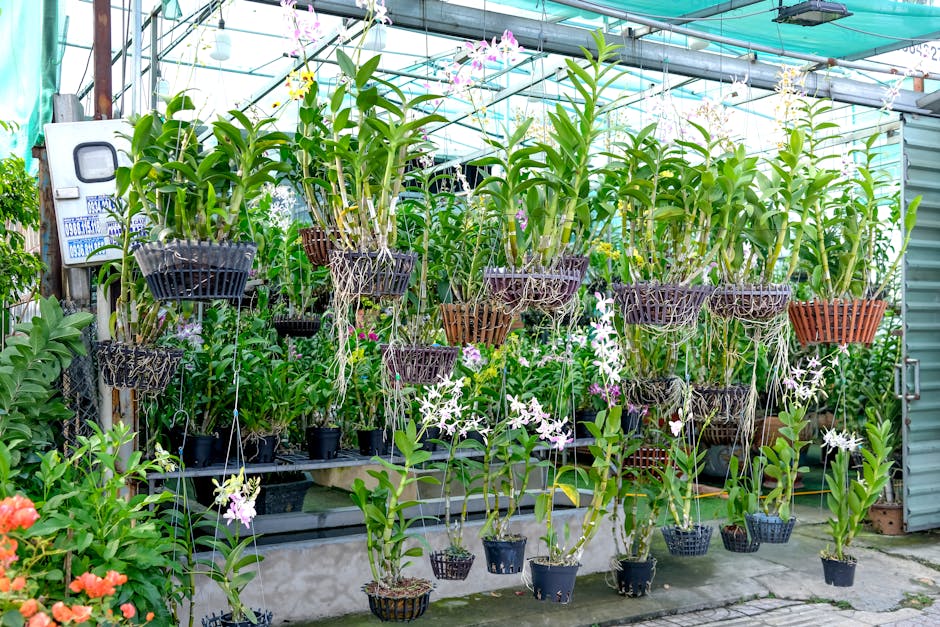
- The global orchid breeding industry is a $5 billion annually valued, secretive, and technologically advanced enterprise.
- Orchid breeding involves a decade-long cultivation cycle and success rates below 5%, requiring advanced techniques such as tissue culture labs and genomic screening.
- Companies protect their techniques like pharmaceutical firms, as demand for rare and refined blooms, like the ‘black orchid,’ surges.
- Bringing a new orchid variety to market typically takes 8 to 12 years, due to slow growth rates and germination requirements.
- Modern breeders use asymbiotic seed propagation in agar gels to bypass germination bottlenecks and accelerate development.
In a quiet greenhouse in Chiang Mai, Thailand, a single orchid blossom sold for $20,000 at auction—a Phalaenopsis hybrid with snow-white petals and a crimson throat, genetically tailored over 12 years. This is no longer the realm of hobbyists and botanical gardens; the global orchid breeding industry has evolved into a secretive, technologically advanced enterprise valued at over $5 billion annually. With cultivation cycles stretching up to a decade and success rates below 5%, breeders deploy tissue culture labs, climate-controlled bioreactors, and genomic screening to accelerate development. Yet, as demand for novel, durable, and photogenic blooms surges—fueled by social media and luxury horticulture—companies guard their techniques more closely than pharmaceutical firms protect drug formulas. The race is on to produce the next ‘black orchid,’ a flower so rare and refined it commands prices rivaling fine art.
The Long Road to Perfection

Bringing a new orchid variety to market typically takes 8 to 12 years, a timeline that dwarfs most agricultural development cycles. Unlike annual crops, orchids grow slowly, with germination from seed requiring sterile laboratory conditions and symbiotic fungi in many species. Modern breeders bypass this bottleneck using asymbiotic seed propagation in nutrient-rich agar gels, allowing thousands of seedlings to be grown from a single cross-pollination. Even so, only a fraction exhibit the desired traits—vibrant color, symmetry, longevity, and resilience. The process begins with selecting parent plants possessing complementary characteristics, followed by manual pollination, seed harvesting, and years of monitoring. During this period, genetic drift, disease, and environmental fluctuations can derail years of work. As urban consumers increasingly treat orchids as living décor, demand for consistent, long-blooming varieties has turned breeding into a precision science.
Inside the Breeding Labs

Leading orchid producers, such as Taiwan’s Golden Orchid Group and the Netherlands-based Van der Horst Orchids, operate bioengineering facilities resembling pharmaceutical clean rooms. Here, scientists use meristem culture to clone elite specimens, ensuring genetic uniformity across commercial batches. CRISPR-based gene editing is being explored to enhance traits like fragrance and pest resistance, though regulatory hurdles limit its use in consumer markets. Fluorescence-activated cell sorting helps identify desirable mutations at the cellular level, drastically reducing trial and error. Data analytics also play a growing role: climate algorithms optimize light, humidity, and nutrient delivery in real time. Despite these advances, most companies refuse to disclose their full methodologies. Intellectual property is protected through trade secrecy rather than patents, as public filings could enable competitors to reverse-engineer breakthroughs. This veil of confidentiality extends to supply chains, with some labs sourcing wild specimens from protected rainforests under undisclosed permits.
The Science Behind the Bloom

Orchid genetics are notoriously complex, with genomes up to five times larger than humans’ in some species. This complexity offers vast potential for variation but complicates targeted breeding. Researchers at the National University of Singapore recently mapped the full genome of Phalaenopsis equestris, a key parent species, enabling marker-assisted selection. This technique allows breeders to screen seedlings for specific genes linked to color intensity or flower shape before they bloom—a process that saves years. Meanwhile, studies published in ScienceDaily reveal that epigenetic factors, such as temperature shocks during early growth, can activate dormant traits, leading to unexpected but valuable mutations. These discoveries are transforming orchid development from an art into a data-driven discipline, where predictive modeling supplements traditional horticultural expertise.
Market Pressures and Ethical Concerns

The rise of online orchid auctions and influencer-driven plant trends has intensified commercial pressure, particularly in Southeast Asia and Europe. Collectors now seek ‘unicorn’ varieties—flowers with iridescent sheens, unusual patterns, or bioluminescent properties. However, this demand risks encouraging unsustainable practices. Wild orchids are among the most trafficked illegal plants globally, with Interpol estimating that up to 30% of traded specimens are poached. While lab-grown hybrids reduce reliance on wild stock, some breeders still collect genetic material from endangered species without proper oversight. Conservationists warn that unregulated genetic sampling could disrupt fragile ecosystems. Moreover, the concentration of breeding power in a few multinational firms threatens biodiversity, as mass-produced cultivars displace regional varieties. As the line between horticulture and biotechnology blurs, regulators struggle to keep pace with ethical and ecological implications.
Expert Perspectives
Dr. Lena Cho, a plant geneticist at Wageningen University, argues that ‘orchid breeding is entering a golden age of innovation, but without transparency, we risk ecological harm and monopolistic control.’ In contrast, industry consultant Rafael Mendez contends that ‘trade secrecy is essential to recoup R&D investments—without it, no company would fund decade-long projects.’ Meanwhile, conservation biologist Dr. Aris Thorne warns that ‘genetic homogenization could make commercial orchids vulnerable to disease outbreaks, much like bananas.’ These divergent views highlight the tension between innovation, profitability, and sustainability in a field where beauty and science increasingly converge.
Looking ahead, the integration of AI in phenotypic prediction and robotic pollination systems could shorten development cycles to under five years. However, questions remain about ownership of genetic data, access to technology for small growers, and the long-term impact on natural orchid populations. As climate change alters growing conditions, breeders may also need to prioritize drought and heat tolerance over aesthetics. The orchid industry stands at a crossroads—balancing the pursuit of perfection with planetary responsibility.
Source: BBC