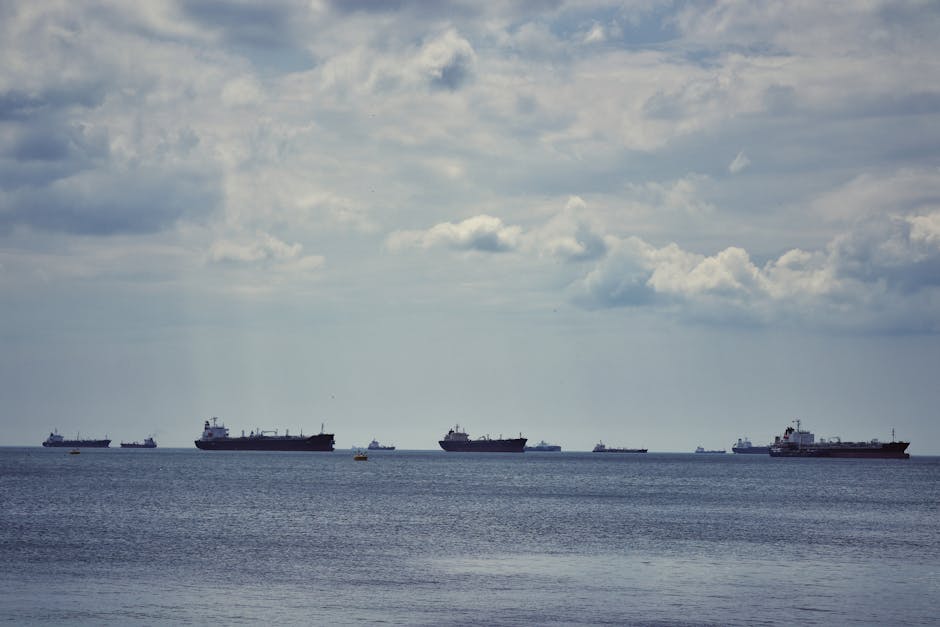
- Iran has selectively allowed Chinese commercial vessels to pass through the Strait of Hormuz, a strategically vital waterway.
- The decision marks a rare instance of state-specific maritime privilege in the contested chokepoint.
- Tehran’s move suggests a deepening strategic alignment between Iran and China.
- The selective access granted to Chinese ships could signal a recalibration of power in the region.
- Control over shipping lanes in the Strait of Hormuz increasingly reflects broader geopolitical alliances.
In a significant escalation of regional maritime tensions, Iran has selectively allowed Chinese commercial vessels to pass through the strategically vital Strait of Hormuz, a waterway through which nearly 20% of the world’s oil travels daily. This decision, reported by Iranian state media, comes days after Tehran seized a foreign-linked tanker in the Gulf, prompting global concern over freedom of navigation. The selective access—granted only to Chinese ships—marks a rare instance of state-specific maritime privilege in the contested chokepoint and suggests a deepening strategic alignment between Tehran and Beijing. With global energy markets already on edge due to ongoing conflicts in the Red Sea and Ukraine, the move could signal a recalibration of power in one of the world’s most volatile regions, where control over shipping lanes increasingly reflects broader geopolitical alliances.
Strategic Calculus in a Chokepoint Under Strain

The Strait of Hormuz, a 21-mile-wide channel separating Iran from Oman, has long been a flashpoint in global energy security. Any disruption here can send shockwaves through oil markets, as approximately 17 million barrels of crude pass through daily, according to the U.S. Energy Information Administration. Iran’s decision to extend safe passage exclusively to Chinese vessels reflects both tactical diplomacy and strategic signaling. Analysts suggest the move is a direct response to quiet but intense diplomatic outreach from Beijing, which has cultivated closer ties with Tehran under a 25-year cooperation agreement signed in 2021. By favoring Chinese shipping, Iran not only strengthens its economic partnership with a key ally but also tests the resolve of Western naval forces patrolling the region. This selective access could undermine the principle of freedom of navigation, a cornerstone of international maritime law, and invites questions about whether other nations might seek similar arrangements in times of crisis.
Diplomacy and Naval Signaling in the Persian Gulf

The decision follows the seizure of a Marshall Islands-flagged tanker by Iran’s Islamic Revolutionary Guard Corps (IRGC) earlier in the week, which Tehran claimed was involved in illegal oil smuggling. The vessel, reportedly carrying Iranian crude, had deviated from its declared route, according to Iranian authorities—a justification often used for intercepting foreign ships. However, the timing of the incident, coupled with the swift granting of passage to Chinese ships, suggests a coordinated message: Iran can both disrupt and facilitate global trade, depending on geopolitical alignment. Chinese state media confirmed that Beijing had engaged in direct consultations with Iranian officials, emphasizing the importance of maritime safety for bilateral trade. This intervention likely carried implicit assurances of economic or political support, reinforcing China’s role as a behind-the-scenes mediator in Middle Eastern affairs. Unlike Western powers, which often respond with sanctions or military posturing, China has pursued a strategy of economic diplomacy, leveraging infrastructure investments and energy deals to expand influence.
Geopolitical Realignment and the Weaponization of Trade Routes

The preferential treatment of Chinese ships underscores a broader shift in global power dynamics, where traditional maritime norms are being reshaped by bilateral deals rather than multilateral agreements. Iran’s actions reflect a growing trend among regional powers to use control over critical infrastructure as a tool of foreign policy. By aligning with China, Tehran gains a powerful counterweight to U.S. and European pressure, while Beijing secures reliable access to energy supplies and a strategic foothold near key shipping lanes. Data from the United Nations Conference on Trade and Development (UNCTAD) shows that China imports over 80% of its oil via sea routes, making the stability of the Persian Gulf essential to its energy security. The arrangement also highlights vulnerabilities in the current maritime order: if one nation can negotiate safe passage, others may follow, potentially fragmenting the global shipping system into spheres of influence. Experts warn this could lead to a ‘Balkanization’ of international waters, where access is dictated by political loyalty rather than legal right.
Implications for Global Shipping and Energy Markets

The selective opening of the Strait of Hormuz has immediate implications for global shipping companies, insurers, and energy traders. Freight rates for tankers traveling through the Gulf have already spiked, with the Baltic Exchange reporting a 30% increase in short-term charter costs. Maritime insurers are reassessing risk premiums for vessels not aligned with major powers, potentially disadvantaging smaller nations and independent operators. For energy markets, the incident raises concerns about the reliability of supply chains, particularly as alternative routes remain limited. Countries dependent on Gulf oil, including Japan, South Korea, and India, may be forced to reconsider their diplomatic engagements with Iran and their reliance on Chinese-mediated security arrangements. Moreover, the U.S. Navy’s Fifth Fleet, based in Bahrain, now faces a more complex operational environment, where diplomatic exemptions could complicate freedom of navigation operations.
Expert Perspectives
“This is not merely about shipping—it’s about sovereignty and strategic dependency,” says Dr. Leila Hassan, a Middle East security analyst at King’s College London. “Iran is signaling that it can control access, but only for those willing to engage on its terms.” Conversely, some observers argue the move reflects pragmatic crisis management. “China isn’t seeking confrontation,” notes James Lin, a senior fellow at the Center for Strategic and International Studies. “It’s protecting its investments and ensuring stability through quiet diplomacy, not military escalation.” These contrasting views highlight the dual nature of China’s Middle East strategy: economic engagement masking deeper strategic ambitions.
Going forward, the international community will be watching whether Iran extends similar concessions to other nations or if this marks the beginning of a tiered maritime order. With tensions in the Red Sea and South China Sea also escalating, the precedent set in the Strait of Hormuz could influence how states negotiate access to contested waters. The question remains: can international law withstand the rise of bilateral maritime deals, or are we entering an era where sea lanes are governed by power, not principle?
Source: The New York Times