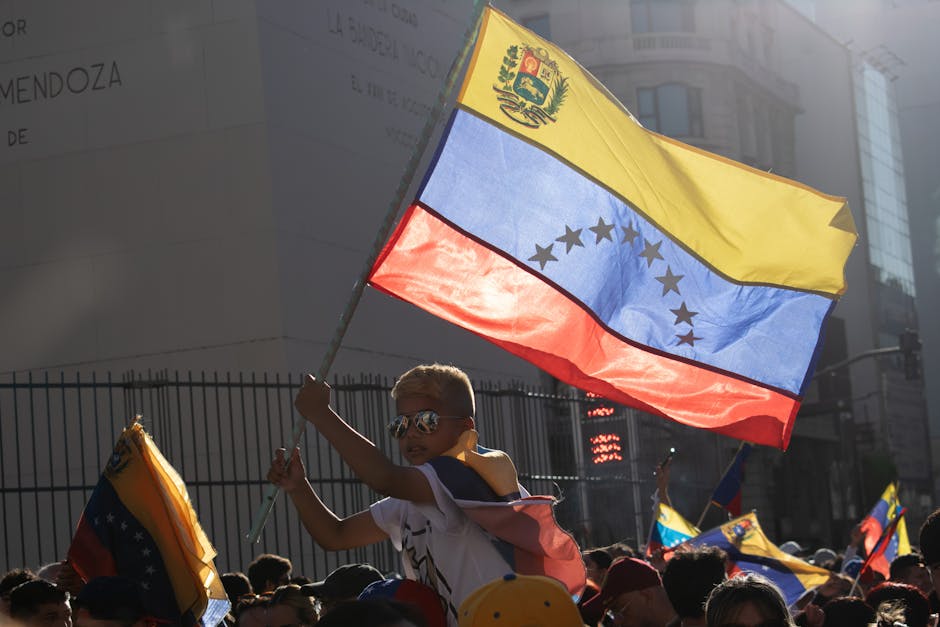
- Thousands of Venezuelan students took to the streets to demand the release of over 500 political prisoners held by the government.
- The protest marked one of the most visible youth-led challenges to President Nicolás Maduro’s administration in recent months.
- The students, waving Venezuelan flags and chanting slogans, called for democracy and justice despite a heavy police presence.
- The demonstration reflects a growing undercurrent of resistance among Venezuela’s younger generation against authoritarian rule.
- The protest has evolved into a national symbol of dissent, reflecting a broader resurgence of civic activism in Venezuela.
In a bold act of defiance, thousands of university students in Caracas shut down the Francisco Fajardo Highway—the city’s busiest thoroughfare—to demand the release of more than 500 political prisoners currently held by the Venezuelan government. According to estimates from the nongovernmental organization Foro Penal, at least 517 individuals have been detained on politically motivated charges since 2014, with nearly 100 arrested in the past year alone. The protest, which brought rush-hour traffic to a standstill, marked one of the most visible youth-led challenges to President Nicolás Maduro’s administration in recent months. Despite a heavy police presence and the threat of retaliation, students waved Venezuelan flags, held signs reading “Libertad Ya” (Freedom Now), and chanted slogans calling for democracy and justice. The demonstration underscores a growing undercurrent of resistance among Venezuela’s younger generation, who are increasingly unwilling to remain silent in the face of prolonged authoritarian rule and systemic human rights violations.
A New Wave of Youth Resistance

What began as a localized university demonstration has evolved into a national symbol of dissent, reflecting a broader resurgence of civic activism in Venezuela. For years, public opposition to the Maduro government has been met with surveillance, arbitrary detention, and violent crackdowns, effectively stifling organized protest. However, the current wave of mobilization—led by students from institutions like the Central University of Venezuela (UCV) and Simón Bolívar University (USB)—represents a strategic shift. Unlike previous movements that relied on mass rallies vulnerable to suppression, today’s youth are organizing through encrypted messaging apps, decentralized networks, and symbolic acts of civil disobedience. Their focus on political prisoners provides a unifying and morally unassailable cause, drawing sympathy even from segments of the population weary of political turmoil. This protest comes at a pivotal moment, as international pressure mounts over Venezuela’s flawed electoral processes and deteriorating human rights record, particularly following the disputed 2024 presidential elections.
Who Is Behind the Detentions?

The students’ demands center on the release of individuals classified as political prisoners by human rights groups, including opposition politicians, activists, journalists, and military officers accused of conspiring against the state. Among the most prominent cases is that of Freddy Guevara, a former opposition lawmaker who spent over two years in detention before being released under house arrest in 2023, and Rafael Marquez, a student leader imprisoned in 2022 for organizing anti-government protests. According to Reuters reporting, many detainees face charges of treason, terrorism, or instigating violence—allegations widely regarded as baseless by international observers. The Venezuelan government denies holding political prisoners, framing arrests as lawful responses to destabilization efforts backed by foreign powers. However, the United Nations and the Inter-American Commission on Human Rights have repeatedly condemned the use of the justice system to silence dissent, documenting patterns of torture, forced confessions, and prolonged pretrial detention without due process.
Roots of Repression and Resistance

The current protest movement must be understood within Venezuela’s broader political and economic collapse. Once Latin America’s richest nation due to vast oil reserves, Venezuela has experienced a catastrophic decline since 2014, with GDP contracting by over 80%, hyperinflation erasing savings, and mass emigration surpassing 7.7 million people. In this vacuum, the Maduro government has consolidated power through electoral manipulation, judicial control, and suppression of civil liberties. The arrest of political opponents serves not only to eliminate threats but also to instill fear and deter mobilization. Yet, youth-led activism has proven resilient. University campuses—historically centers of political debate—have become incubators for dissent, despite government efforts to impose loyalist administrations and restrict academic freedom. Data from BBC News indicates a 40% increase in politically motivated detentions since 2022, suggesting that repression has not quelled opposition but may instead be fueling it.
Who Stands to Gain or Lose?

The implications of this protest extend far beyond the immediate demand for prisoner releases. For students and civil society, a successful campaign could reinvigorate democratic movements and restore public confidence in collective action. Conversely, a harsh government response risks further alienating both domestic and international stakeholders. The United States and European Union have maintained targeted sanctions on Venezuelan officials linked to human rights abuses, while regional actors like Colombia and Brazil have called for inclusive dialogue. If the government escalates violence against peaceful protesters, it could trigger renewed diplomatic isolation and economic penalties. Meanwhile, families of detainees face emotional and financial strain, often unable to visit or legally represent their loved ones. The protest also highlights generational fractures: while older Venezuelans may prioritize economic stability over political change, younger citizens, many of whom have known only crisis, are increasingly unwilling to accept the status quo.
Expert Perspectives
Analysts are divided on the long-term impact of the student movement. Gustavo Infante, a political scientist at UCV, argues that “today’s students are more strategic and digitally savvy than previous generations, making them harder to suppress.” In contrast, Caracas-based security analyst Lorena Escandón warns that “the regime has survived past uprisings by combining co-optation and repression—it may do so again.” International human rights organizations broadly support the students’ demands, with Human Rights Watch calling for an independent commission to review all political detentions. The Organization of American States has echoed these concerns, though its influence remains limited without unified regional backing.
Looking ahead, the movement’s ability to sustain momentum will depend on its capacity to avoid infiltration, maintain nonviolent discipline, and attract broader societal support. Upcoming regional summits and UN human rights reviews could amplify their message, but the Maduro government shows little sign of conceding political space. The world will be watching whether Venezuela’s youth can reignite a democratic awakening—or face another cycle of repression.
Source: Al Jazeera