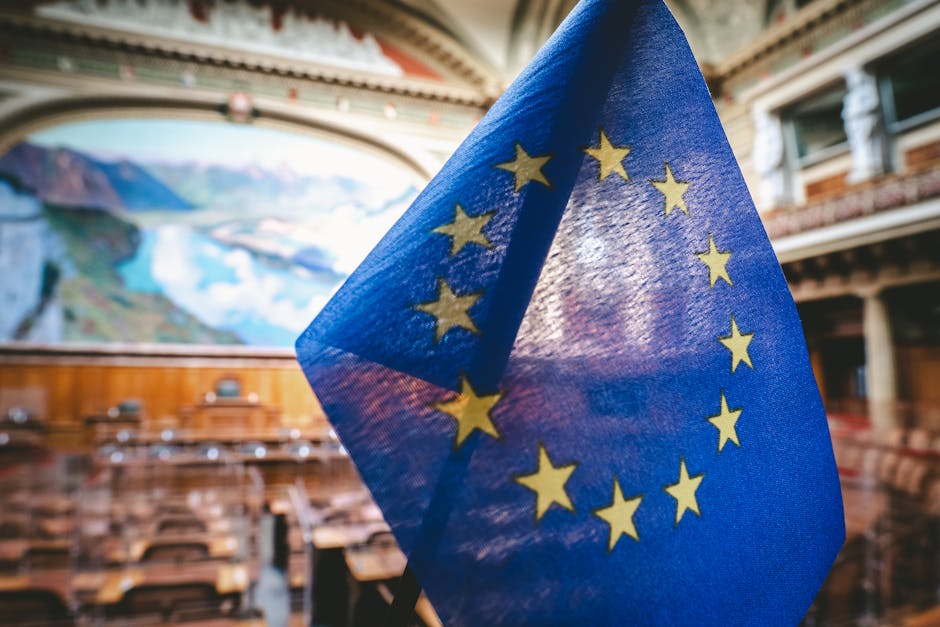
- Canada’s alignment with the EU on UN resolutions has increased to 75% from 58% two decades ago.
- Canada’s regulatory standards now mirror the EU’s in areas like digital privacy, carbon pricing, and AI ethics.
- The Comprehensive Economic and Trade Agreement (CETA) has boosted EU-Canada goods exchange by 35% since 2017.
- Canada’s adoption of the EU’s GDPR-style privacy reforms and carbon border adjustment mechanism signifies a deliberate harmonization.
- This strategic pivot toward European norms challenges traditional notions of sovereignty and regional blocs.
Canada now votes in alignment with the European Union on over 75% of United Nations General Assembly resolutions—up from just 58% two decades ago—according to a 2023 study by the European Policy Centre. This convergence extends far beyond diplomacy: Canadian regulatory standards increasingly mirror those of the EU, from digital privacy under the Digital Charter to carbon pricing and AI ethics frameworks. While no treaty binds Ottawa to Brussels, the depth of coordination suggests a structural realignment. In trade alone, the Comprehensive Economic and Trade Agreement (CETA) has boosted EU-Canada goods exchange by 35% since 2017, making the EU Canada’s third-largest trading partner. As geopolitical fractures widen between democratic alliances and authoritarian blocs, Canada’s strategic pivot toward European norms signals a quiet but profound shift in global alignment—one that challenges traditional notions of sovereignty and regional blocs.
A New Axis of Like-Minded Democracies

What was once a transatlantic relationship rooted in NATO and historical ties has evolved into a comprehensive policy convergence. Canada’s decision to adopt the EU’s General Data Protection Regulation (GDPR)-style privacy reforms in 2023, along with its endorsement of the European Green Deal’s carbon border adjustment mechanism, underscores a deliberate harmonization of regulatory frameworks. This alignment is not incidental but strategic: with rising protectionism and U.S. foreign policy volatility, Canada has sought stable, values-based partnerships. The EU, in turn, sees Canada as a reliable partner in multilateral institutions, particularly as it seeks to counterbalance influence from China and Russia. According to the Canadian Department of Foreign Affairs, over 60% of Canada’s bilateral agreements signed since 2020 include clauses explicitly referencing EU standards, a trend previously unseen in its international engagements.
From Trade to Technology: The Integration Deepens

The Comprehensive Economic and Trade Agreement (CETA), provisionally applied since 2017, has become the cornerstone of Canada-EU integration. Unlike traditional free-trade deals, CETA includes binding cooperation on regulatory equivalence, allowing Canadian companies to meet EU standards without duplicative certification processes. This has been particularly transformative in sectors like pharmaceuticals, automotive, and clean technology. For example, Canada’s 2022 Critical Minerals Strategy was developed in close consultation with the European Commission to ensure compatibility with the EU’s raw materials initiative, vital for electric vehicle batteries. Furthermore, Canada has joined the EU’s Horizon Europe research program as an associate member, granting its scientists full access to €95.5 billion in research funding. Even in digital governance, Canada’s proposed AI and Data Act closely mirrors the EU’s Artificial Intelligence Act, signaling a shared vision for ethical tech regulation.
Why Sovereignty Is No Longer Binary

The traditional model of state sovereignty—where nations operate with full autonomy—is being redefined by networks of regulatory alignment like that between Canada and the EU. Political scientists at McGill University argue that Canada is entering a ‘soft integration’ phase, where influence is exerted not through treaties of accession but through normative leadership. This is particularly evident in foreign policy: Canada has echoed EU positions on issues ranging from the 2022 Belarus election to the 2023 Gaza conflict, often coordinating statements in advance. Yet, this alignment carries risks. Critics warn that Canada could become a ‘rule-taker’ rather than a rule-maker, especially if it continues to adopt EU regulations without reciprocal influence. As BBC analysis has shown, smaller nations that closely align with larger blocs often find their diplomatic flexibility constrained during crises requiring independent judgment.
Implications for North America and Beyond

The deepening Canada-EU bond has ripple effects across North America, particularly in its relationship with the United States. While the U.S. remains Canada’s largest trading partner, regulatory divergence—especially on climate and digital privacy—is creating friction. American tech firms, for instance, have criticized Canada’s GDPR-style reforms as ‘European overreach,’ complicating cross-border data flows. Moreover, Canada’s alignment with EU carbon pricing mechanisms could trigger trade disputes under USMCA if not carefully managed. For Europe, Canada’s cooperation offers a strategic foothold in the Western Hemisphere, enhancing its influence in forums like the G7 and UN Security Council. Indigenous communities in Canada, however, have raised concerns that rapid alignment with foreign regulatory models may sideline domestic consultation, particularly in environmental assessments for energy projects.
Expert Perspectives
“Canada isn’t seeking EU membership, but it’s building a parallel architecture of integration,” says Dr. Elena Marquez, a global governance scholar at the London School of Economics. She views the trend as a pragmatic response to a fragmented world order. Conversely, geopolitical analyst Rajiv Khanna warns, “This isn’t partnership—it’s asymmetrical dependence. The EU sets the rules; Canada adapts.” While both agree on the depth of integration, they differ on its sustainability. Some legal experts argue that without formal mechanisms for Canadian input into EU rulemaking, the relationship risks becoming extractive rather than reciprocal. As Reuters reported in 2023, Canadian officials have begun informal consultations with EU bodies on upcoming legislation, but without voting rights, their influence remains limited.
Looking ahead, the key question is whether this model of ‘stealth integration’ can endure without formal accountability. Will Canada seek associate membership in EU institutions, as some academics propose? Or will domestic pushback grow as regulatory alignment accelerates? With the next EU-Canada summit scheduled for late 2024, observers will watch for signs of institutionalization—such as joint policy councils or regulatory task forces. In an era where alliances are defined less by geography and more by values and standards, Canada’s evolution may offer a blueprint for other democracies navigating a multipolar world.
Source: Bloomberg