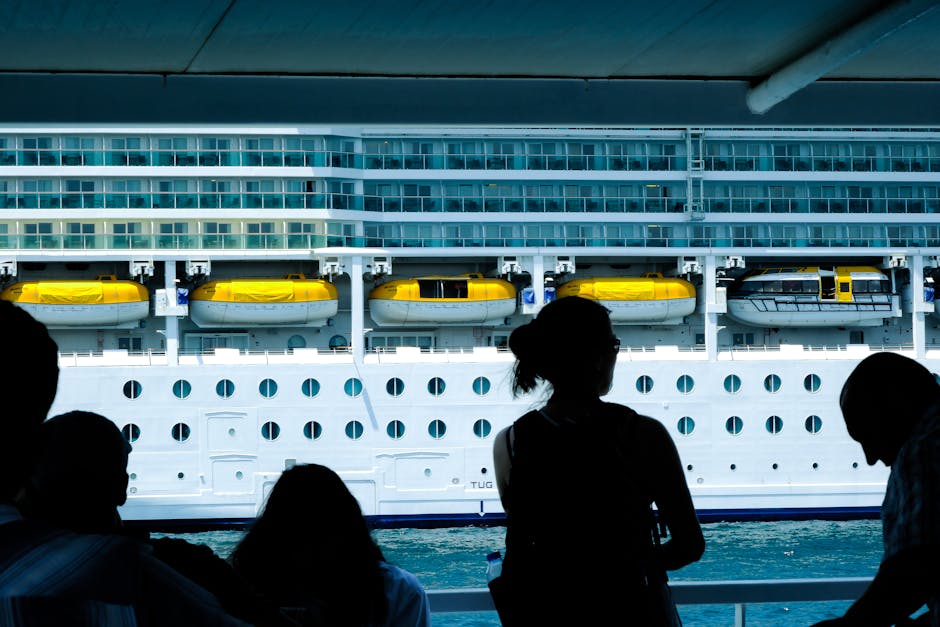
- Over 1,700 passengers and crew on MS Aurora are under quarantine in Marseille due to suspected norovirus outbreak.
- British-registered cruise ship MS Aurora has been isolated in Marseille to prevent community spread of norovirus.
- A probable norovirus outbreak on MS Aurora has prompted swift action from French health authorities.
- Symptoms consistent with norovirus have been reported in hundreds of passengers and crew, including nausea, vomiting, and diarrhea.
- French health officials are working to confirm the pathogen and prevent the spread of norovirus.
More than 1,700 passengers and crew aboard the British-registered cruise ship MS Aurora have been placed under de facto quarantine in the French port of Marseille after a probable norovirus outbreak. French health authorities acted swiftly upon receiving reports of widespread gastrointestinal symptoms, restricting movement off the vessel while testing is conducted. The containment measure underscores growing vigilance around infectious disease transmission in high-density travel environments, particularly in the wake of recent global health crises. With symptoms consistent with norovirus—including nausea, vomiting, and diarrhea—reported in hundreds, officials are working to confirm the pathogen and prevent community spread, testing samples at regional public health laboratories.
Outbreak Scale and Health Data

According to the Agence Régionale de Santé (ARS) Provence-Alpes-Côte d’Azur, at least 342 passengers and 47 crew members have reported acute gastroenteritis symptoms since the ship docked on Tuesday morning. That represents roughly 23% of the 1,700 individuals on board, a threshold that triggers mandatory isolation protocols under French public health regulations for maritime arrivals. Preliminary stool samples have been sent to Marseille’s Timone Hospital for PCR analysis to confirm whether the culprit is norovirus, the most common cause of such outbreaks on cruise ships. Historical data from the U.S. Centers for Disease Control and Prevention (CDC) shows norovirus is responsible for over 90% of cruise-related gastrointestinal outbreaks globally, with attack rates often exceeding 20% in confined settings. The current infection rate aboard the MS Aurora falls within this alarming range, prompting strict movement controls until results are confirmed and decontamination verified.
Key Actors and Institutional Responses

The response has been coordinated by French regional health agencies, port medical officers, and the ship’s operator, P&O Cruises, a subsidiary of Carnival Corporation. ARS Marseille has taken the lead in enforcing quarantine, deploying medical teams to assess symptomatic individuals and collect clinical samples. Meanwhile, P&O Cruises has activated its onboard medical staff and disease containment protocols, including enhanced sanitation of cabins, dining areas, and shared facilities. The UK’s Maritime and Coastguard Agency and the Foreign, Commonwealth & Development Office (FCDO) are monitoring the situation closely, though jurisdictional authority rests with French health officials while the vessel remains in Marseille. The World Health Organization (WHO) has not been formally notified, but maritime health experts at WHO have flagged the incident as a case study in cross-border health governance, particularly for ships operating under flags of convenience or foreign registry in EU ports.
Public Health vs. Economic and Human Costs

The quarantine presents a difficult balance between public health imperatives and economic as well as human costs. Preventing the virus from spreading into Marseille—a city of nearly 900,000—avoids potential strain on local healthcare infrastructure and secondary outbreaks in schools or care homes. However, the confinement has caused distress among passengers, many of whom are elderly or have pre-existing conditions, and are now stranded without clear timelines for disembarkation. P&O Cruises faces reputational and financial consequences, including potential compensation claims and future booking cancellations. Cruise industry analysts note that such incidents, though rare, can disproportionately affect consumer confidence. According to a 2023 report by Reuters, the sector has yet to fully recover post-pandemic trust levels, and high-profile quarantines risk undermining years of recovery efforts.
Why the Timing Raises Red Flags

This incident comes at a time of heightened surveillance for gastrointestinal pathogens in Europe. The UK Health Security Agency recently reported a 40% year-on-year increase in norovirus cases during early 2024, attributed to waning population immunity and increased social mixing. Simultaneously, cruise travel has rebounded sharply, with Carnival Corporation reporting 98% fleet capacity utilization in Q1 2024. The convergence of rising infection rates and dense passenger volumes creates a perfect storm for rapid transmission. Moreover, international health regulations for ships remain fragmented: while the EU has robust port health directives, enforcement depends on host nations, and British vessels no longer fall under EU health frameworks post-Brexit. This regulatory gap complicates coordination and may delay response times during cross-border incidents.
Where We Go From Here
In the next six to twelve months, three scenarios could unfold. First, if testing confirms norovirus and containment holds, the ship may be released after deep cleaning, with passengers quarantined individually upon return. Second, if secondary cases emerge in Marseille, local authorities could declare a public health alert, triggering contact tracing and potential travel advisories. Third, the incident may prompt bilateral talks between the UK and France on harmonizing maritime health protocols, especially for British-flagged vessels in EU ports. The European Centre for Disease Prevention and Control (ECDC) could also recommend standardized outbreak reporting for non-EU cruise operators using EU ports. Regardless of the outcome, this case will likely influence future cruise industry risk assessments and passenger insurance policies.
Bottom line — the quarantine of 1,700 people on a British cruise ship in France highlights the fragile balance between global mobility and public health security, exposing critical gaps in international maritime disease control that demand urgent diplomatic and regulatory attention.
Source: News